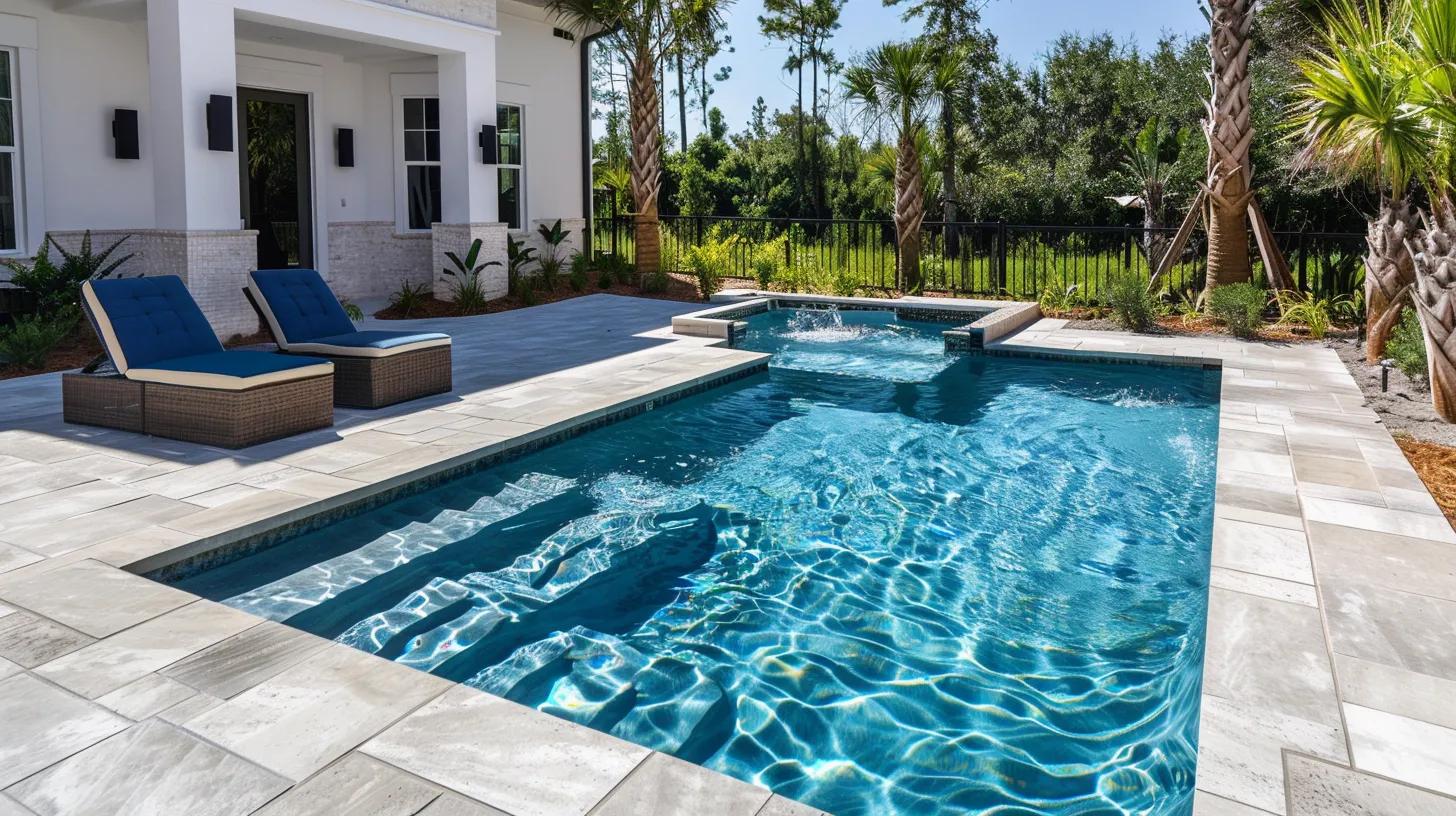
You’ll maximize your investment by adding LED lighting for vibrant, customizable colors and smart controls that manage temperature, filtration, and lighting from your smartphone. Consider installing a heating system, heat pumps offer efficiency, gas heaters provide rapid warmth, and solar panels deliver the lowest long-term costs. Built-in spajets, such as neck jets and massage seats, transform your pool into a hydrotherapy center, while safetyfeatures, including fencing, covers, and alarms, ensure code compliance. The sections below show how each feature integrates seamlessly into the construction process.
Key Takeaways
- LED pool lighting offers energy-efficient, customizable illumination with vibrant colors and remote control at an affordable installation cost.
- Smart pool controls enable smartphone management of temperature, lighting, and filtration while optimizing energy usage through automated scheduling.
- Pool heating systems include heat pumps for efficiency, gas heaters for rapid warming, and solar options for the lowest long-term costs.
- Built-in spa jets provide therapeutic benefits, with features such as neck jets, massage seats, and therapy benches for targeted relaxation.
- Safety features, including proper fencing, covers, and alarms, must comply with local building codes and require permits for verification of compliance.
LED Pool Lighting: Fiber Optics vs. Color-Changing LEDs
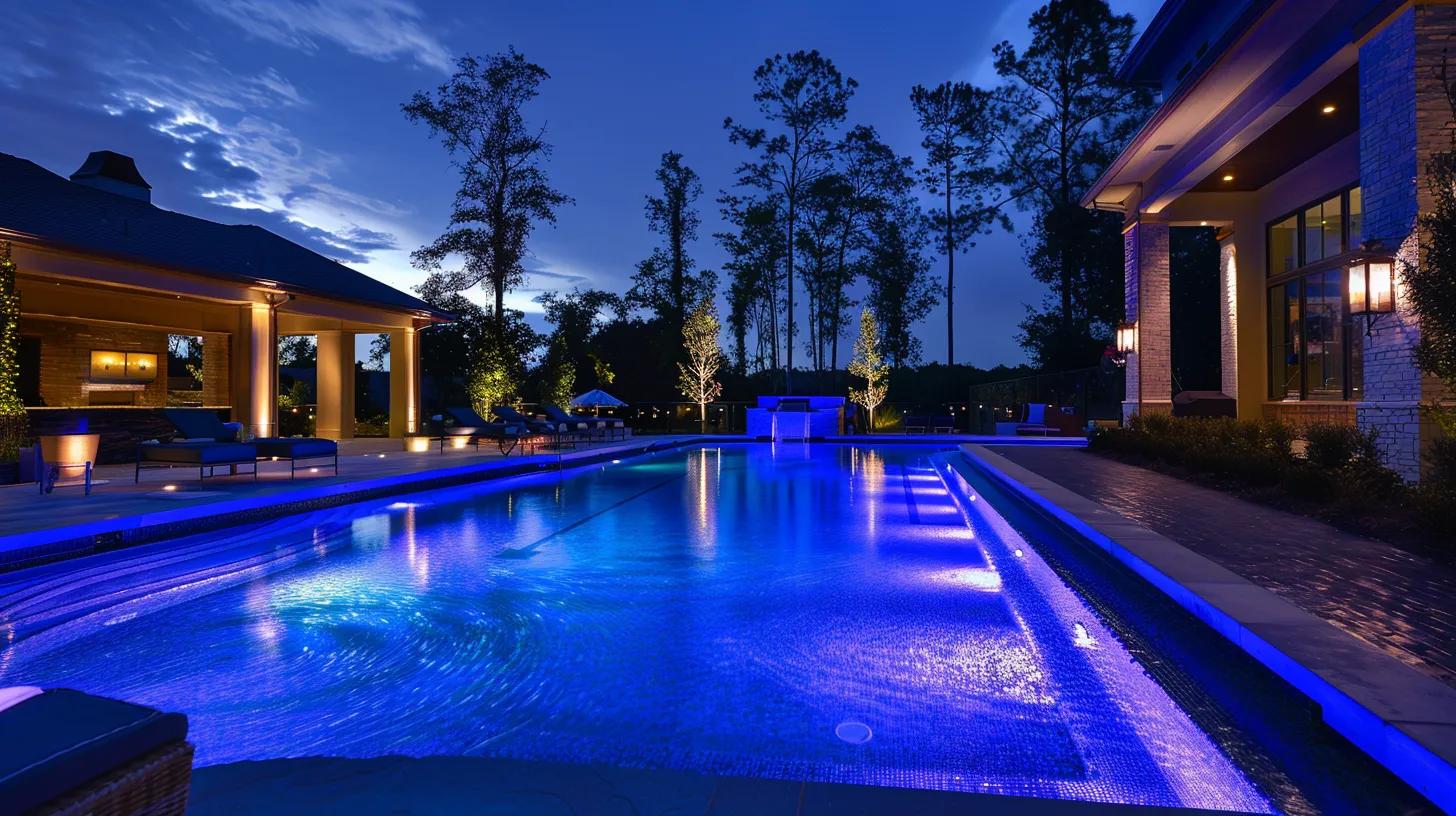
When you’re designing your fiberglass pool, choosing the right lighting system greatly impacts both ambiance and functionality.
Fiber optic lighting offers subtle, energy-efficient illumination that’s perfect for creating soft, ambient effects around your pool’s perimeter.
However, color-changing LED lights have become the preferred choice for most homeowners. They’re more affordable, easier to install, and provide vibrant, customizable colors you can control remotely.
LEDs consume less energy than traditional bulbs and last considerably longer. You’ll also find LEDs deliver brighter illumination for nighttime swimming.
Most fiberglass pool owners choose LED systems for their versatility and value.
Smart Pool Controls: Automating Lights, Heat, and Cleaning
Modern pool technology has advanced far beyond simple on/off switches for your lights and equipment. Smart pool controls let you manage every aspect of your pool from your smartphone or tablet, whether you’re home or away.
You’ll control water temperature, lighting schedules, and filtration cycles with a few taps. Many systems integrate with voice assistants like Alexa or Google Home for hands-free operation.
These automated systems optimize energy usage by running equipment during off-peak hours and adjusting heating based on weather forecasts. You’ll save money while maintaining perfect water conditions.
Installation during construction guarantees seamless integration with your pool’s electrical systems.
Pool Heating Systems: Heat Pumps, Gas, and Solar Compared
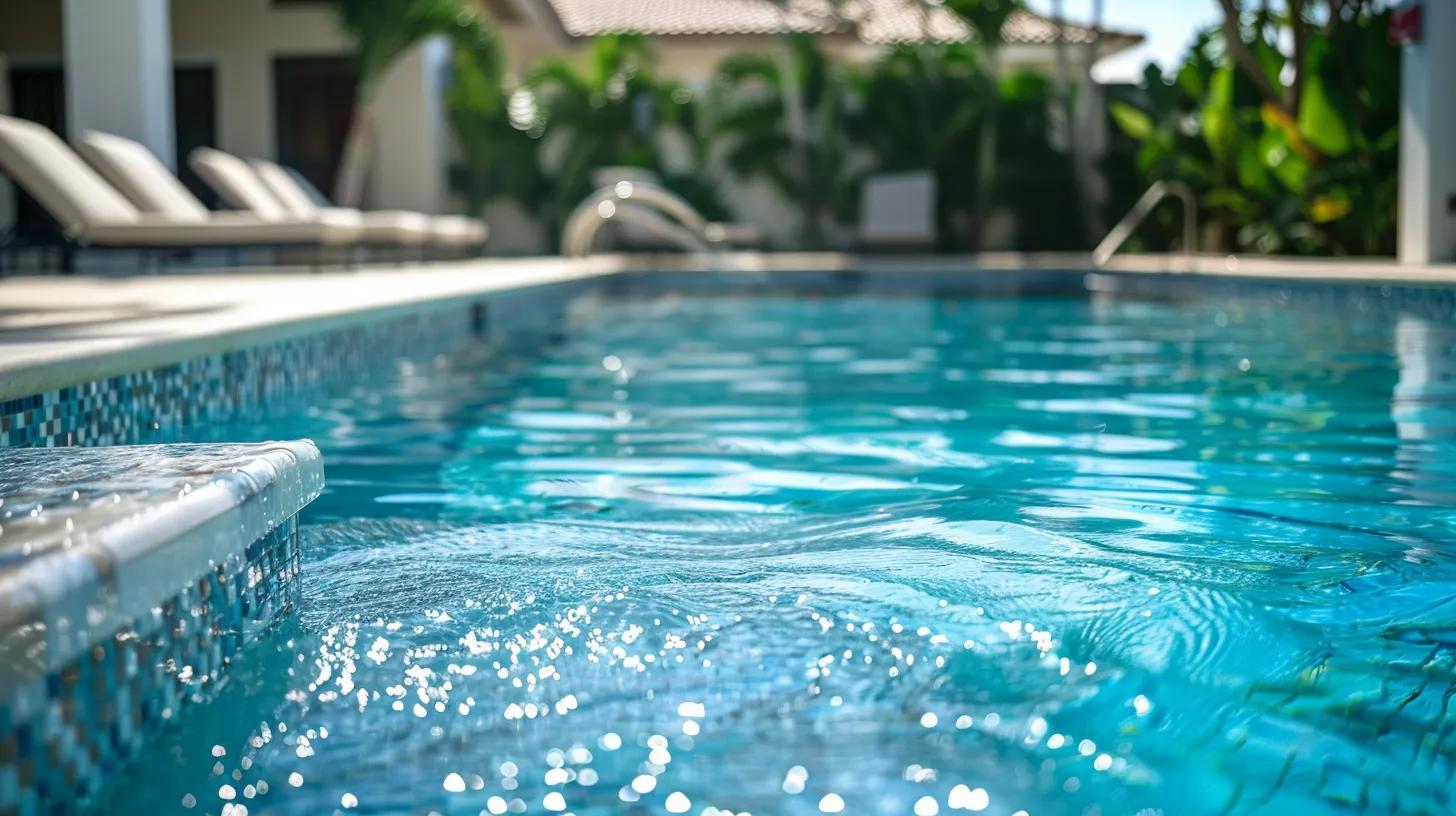
Three primary heating options will determine how comfortably and efficiently you’ll extend your swimming season: heat pumps, gas heaters, and solar systems.
Heat pumps extract warmth from ambient air, delivering consistent temperatures with low operating costs but requiring moderate upfront investment.
They’re ideal for moderate climates.
Gas heaters provide rapid heating regardless of air temperature, making them perfect for occasional use or cool climates.
However, they carry higher operating expenses.
Solar systems harness free energy from sunlight, offering the lowest long-term costs after initial installation.
They work best in sunny regions with adequate roof space for panel mounting.
Built-In Spa Jets: Neck Jets, Massage Seats, and Therapy Benches
Transforming your fiberglass pool into a personal hydrotherapy center requires understanding three distinct jet configurations that target specific muscle groups and relaxation needs.
Neck jets mount along pool walls at shoulder height, delivering targeted streams that relieve tension in your upper back and neck muscles.
You’ll position yourself against these jets for concentrated massage therapy.
Massage seats feature multiple jets strategically placed to work your entire back simultaneously.
These molded seats hold you in an ideal position while jets address lower back pain and muscle fatigue.
Therapy benches combine low-pressure jets over wider areas, letting you stretch out while receiving a full-body relaxation treatment.
Pool Safety Features Required by Code: Covers, Alarms, and Fencing
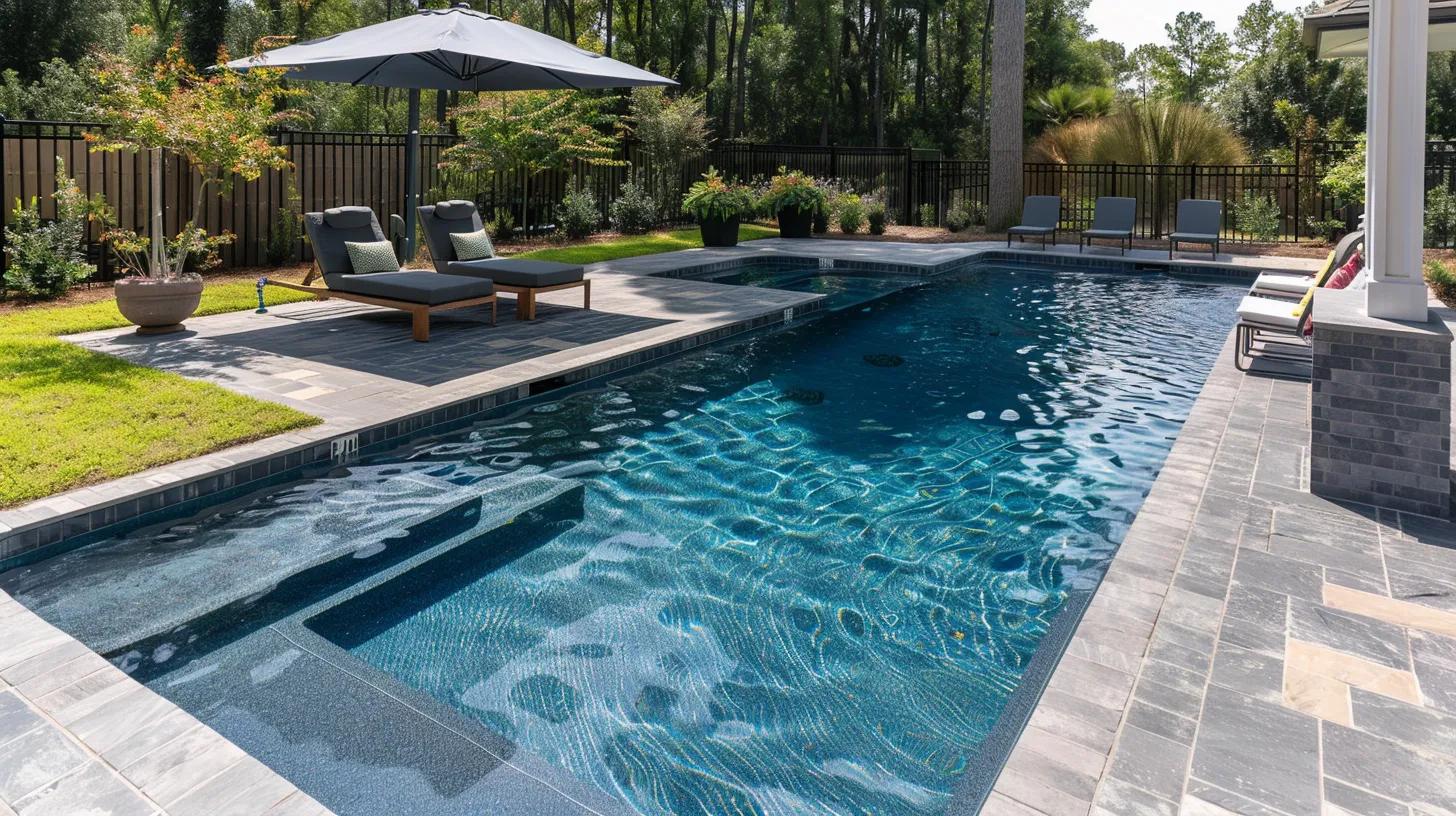
While spa jets enhance your pool experience, local building codes mandate specific safety features before you can legally operate your fiberglass pool.
Most jurisdictions require at least one barrier method: a four-sided fence with self-closing gates, approved pool covers, or door and window alarms if your house serves as part of the barrier.
You’ll need proper permits and inspections to verify compliance.
Safety cover requirements typically specify weight-bearing capacity, while alarms must meet ASTM standards for volume and detection sensitivity.
Fencing height, gate latch positioning, and slat spacing follow strict measurements.
Verify your municipality’s specific requirements before installation begins.
Waterfalls, Bubblers, and Deck Jets: Built-In Water Features
Beyond mandated safety equipment, water features add both visual appeal and soothing acoustics to your fiberglass pool.
Waterfalls create a dramatic focal point while producing relaxing sounds that mask neighborhood noise. You’ll find they’re easier to install during initial construction than as retrofits.
Bubblers shoot gentle streams upward from shallow areas, creating playful fountains that kids love.
They’re particularly popular in tanning ledges and beach entries.
Deck jets arc water from your pool deck into the swimming area, adding elegant visual interest.
You can adjust their height and direction, and many feature LED lighting for nighttime ambiance.
Consider combining multiple features for maximum impact.
Frequently Asked Questions
How Long Does a Typical Fiberglass Pool Installation Take From Start to Finish?
You’ll typically wait 2-4 weeks for your fiberglass pool installation to complete from start to finish.
The timeline depends on several factors, including weather conditions, your site’s accessibility, and local permit requirements.
The actual pool shell installation takes just 1-2 days, but you’ll need additional time for excavation, plumbing, electrical work, decking, and landscaping.
If you encounter rock during excavation, expect delays that’ll extend your project timeline.
What Is the Average Lifespan of a Fiberglass Pool Shell?
You’ll enjoy decades of use from your fiberglass pool shell, as it typically lasts 25-30 years or more with proper maintenance.
The durable gelcoat surface resists algae growth and chemical damage better than other pool types. If you maintain balanced water chemistry and perform regular cleaning, your pool can even exceed this lifespan.
Many manufacturers back their shells with 25+ year warranties, demonstrating confidence in the material’s longevity and structural integrity.
Can Fiberglass Pools Be Installed in Areas With Cold Climates and Freeze-Thaw Cycles?
Yes, you can install fiberglass pools in cold climates with freeze-thaw cycles.
They’re actually ideal for these conditions because their flexible structure withstands ground movement better than concrete. The one-piece shell won’t crack from freezing temperatures like other pool types might.
However, you’ll need proper winterization, including lowering water levels, adding antifreeze to plumbing lines, and using a quality winter cover to protect your investment during harsh winters.
What Permits and Inspections Are Required Before Installing a Fiberglass Pool?
You’ll need to obtain building permits from your local municipality before installation begins.
Your installer must submit detailed plans showing the pool’s location, dimensions, and equipment placement.
Inspections are typically required at multiple stages: excavation, electrical work, plumbing, and final completion.
You’ll also need fence permits if your area requires pool barriers.
Additionally, setback requirements from property lines must be verified.
It’s best to let your contractor handle the permitting process since they’re familiar with local codes.
How Much Does a Fiberglass Pool Installation Typically Cost, Including All Features?
You’ll typically spend $45,000 to $85,000 for a complete fiberglass pool installation, including the shell, excavation, and basic equipment.
However, if you’re adding premium features like built-in spas, water features, LED lighting, heating systems, and upscale decking, you could reach $100,000 or more.
Your final cost depends on your pool’s size, site accessibility, soil conditions, and which features you choose to include in your backyard oasis.
Conclusion
You’ll maximize your fiberglass pool investment by choosing features that match your lifestyle and budget. Whether you’re prioritizing energy-efficient LED lighting, convenient smart controls, or relaxing spa jets, plan these additions during installation, it’s far more cost-effective than retrofitting later. Don’t forget to include required safety features in your budget from the start. Work with your installer to create a customized pool that’ll provide years of enjoyment for your family.