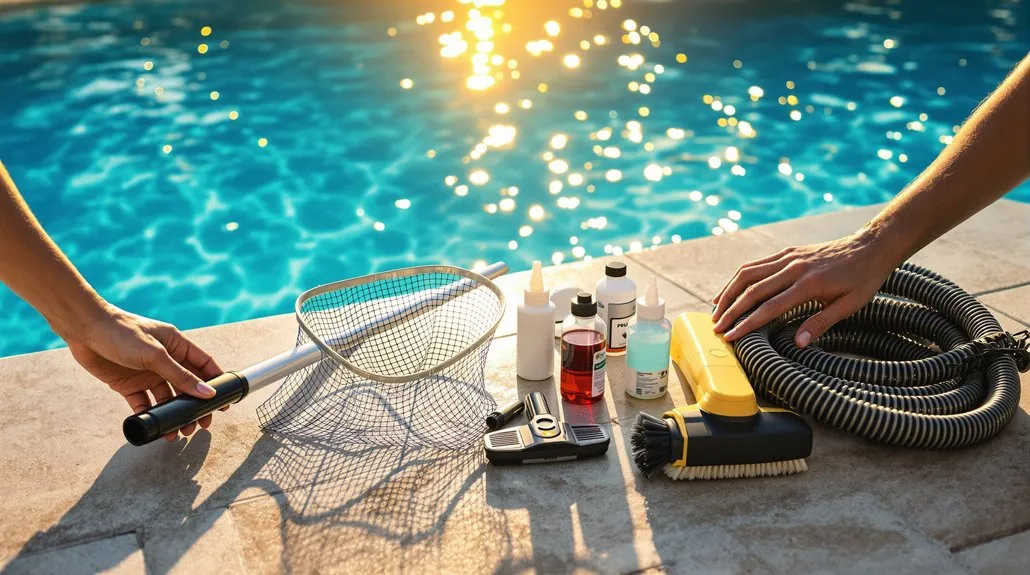
You’ll need to maintain your pool weekly by skimming debris, brushing walls and floors, then vacuuming thoroughly from the shallow to the deep end. Test your water chemistry to keep pH between 7.4-7.6 and chlorine at 1-3 ppm, adjusting chemicals gradually as needed. Empty skimmer baskets twice weekly, clean your filter when pressure rises 8-10 PSI above normal, and run your system 8-12 hours daily. Check equipment for leaks or unusual sounds, and you’ll discover additional techniques below to keep your pool swim-ready year-round.
Key Takeaways
Skim debris from the surface and vacuum the pool floor weekly, brushing walls and steps to maintain water clarity.
Test water chemistry weekly, keeping pH at 7.4-7.6 and chlorine at 1-3 ppm for safe swimming conditions.
Clean skimmer and filter baskets at least twice weekly to ensure proper water circulation and system efficiency.
Monitor the filter pressure gauge and clean when readings exceed normal by 8-10 PSI to maintain filtration performance.
Run the pool system 8-12 hours daily and inspect equipment for leaks, unusual sounds, or malfunctions to prevent costly repairs.
Your Complete Weekly Pool Maintenance Checklist
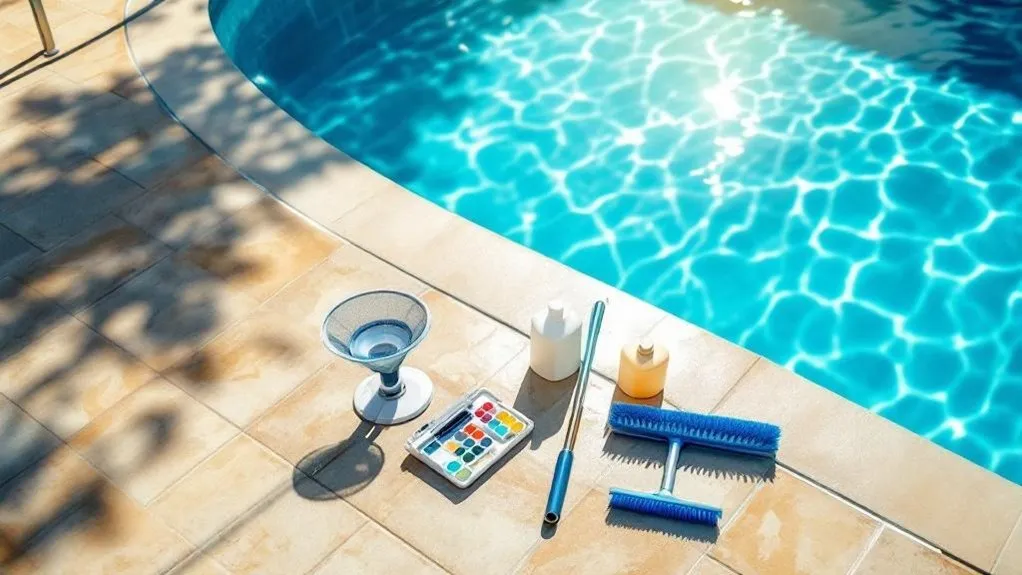
Maintaining a pristine pool doesn’t require hours of work each week. Just a consistent routine that covers the essentials.
Start by skimming debris from the surface and emptying your skimmer baskets. Test your water‘s pH and chlorine levels, adjusting chemicals as needed.
Brush the walls and floor to prevent algae buildup, then vacuum thoroughly. Check your filter pressure and backwash if it’s risen 8-10 PSI above normal.
Finally, inspect your equipment for leaks or unusual sounds. This systematic approach takes roughly 30-45 minutes and keeps your pool swim-ready while preventing costly problems down the road.
Skim, Brush, and Vacuum Pool Surfaces
The foundation of your weekly routine starts with physical cleaning, removing visible debris and buildup before it affects your water chemistry.
Start by skimming the surface with a leaf net to remove floating leaves, insects, and debris.
Next, brush the walls, steps, and floor with a pool brush appropriate for your surface. Use softer bristles on fiberglass and a stiffer brush on concrete.
Work from shallow to deep end, dislodging algae and dirt.
Finally, thoroughly vacuum the pool floor, either manually or with an automatic cleaner.
This three-step process prevents circulation issues and keeps water sparkling.
Clean Your Pool Filter System
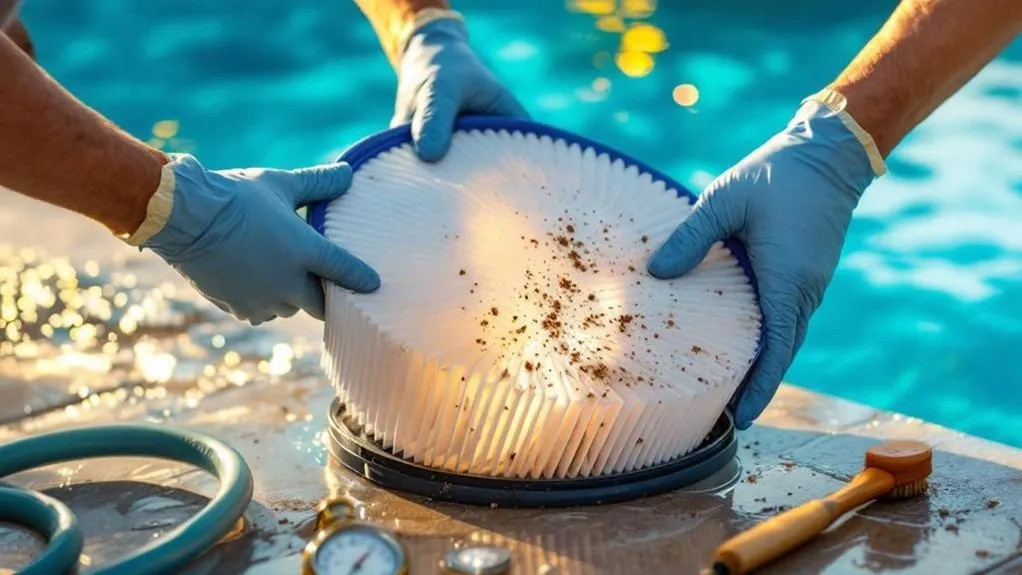
Your pool filter works overtime to trap dirt, oils, and contaminants, so regular cleaning keeps it running efficiently.
Check your pressure gauge weekly. When it reads 8-10 PSI above normal, it’s time to clean.
For cartridge filters, remove and rinse cartridges with a garden hose.
For sand filters, run a backwash cycle until the water runs clear.
DE filters require backwashing and adding fresh diatomaceous earth.
Clean your filter basket and skimmer basket weekly by removing debris.
This simple step prevents clogs and maintains proper water circulation.
A clean filter system means clearer water and lower chemical costs.
Test and Balance Water Chemistry
While a clean filter removes physical debris, properly balanced water chemistry protects your pool equipment and keeps swimmers safe. Test your water weekly using strips or a liquid kit.
Add chemicals gradually based on test results. Low pH? Use soda ash. High chlorine? Let it naturally dissipate. Always follow product instructions and wait between additions. You’ll prevent corrosion, scaling, and algae growth while ensuring comfortable swimming conditions.
Empty Skimmer Baskets and Check Equipment
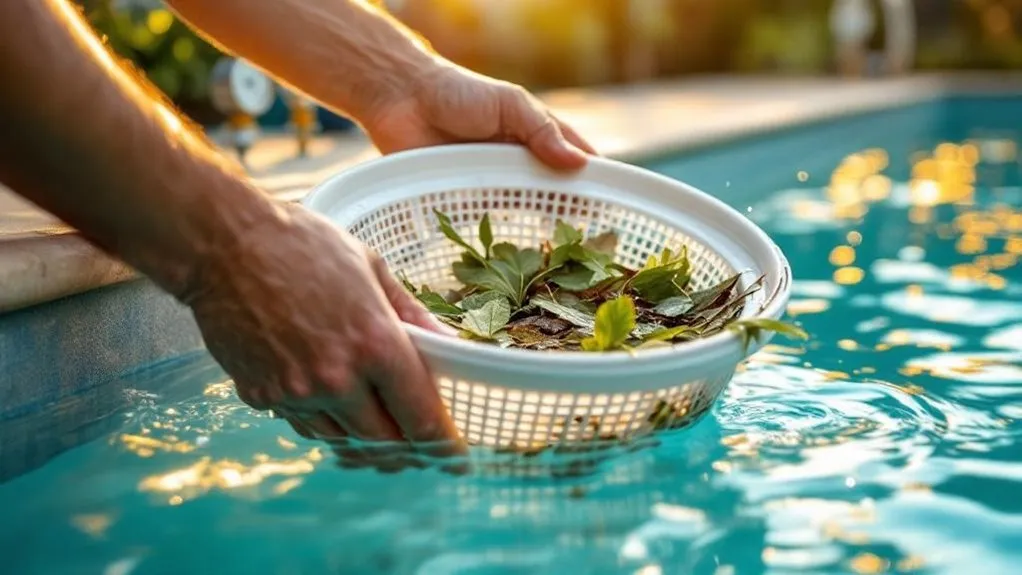
Check your skimmer baskets at least twice weekly to maintain ideal water circulation. Remove debris accumulation that restricts water flow and strains your pump motor.
While you’re there, inspect critical equipment components:
Pump motor: Listen for unusual grinding or humming sounds
Filter pressure gauge: Note readings 8-10 PSI above baseline indicate cleaning time
Pool timer: Verify it’s running your system 8-12 hours daily
Return jets: Confirm they’re directing water downward at 45-degree angles
Visible plumbing: Look for leaks, cracks, or loose connections
These quick checks prevent costly repairs and keep your pool running efficiently.
Frequently Asked Questions
How Much Does Weekly Pool Maintenance Cost if I Hire a Professional?
You’ll typically pay between $80 and $150 per week for professional pool maintenance, depending on your location and pool size.
This usually covers chemical balancing, skimming, vacuuming, and filter cleaning. If you’ve got a larger pool or need extra services like equipment repairs, you’ll pay more.
Some companies offer monthly packages that can save you money compared to weekly rates.
It’s worth getting quotes from several local services to find the best deal.
What Should I Do if My Pool Develops a Leak?
If you suspect a leak, you’ll need to perform a bucket test first to confirm it’s not just evaporation.
Place a bucket of water on your pool step and mark the water levels inside and outside the bucket.
After 24 hours, if the pool level drops more than the bucket’s, you’ve got a leak.
Turn off your equipment and call a professional leak detection service. They’ll use specialized tools to locate and repair it before you lose more water.
How Often Should I Shock My Pool During Summer Months?
You should shock your pool once a week during the summer months to maintain proper sanitation.
However, you’ll need to shock more frequently if you’re experiencing heavy pool usage, after rainstorms, or when you notice cloudy water or algae growth.
If you’re hosting a pool party, it’s best to shock afterward.
Always test your water chemistry before shocking, and add the treatment in the evening when the sun won’t break down the chlorine.
Can I Swim Immediately After Adding Chemicals to My Pool?
You shouldn’t swim immediately after adding chemicals to your pool. Wait times vary depending on what you’ve added.
For chlorine shock treatments, you’ll need to wait 8-24 hours until levels drop below 5 ppm. If you’ve added algaecide, wait at least 15 minutes.
For pH adjusters or standard chlorine, 20-30 minutes is usually sufficient. Always test your water first to verify it’s safe before diving in.
What’s the Best Way to Winterize My Pool for Cold Weather?
Start by balancing your water chemistry. Then, lower the water level below the skimmer.
Next, drain and blow out all plumbing lines to prevent freezing damage. Remove and store equipment like ladders and skimmer baskets.
Add winterizing chemicals to keep the water clean. Finally, cover your pool with a secure winter cover.
Don’t skip these steps. They’ll protect your investment and make spring opening much easier.
Conclusion
You’ve got the essential steps to keep your pool sparkling clean and safe. Stick to this weekly routine, and you’ll prevent bigger problems down the road. Remember, consistency is key. Skipping maintenance sessions only creates more work later. As you get comfortable with these tasks, they’ll become second nature. You’ll spend less time on upkeep and more time enjoying your pool. Now get out there and make pool ownership rewarding!