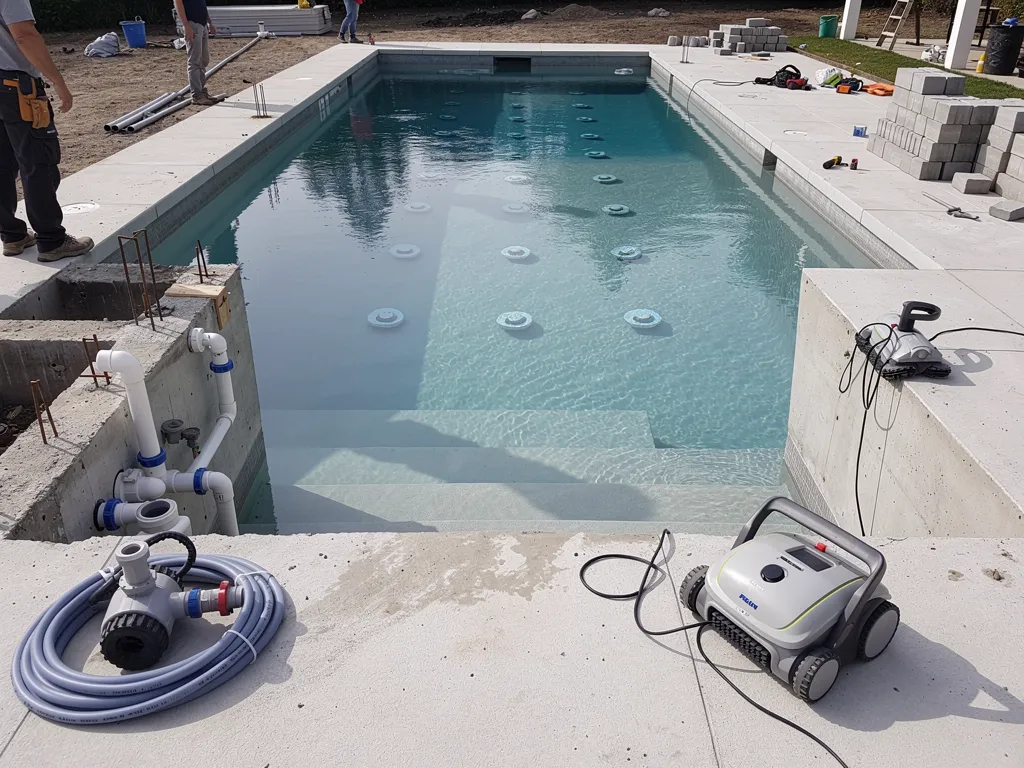
You can install any automatic pool cleaner type during new construction—suction-side ($200-$500), pressure-side ($400-$800 plus optional booster pump), robotic ($800-$3,000), or in-floor systems ($5,000-$15,000). Pre-plumbing during construction costs just $800-$1,500 compared to $3,000-$5,000 for retrofitting later. Robotic cleaners don’t require any plumbing modifications, while in-floor systems must be installed during construction. Your choice depends on budget, desired automation level, and long-term maintenance preferences. The sections below break down each option’s complete cost picture and operational advantages.
Key Takeaways
In-floor systems require installation during construction, costing $5,000-$15,000, but offer permanent maintenance-free cleaning with improved circulation.
Pre-plumbing for pressure-side cleaners costs $800-$1,500 during construction versus $3,000-$5,000 for retrofitting existing pools.
Suction-side cleaners connect to existing filtration without special plumbing, making them budget-friendly at $200-$500 for new construction.
Robotic cleaners need no plumbing integration and can be added anytime, offering flexibility without affecting construction plans.
Pre-plumbing during construction avoids future disruption from tearing up finished concrete and landscaping, and eliminates costly demolition expenses.
New Construction Advantages: Pre-Plumbing That Saves Thousands Later
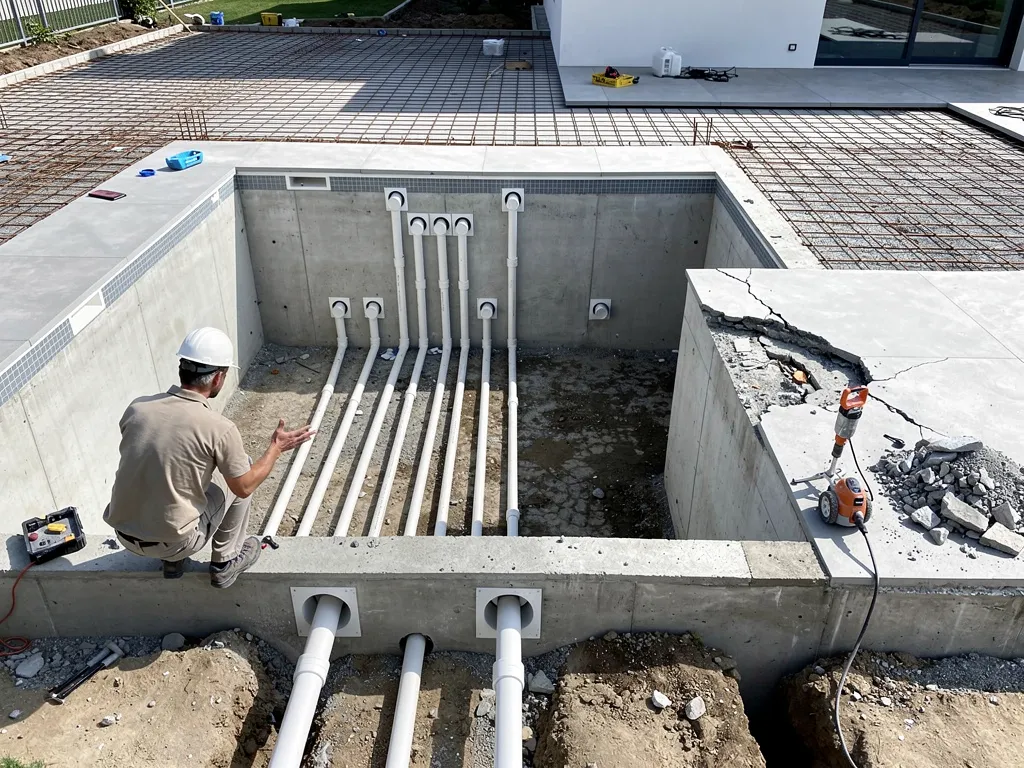
When you’re building a pool from scratch, installing the plumbing infrastructure for an automatic cleaner costs a fraction of what you’ll pay for a retrofit.
Pre-plumbing during construction typically runs $800-$1,500, while retrofitting existing pools can exceed $3,000-$5,000 due to jackhammering, deck removal, and restoration work.
You’ll avoid the hassle of tearing up finished concrete and landscaping.
The installation happens seamlessly alongside other construction phases, eliminating disruption to your backyard enjoyment.
This forward-thinking approach means you’re ready for in-floor cleaning systems or pressure-side cleaners from day one, maximizing your pool’s automated cleaning potential without future demolition costs.
Four Types of Automatic Pool Cleaners: Quick Comparison
Pool owners face four distinct cleaner categories, each with unique advantages for new construction projects.
You’ll save considerably by planning ahead. In-floor systems require concrete work before pouring, while pressure cleaners need dedicated return lines. Suction models work with standard plumbing. Robotics offer flexibility since they don’t require special infrastructure. Choose based on your budget and desired level of automation.
In-Floor Cleaning Systems: Built-In Automation From Day One
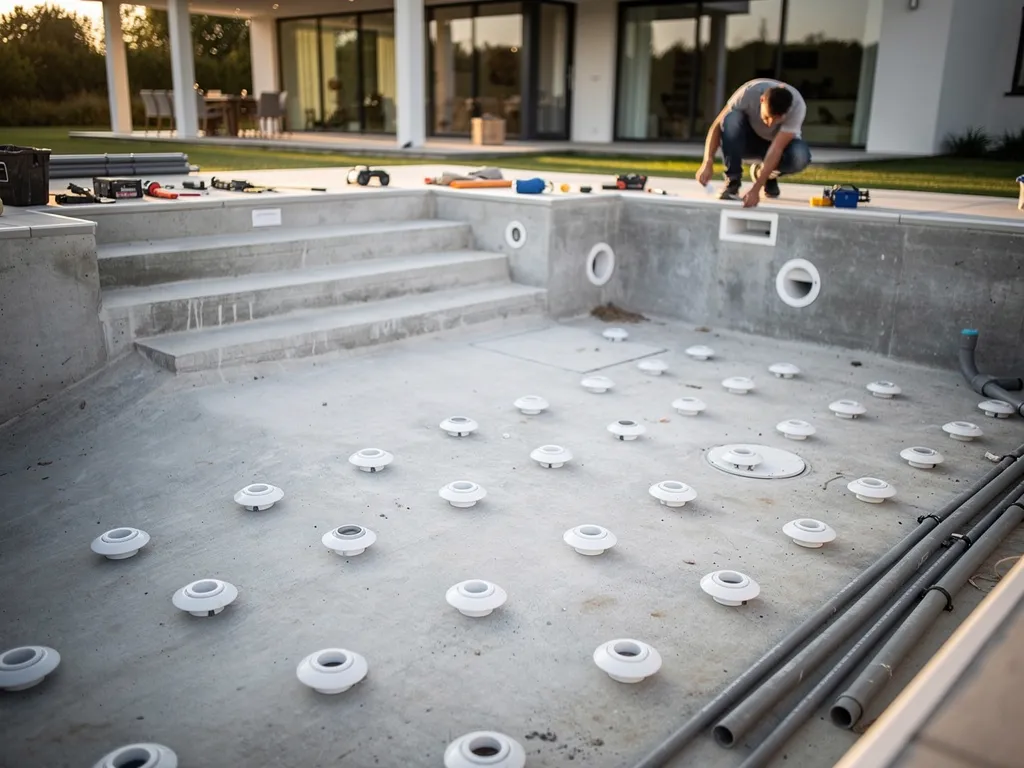
Because in-floor cleaning systems become permanent fixtures in your pool’s structure, they offer the most seamless automation option—but only if you install them during initial construction.
These systems work through strategically placed pop-up cleaning heads embedded in your pool’s floor and steps. Water pressure activates these heads in timed sequences, pushing debris toward your main drain while circulating treated water throughout the pool.
You’ll pay considerably more upfront—typically $3,000 to $10,000 beyond standard construction costs.
However, you’ll eliminate visible equipment, reduce chemical usage through improved circulation, and enjoy maintenance-free operation for years.
Robotic Pool Cleaners: Zero Plumbing Required, Maximum Flexibility
Unlike in-floor systems that require construction integration, robotic pool cleaners operate completely independently of your pool’s plumbing and equipment.
You simply plug them into a standard electrical outlet, drop them in your pool, and they’ll autonomously scrub floors, walls, and waterlines.
This independence offers significant advantages during new construction.
You won’t need dedicated plumbing lines, return jets, or valve systems installed.
If you’re uncertain about automation during building, you can add a robotic cleaner later without retrofitting anything.
Modern robotics feature smart navigation, programmable schedules, and remote controls.
They’re also portable between pools and easy to service without affecting your pool’s infrastructure.
Pressure-Side Cleaners: Pre-Plumbing for Dedicated Return Lines
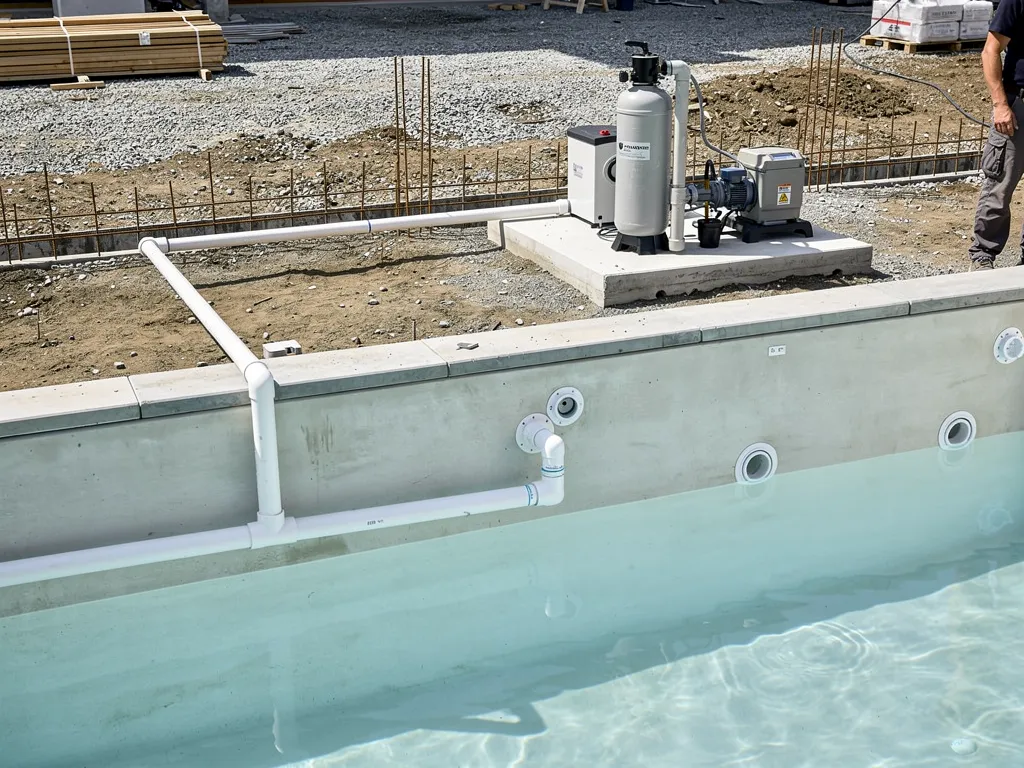
While robotic cleaners eliminate plumbing requirements entirely, pressure-side cleaners sit between robotics and in-floor systems. You’ll need to pre-plumb a dedicated return line during construction to provide water pressure to power the cleaner. This option costs less than in-floor systems while maintaining automatic operation.
Suction-Side Cleaners: The Simplest Installation Option
Suction-side cleaners represent the most straightforward automatic cleaning option for new pool construction. They connect directly to your pool’s existing skimmer or a dedicated suction line, requiring minimal pre-plumbing compared to other cleaner types.
During construction, you’ll only need to install a skimmer if you’re using that connection method. For peak performance, consider adding a dedicated suction port to prevent debris from entering your skimmer basket while the cleaner operates.
These cleaners use your pool’s filtration pump for power, eliminating the need for additional equipment.
They’re budget-friendly and ideal if you want to keep installation costs down without sacrificing cleaning effectiveness.
Upfront Costs vs. Ongoing Maintenance: What Each Type Really Costs
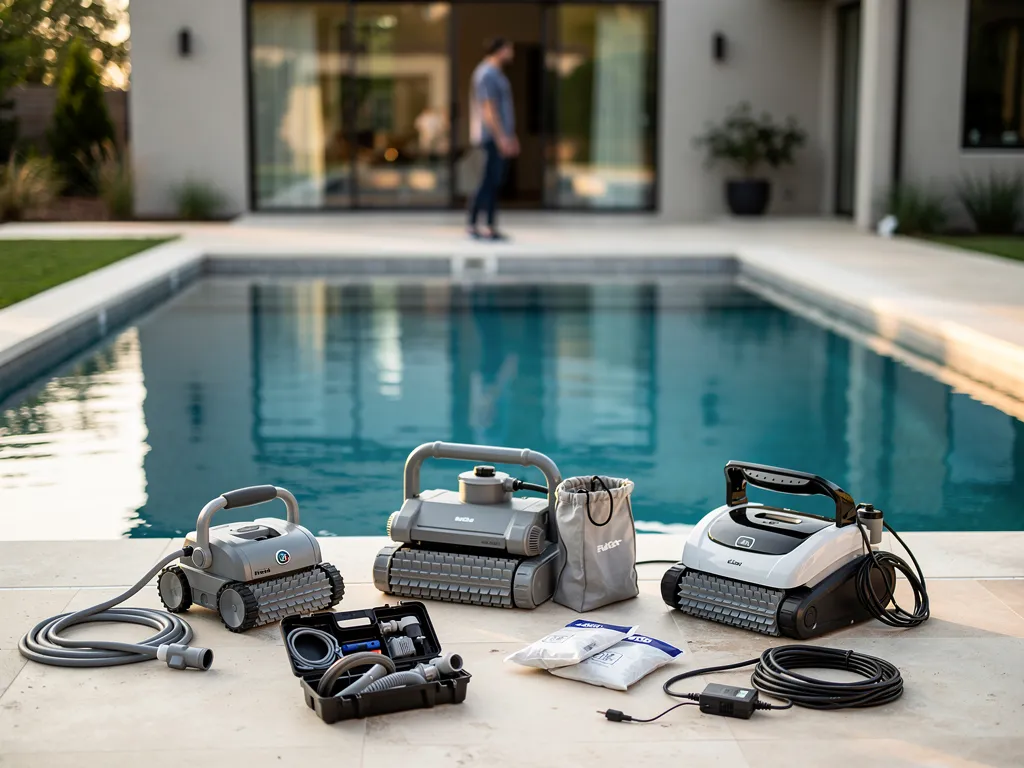
When planning your pool budget, understanding the complete cost picture of each cleaner type helps you make a decision you won’t regret later.
Suction-side cleaners cost $200-$500 upfront with minimal maintenance—just occasional hose replacements.
Pressure-side models cost $400-$800 initially and may require booster pump installation ($800-$1,500), plus annual bag replacements.
Robotic cleaners demand the highest initial investment at $800-$3,000 but have lower operating costs since they’re energy-efficient and don’t stress your filtration system.
In-floor systems represent the largest commitment at $5,000-$15,000 during construction, though they require virtually no ongoing maintenance beyond regular pool care.
Frequently Asked Questions
Can Automatic Pool Cleaners Work With Saltwater Pools in New Construction?
Yes, you’ll find that automatic pool cleaners work perfectly with saltwater pools in new construction.
You don’t need to worry about compatibility issues since most modern automatic cleaners are specifically designed to handle saltwater systems. The salt won’t damage the cleaner’s components, as manufacturers build them with corrosion-resistant materials.
You can choose suction-side, pressure-side, or robotic models, and they’ll all work effectively in your new saltwater pool without any special modifications.
Do Pool Cleaners Affect Homeowner’s Insurance Rates for New Construction Properties?
Pool cleaners typically don’t directly affect your homeowner’s insurance rates for new construction.
However, your insurer will care about the pool itself, which can increase your premiums by 10-20%.
They’re more concerned with safety features like fences, gates, and covers rather than cleaning equipment.
That said, maintaining a clean pool with proper equipment demonstrates responsible ownership, which could work in your favor during claims.
You’ll want to notify your insurer about the pool addition regardless.
Which Pool Cleaner Brands Offer the Longest Warranties for New Builds?
You’ll find Dolphin and Polaris offer the longest warranties for new builds, typically providing 3-year coverage on their premium models.
Hayward’s AquaVac series comes with a 2-year warranty, while Pentair’s Prowler models include similar protection.
For new construction, Maytronics’ Dolphin Nautilus CC Plus stands out with its extensive 3-year warranty covering motors and parts.
Always register your cleaner immediately after installation to activate the full warranty coverage on your new pool investment.
Can I Retrofit a Different Cleaner Type if I Change My Mind?
Yes, you can retrofit a different cleaner type after installation.
If you’ve got a suction-side system, you can switch to pressure-side or robotic cleaners without major modifications.
However, changing from pressure-side to suction-side might require additional plumbing work.
Robotic cleaners are the easiest retrofit since they’re self-contained and don’t need dedicated lines.
You’ll just need to guarantee your pool’s surface and shape are compatible with your new cleaner choice.
Do Automatic Cleaners Work Effectively With Infinity Edge or Perimeter Overflow Pools?
Automatic cleaners can work with infinity edge and perimeter overflow pools, but you’ll need to keep a few things in mind.
Robotic cleaners are your best bet since they’re self-contained and won’t interfere with your pool’s hydraulic balance.
Suction and pressure cleaners can work too, but you’ll need to guarantee proper plumbing design to maintain the overflow effect.
The key is working with your builder to integrate the cleaner’s system without disrupting your pool’s stunning visual appeal.
Conclusion
You’ve got four solid options for your new pool, each with distinct trade-offs. If you’re building from scratch, consider pre-plumbing for pressure-side or in-floor systems now—you’ll save thousands on retrofitting later. Robotic cleaners offer the most flexibility without any construction requirements, while suction-side models keep things simple. Weigh your budget against long-term maintenance costs, and choose what best fits your lifestyle. Your future self will thank you.