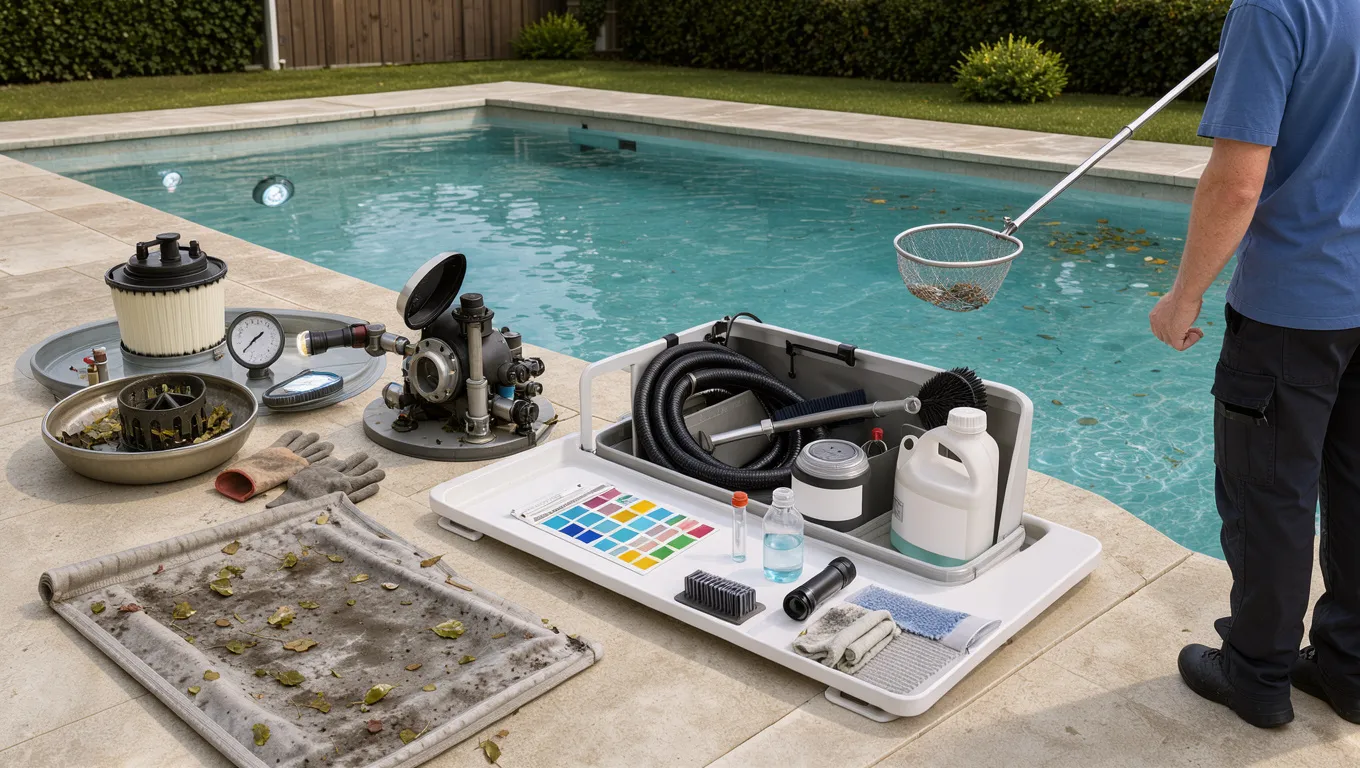
You’ll need to maintain your pool daily by skimming debris, emptying baskets, checking water levels, and testing chlorine and pH, taking about 15 minutes. Weekly tasks include vacuuming, brushing the walls, backwashing the filter, and shocking the water. Monthly, you should deep-clean your filter system and inspect the equipment for wear. Seasonally, you’ll open your pool in spring by balancing the chemistry and running filters continuously, then close it in fall by lowering the water level and adding winterizing chemicals. This guide breaks down each task in detail.
Key Takeaways
Do 15 minutes of maintenance daily, including skimming debris, emptying baskets, checking water levels, and testing chlorine and pH balance.
Complete weekly tasks such as vacuuming, brushing surfaces, backwashing filters, shocking the water, and testing alkalinity and calcium hardness.
Conduct monthly deep cleaning of filters, inspect pump baskets and equipment, check pool lights, and verify the accuracy of the pressure gauge.
Open pools in spring by cleaning covers, balancing chemistry, shocking water, reinstalling equipment, and running filters continuously for 48 hours.
Close pools in fall by lowering water levels, draining equipment, adding winterizing chemicals, installing covers, and storing removable accessories.
Your Complete Pool Maintenance Calendar: Daily to Seasonal Tasks
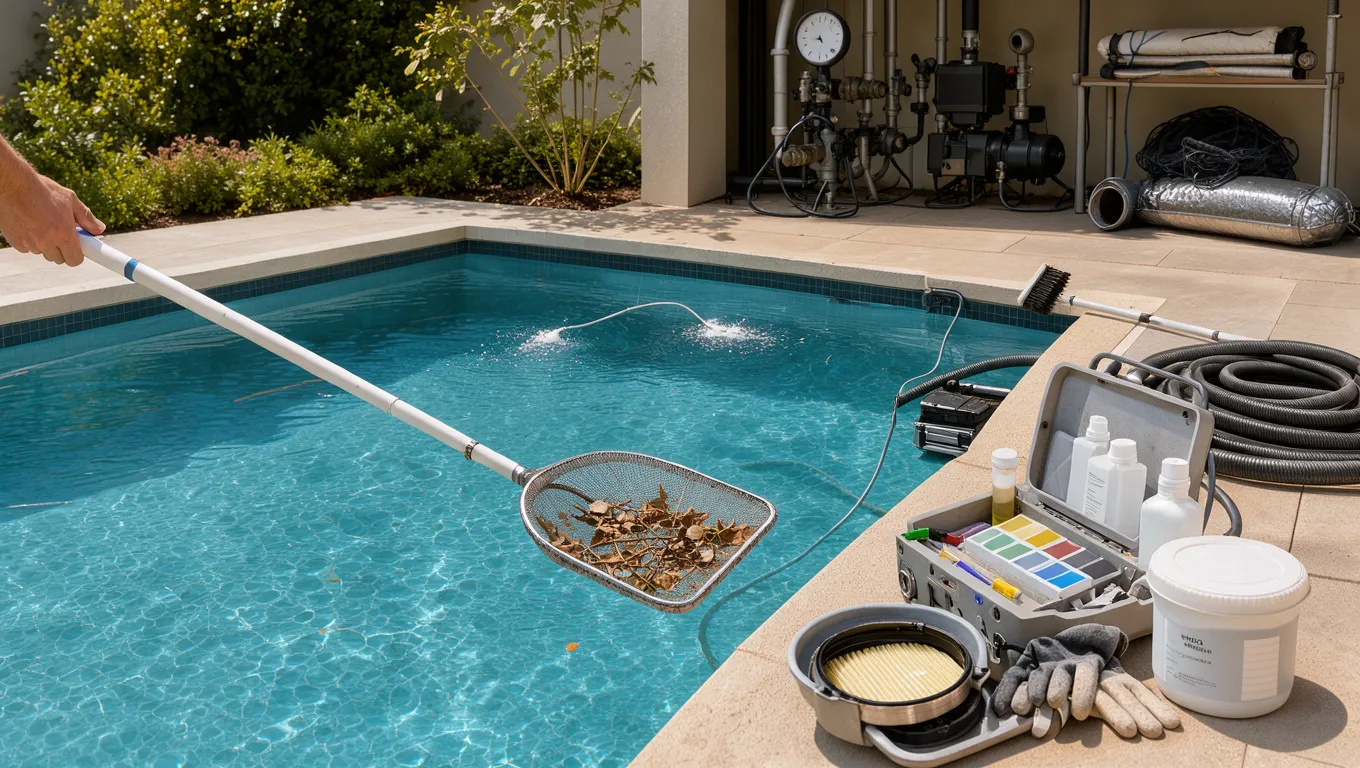
A well-maintained pool doesn’t happen by accident—it requires consistent attention across different timeframes.
You’ll need to balance daily tasks like skimming debris and checking chemical levels with weekly duties like vacuuming and brushing the walls.
Monthly maintenance includes cleaning filters and shock treatments, while seasonal tasks vary with weather conditions.
During summer, you’ll increase circulation and monitor usage more frequently.
Winter preparations involve winterizing equipment and adjusting chemical balances.
By following this structured approach, you’ll prevent costly repairs, extend your pool’s lifespan, and guarantee safe, crystal-clear water year-round.
Consistency is your key to success.
Testing Pool Chemicals: What to Check Daily vs. Weekly
Among your pool maintenance responsibilities, chemical testing is the most important factor in keeping your water safe and balanced.
Daily checks: Test chlorine levels and pH daily during swimming season. These two factors fluctuate quickly and directly impact swimmer safety and comfort.
Weekly checks: Test alkalinity, calcium hardness, and cyanuric acid once weekly. These stabilizing chemicals change gradually but markedly affect your water chemistry.
You’ll need a reliable test kit or strips for accurate readings.
Digital testers offer precision but cost more.
Keep a log of your results to spot trends and prevent problems before they escalate.
Daily and Weekly Pool Maintenance Checklist
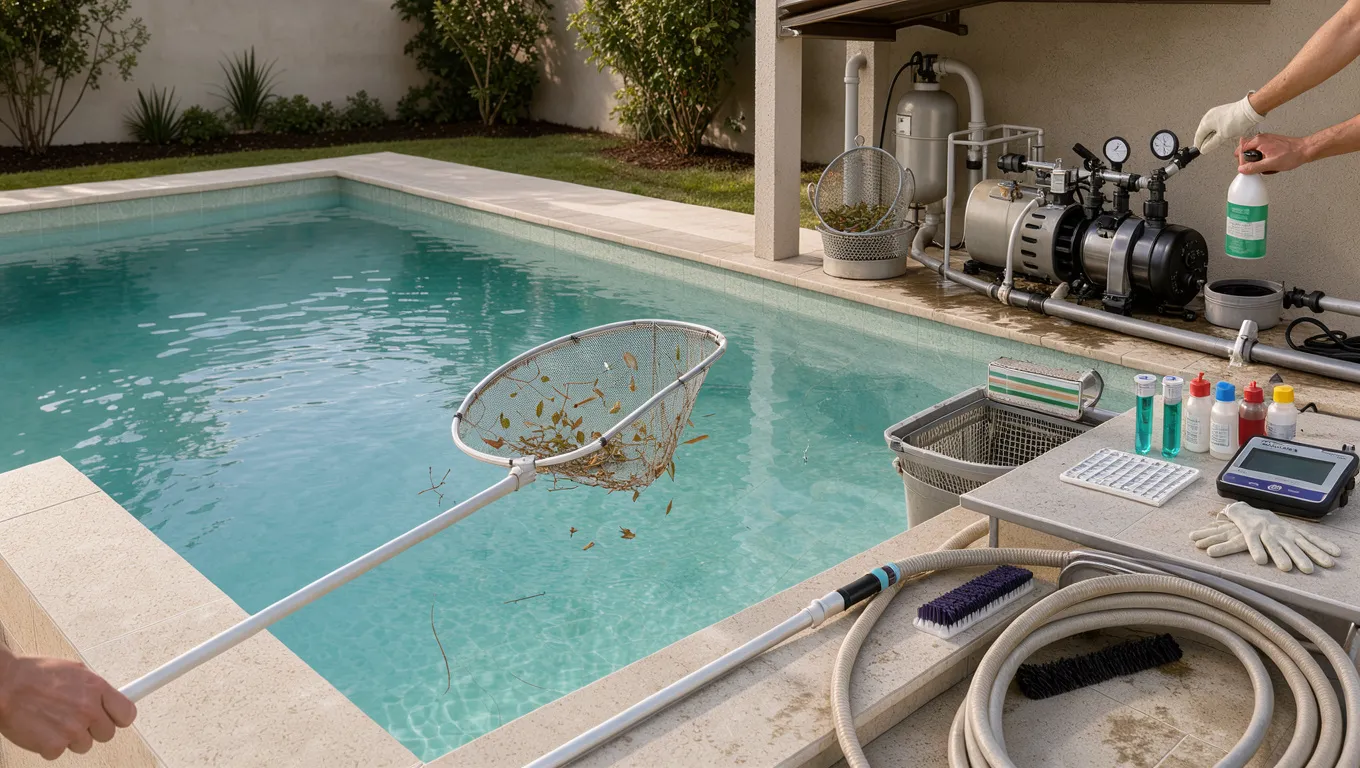
Keeping your pool pristine takes consistency, but you don’t need to spend hours on maintenance each day.
Daily Tasks: Skim debris from the surface, empty skimmer baskets, and check your water level. Test chlorine and pH levels and adjust as needed.
Weekly Tasks: Vacuum the pool floor, brush walls and stairs, backwash your filter, and shock the water.
Test alkalinity, calcium hardness, and cyanuric acid levels. Clean the pump strainer basket and inspect the equipment for leaks or unusual noises.
This routine takes roughly 15 minutes daily and two hours weekly, preventing costly repairs and ensuring sparkling water year-round.
Monthly Pool Care: Filter Cleaning and Equipment Inspections
Once a month, deep-cleaning your filter system is essential for peak pool performance.
You’ll need to backwash sand filters, hose-clean cartridge filters, or recharge DE filters with fresh diatomaceous earth. Don’t skip inspecting your pump’s strainer basket for debris buildup.
Check all equipment for wear: inspect O-rings for cracks, listen for unusual pump noises, and test your automatic timer’s accuracy.
Inspect pool lights for moisture, tighten loose fittings, and verify your pressure gauge reads correctly.
These monthly checks prevent costly repairs and considerably extend your equipment’s lifespan.
Opening and Closing Your Pool: Seasonal Maintenance Guide
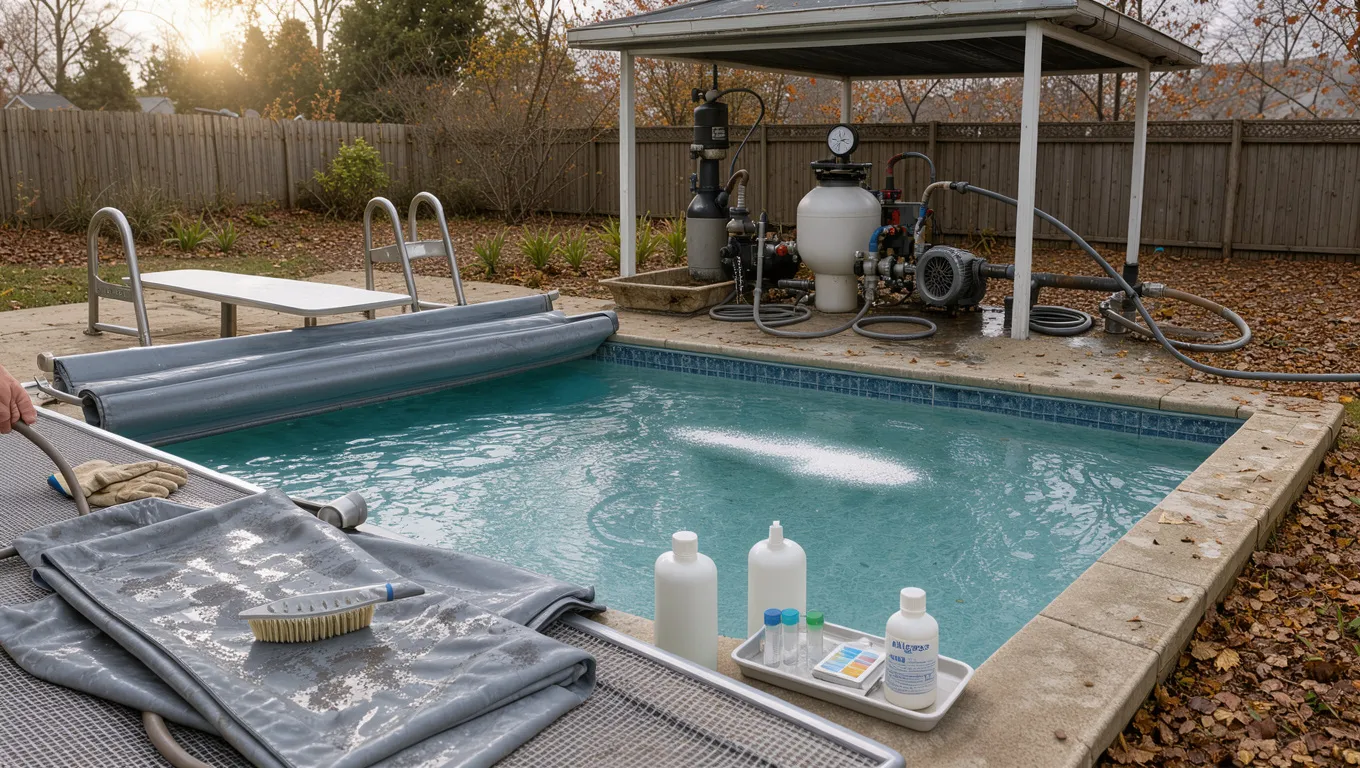
When temperatures shift and swimming season approaches or ends, you’ll face two critical tasks that determine your pool’s longevity and water quality.
Spring Opening: Remove your cover and clean it thoroughly. Balance the water chemistry immediately, then shock the pool.
Reinstall equipment like ladders and diving boards. Run your filter continuously for 24-48 hours.
Fall Closing: Lower water below skimmer level. Drain equipment and blow out plumbing lines.
Add winterizing chemicals and algaecide. Install a secure cover to prevent debris accumulation and safety hazards.
Store removable accessories in a dry location.
Frequently Asked Questions
How Much Does It Cost to Maintain a Pool Annually?
You’ll spend between $1,200 and $1,800 annually to maintain your pool. This covers chemicals ($300-$600), electricity for pumps and heaters ($400-$800), water ($100-$200), and routine supplies like filters and cleaning tools ($200-$400).
If you hire a professional service, add $960 to $1,920 per year. Your costs vary by pool size, climate, and how often you use it.
Regular maintenance prevents expensive repairs, so don’t skip routine care to save money in the short term.
Can I Use Household Products Instead of Pool Chemicals?
You shouldn’t substitute household products for pool chemicals.
Some people use baking soda or bleach, but these products aren’t formulated for pools and can damage your equipment or create unsafe water conditions.
Pool chemicals are specifically designed to maintain proper pH, alkalinity, and sanitization levels.
Using the wrong products can lead to costly repairs and health risks.
It’s worth investing in proper pool chemicals to protect both your investment and swimmers’ safety.
Should I Hire a Professional or Maintain the Pool Myself?
You can maintain your pool yourself if you’re willing to learn the basics and commit to a regular schedule. It’s cost-effective and gives you complete control.
However, you should hire a professional if you lack time, feel overwhelmed by chemical balancing, or notice complex issues like equipment malfunctions or persistent algae problems.
Many owners start DIY and call professionals seasonally for deep cleaning or repairs.
Choose what matches your comfort level and availability.
What Pool Equipment Warranty Should I Expect From Manufacturers?
Expect 1-3 years on most pool equipment warranties from manufacturers.
Pumps and filters typically come with 1-2-year warranties, while heaters often include 1-3-year coverage.
Salt systems and automation equipment usually offer 2-3 year warranties.
High-end manufacturers might extend coverage to 5 years on specific components.
Always register your equipment immediately after purchase to activate your warranty protection.
Keep your receipts and documentation, since you’ll need proof of purchase for any claims.
Does Homeowners Insurance Cover Pool Damage and Repairs?
Your homeowners’ insurance typically covers pool damage from covered perils such as fire, lightning, or falling trees, but it won’t cover damage from poor maintenance or wear and tear.
You’ll need to check your specific policy, as coverage varies widely. Many insurers exclude certain pool-related incidents or require additional liability coverage.
Review your policy’s exclusions and consider supplemental pool insurance to protect against accidents, equipment failure, and liability claims.
Conclusion
You’ve got everything you need to keep your pool sparkling year-round. Stick to your daily chemical checks, weekly skimming, and monthly deep cleans. Don’t skip those seasonal openings and closings—they’ll save you headaches and money down the road. Set phone reminders if you need to. With this maintenance calendar in your back pocket, you’ll spend less time worrying about upkeep and more time enjoying your crystal-clear oasis.