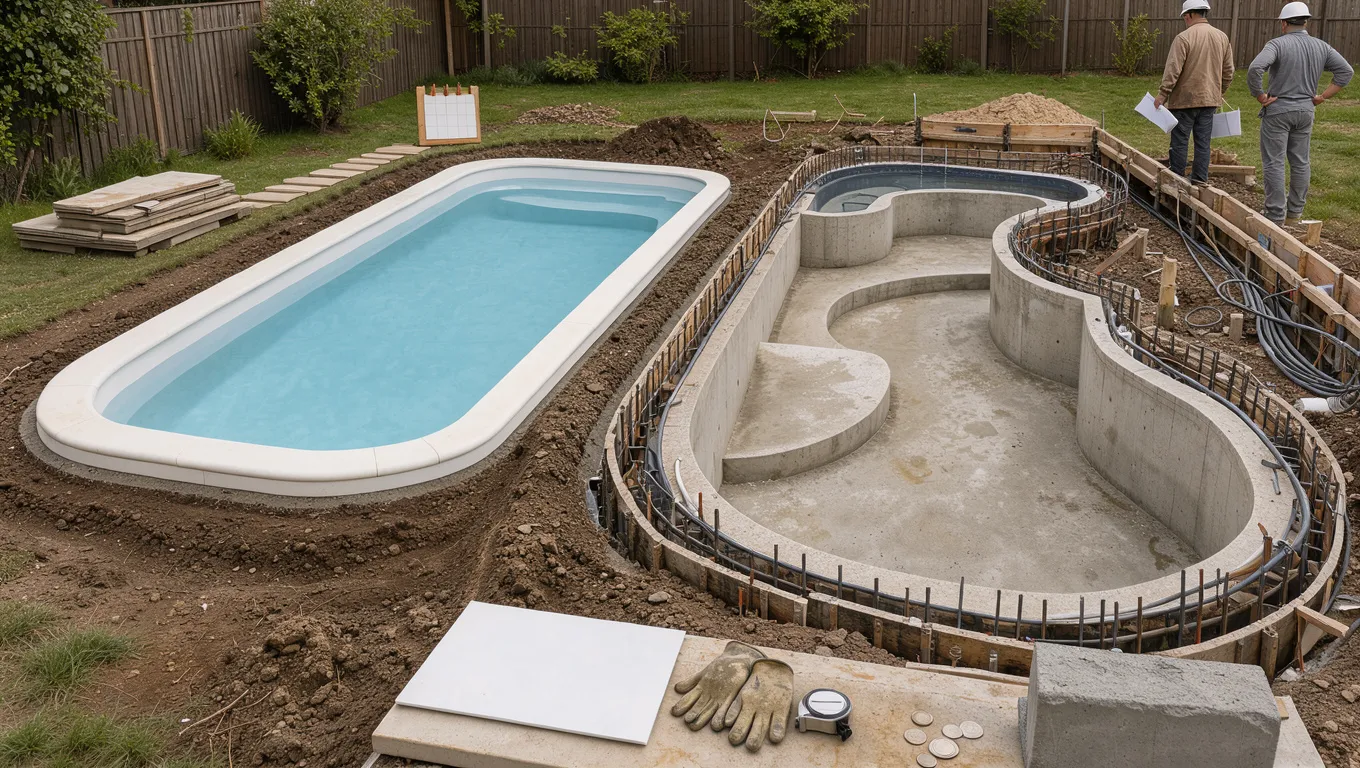
You can install fiberglass pools in just 3-5 days because they arrive as pre-manufactured shells ready for placement, while concrete pools take 8-12 weeks because you build them from scratch on-site. Fiberglass offers faster plumbing hookups (1-2 days vs. 3-5 days) and lets you swim within 2-3 weeks total, compared to 3-6 months for concrete. Concrete costs more and is less predictable but allows full design customization, while fiberglass offers fixed pricing and limited shape options. The sections below break down each installation phase so you can choose the timeline that fits your backyard project.
Key Takeaways
Fiberglass pools use pre-manufactured shells installed in 3-5 days, while concrete pools are built on-site over 8-12 weeks.
Fiberglass pools come with pre-installed plumbing fittings, allowing 1-2-day connections, compared with concrete’s custom-drilled penetrations, which take 3-5 days.
Backfilling fiberglass pools uses gravel or sand to speed completion; concrete pools use compacted soil, which extends the process.
Fiberglass pools are swim-ready 2-3 weeks after excavation, while concrete pools take 3-6 months to cure.
Concrete pools offer unlimited custom designs and dimensions; fiberglass pools are limited to pre-manufactured shapes and sizes.
What Makes Fiberglass and Concrete Pool Installations Different
When you compare fiberglass and concrete pool installations, the biggest difference is how each pool reaches your backyard.
Fiberglass pools arrive as pre-manufactured shells, built off-site in controlled factory conditions. You get a complete, one-piece structure that they truck and crane into your excavated hole.
Concrete pools, however, are constructed entirely on your property. Your installation team builds them from scratch, creating a custom framework, applying steel reinforcement, and spraying or pouring concrete directly into the excavation.
These differences in construction methods affect installation time, complexity, and the skills your contractors need.
Fiberglass Pools: Why Installation Takes Days, Not Weeks
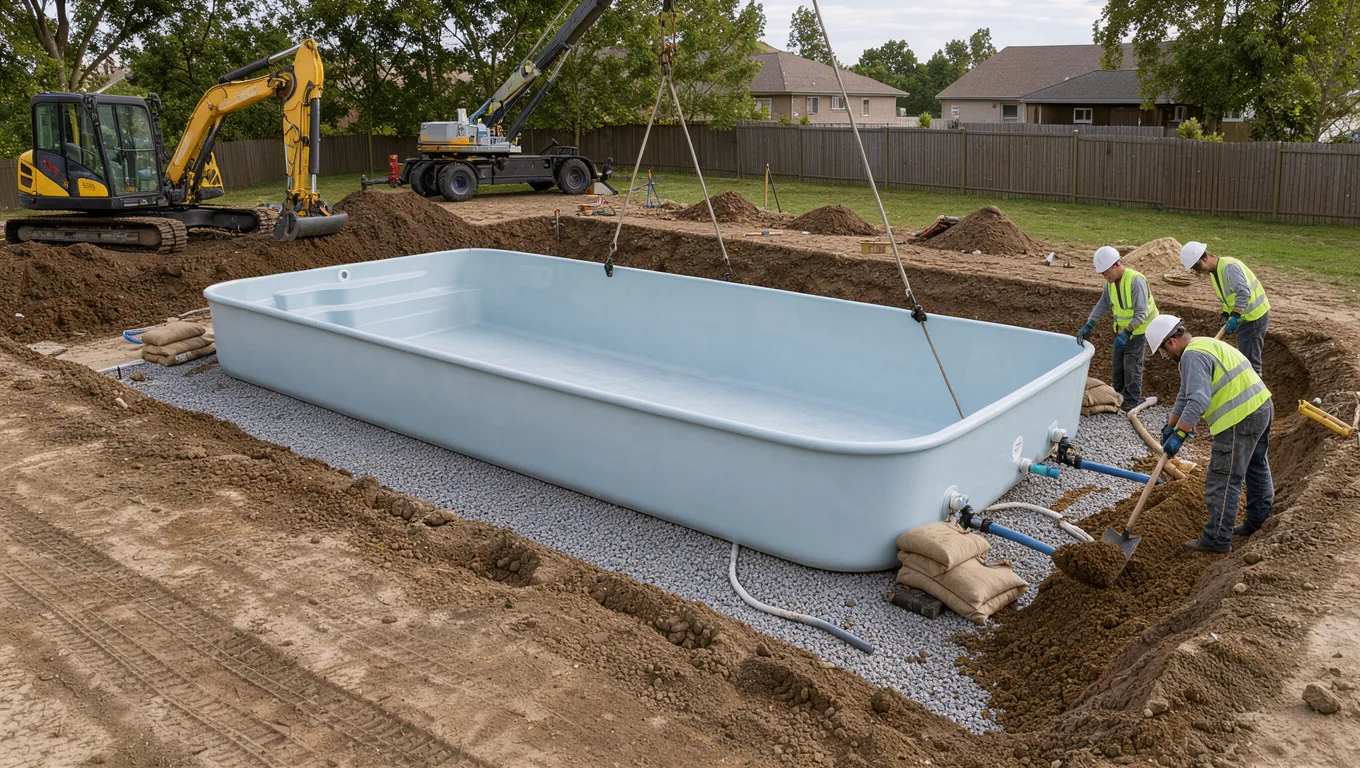
Because fiberglass pools arrive as complete shells, your installation timeline is much shorter than with concrete alternatives.
You’ll watch your backyard transform in just 3-5 days, not months.
The streamlined process includes:
Site excavation and preparation – Your contractor digs the hole and lays a stable gravel base.
Shell delivery and placement – A crane positions the pre-manufactured pool into the excavation.
Backfilling and plumbing connections – Workers secure the shell, connect equipment, and complete finishing touches.
You won’t deal with curing times, multiple contractor visits, or weather-related delays that plague concrete installations.
Concrete Pools: The Multi-Week Custom Build Process
Concrete pools require considerably more time and patience on your part.
The installation process typically spans 8-12 weeks, sometimes longer, depending on weather and complexity.
Your pool starts with excavation, followed by installing a steel rebar framework. Workers then spray or pour concrete (gunite or shotcrete) to form the shell.
After several days of curing, they’ll apply plaster or aggregate finishes.
Between each phase, you’ll face mandatory waiting periods for proper curing.
Tile work, coping installation, and deck construction add additional weeks.
While this extended timeline tests your patience, you’ll ultimately receive a completely customized pool.
Site Prep and Excavation: What’s the Same for Both
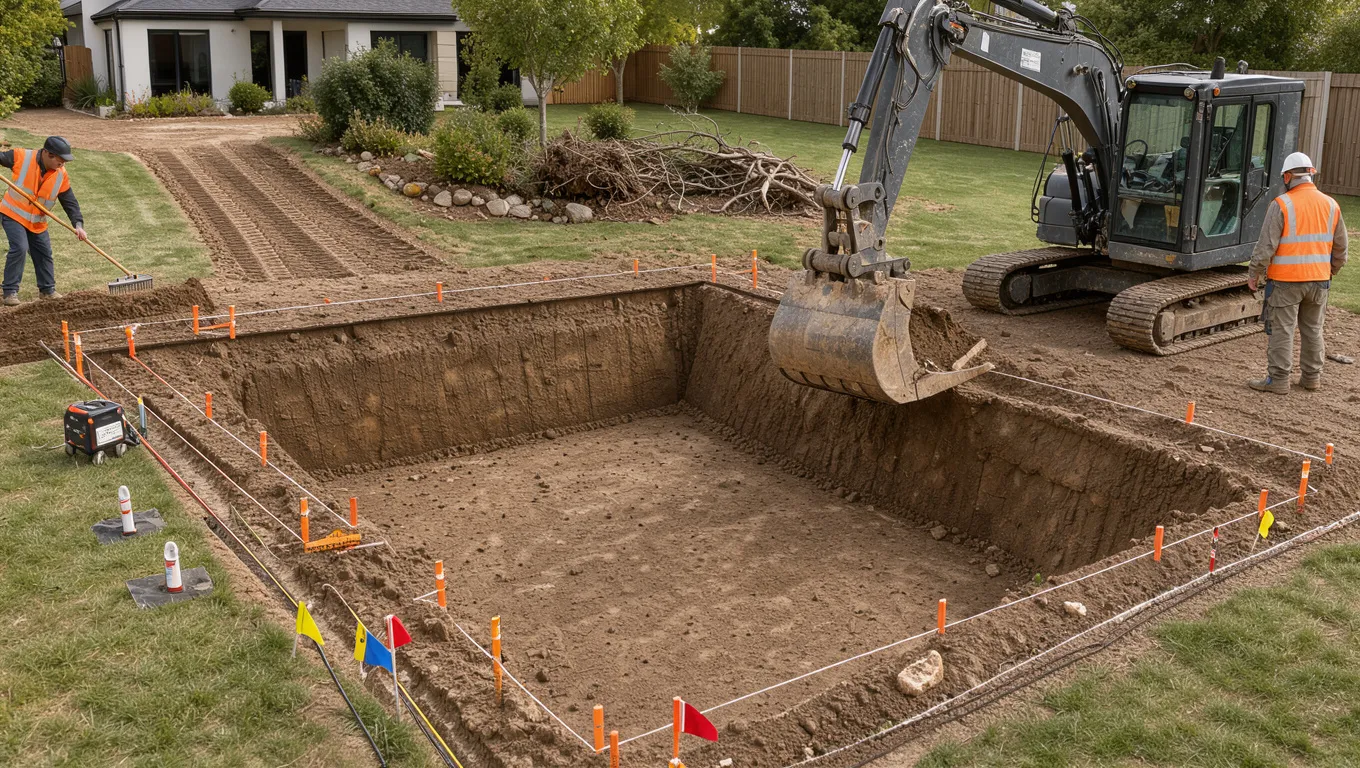
Despite their different construction methods, both fiberglass and concrete pools require the same initial groundwork on your property.
You’ll need professional excavation equipment to dig the hole, no matter which pool type you choose.
The shared site preparation includes:
Marking utilities – Locating underground gas, water, and electrical lines before digging begins
Clearing the area – Removing trees, shrubs, and obstacles from the installation zone
Grading access – Creating pathways for heavy machinery to reach your backyard
Your contractor will also level the excavation site and establish proper drainage.
These foundational steps guarantee structural integrity for both pool types.
Fiberglass Shell Delivery: Crane Placement in Hours
Once excavation wraps up, your fiberglass pool arrives as a single, pre-manufactured shell on a flatbed truck. A crane lifts the shell and carefully lowers it into the prepared hole. This process typically takes just a few hours from delivery to placement.
The crew guarantees proper positioning and leveling before securing the shell. This stage moves quickly compared to concrete construction. Weather conditions matter—wind can delay crane operations.
Once positioned, installers check alignment and begin backfilling around the shell. This installation phase is one of fiberglass pools’ biggest advantages.
Concrete Construction: Rebar, Gunite, and Curing Time
Unlike fiberglass’s quick crane placement, building a concrete pool requires multiple construction phases over several weeks.
You’ll need patience as your pool takes shape through these critical stages:
Steel rebar installation creates the structural framework, requiring precise placement and tying.
Gunite application involves spraying concrete at high pressure onto the rebar cage.
Curing takes 28 days for the concrete to reach full strength.
You can’t rush this timeline. The gunite needs consistent watering to cure properly and prevent cracks.
Weather delays often push construction past initial estimates, making concrete pools a much longer investment than fiberglass alternatives.
Plumbing and Electrical: Simpler Hookups for Fiberglass
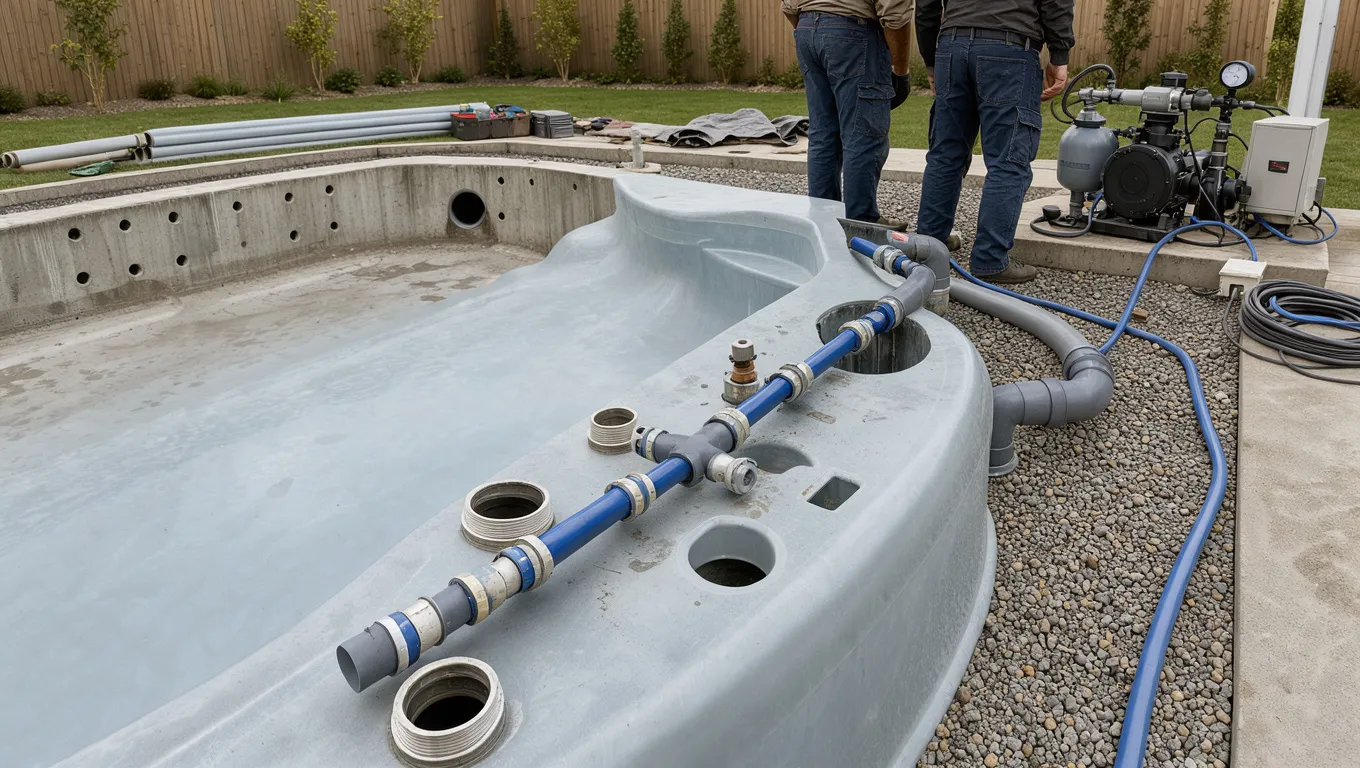
After the pool shell is set, the installation crew connects all mechanical systems to bring your pool to life.
Fiberglass pools arrive with predetermined plumbing ports, eliminating guesswork and reducing labor. The pump, filter, and heater connect faster because technicians aren’t drilling through thick concrete. Concrete pools require precise core drilling and waterproofing around each penetration, adding complexity and cost.
Backfill and Decking: Finishing Your Pool Area
With mechanical systems connected, your installation crew shifts focus to stabilizing the pool structure and creating the surrounding entertainment space.
Backfill Process:
Fiberglass pools require careful backfilling with gravel or sand around the shell to maintain the water level inside and prevent structural warping.
Concrete pools use excavated soil compacted in layers, offering simpler backfill since the structure’s already reinforced.
Both approaches demand proper drainage solutions to prevent future settling.
Decking installation follows immediately. You’ll choose materials like pavers, stamped concrete, or natural stone.
Fiberglass pools typically reach this stage within days, while concrete installations require additional curing time before the deck is finalized.
Total Timeline Compared: When You’ll Start Swimming
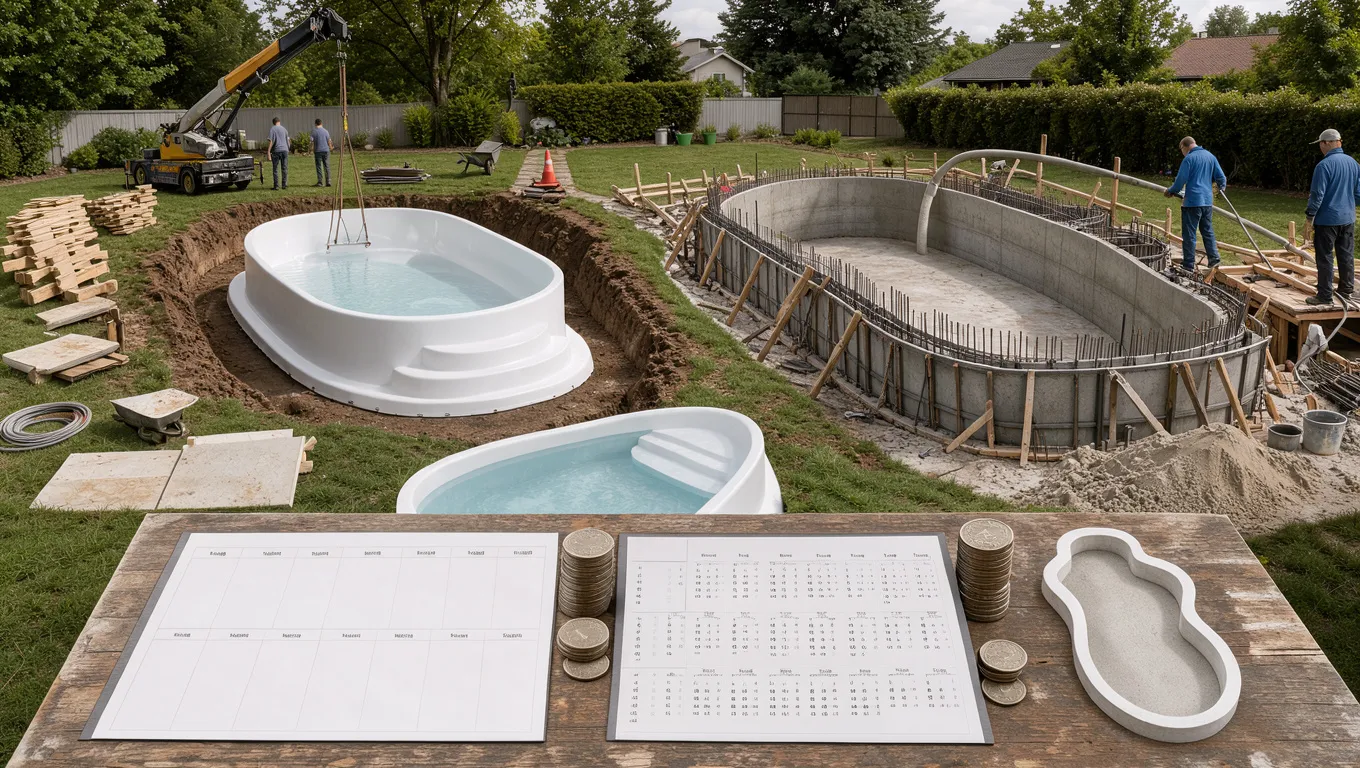
Once decking wraps up, the moment you’ve been planning for arrives—but the wait time differs dramatically between pool types.
Fiberglass pools let you start swimming about 2-3 weeks after excavation begins, since you’re installing a pre-manufactured shell that needs minimal finishing.
Concrete pools, however, demand 3-6 months from excavation to your first swim, as the construction process includes steel installation, multiple concrete applications, curing periods, plastering, and chemical balancing.
If you’re keen to plunge in quickly, fiberglass wins decisively. If you’re willing to wait for full customization, concrete’s longer timeline is worth it.
Choose Based on Timeline, Customization, and Budget
Because these two pool types differ so dramatically in installation speed, design flexibility, and cost structure, you’ll need to prioritize what matters most for your backyard project.
Consider these key factors:
Timeline urgency: Choose fiberglass if you need to swim in 3-6 weeks; concrete takes 3-6 months.
Design requirements: Select concrete for custom shapes and depths; fiberglass offers pre-manufactured shells.
Budget constraints: Fiberglass costs $45,000-$85,000 installed; concrete runs $50,000-$100,000+.
Your decision should align with your specific circumstances. If you’re planning for summer or need predictable costs, fiberglass is a strong option.
For unique designs or specific dimensions, concrete’s worth the extended timeline.
Frequently Asked Questions
Can You Convert a Fiberglass Pool to Concrete Later?
No, you can’t convert a fiberglass pool to concrete.
The fiberglass shell is a single, molded unit that’s permanently installed in the ground.
If you wanted a concrete pool instead, you’d need to remove the entire fiberglass shell, fill in the excavation, and start from scratch with a completely new concrete pool installation.
It’s fundamentally building a brand-new pool, making conversion impractical and cost-prohibitive for most homeowners.
Do Fiberglass Pools Crack in Freezing Climates?
Fiberglass pools can crack in freezing climates, but it’s relatively rare with proper maintenance.
To winterize your pool correctly, lower the water level, add antifreeze to plumbing lines, and use a winter cover.
The fiberglass shell itself is flexible and can withstand temperature changes better than concrete.
However, if water freezes inside the structure or you don’t prep it properly, you’re risking cracks and damage.
Which Pool Type Has Lower Long-Term Maintenance Costs?
You’ll spend considerably less on maintenance with a fiberglass pool.
Since the smooth, non-porous gel coat surface resists algae growth, you’ll use fewer chemicals and spend less time cleaning.
You won’t need acid washing or resurfacing like concrete pools require every 10-15 years, which costs thousands.
Your chemical costs will be about 50% lower, and you’ll avoid the expensive replastering bills that concrete pool owners face regularly.
Can Concrete Pools Be Relocated if You Move Homes?
No, you can’t relocate a concrete pool when you move.
Concrete pools are permanently built into your property. They’re constructed on-site using rebar, gunite, and plaster, making them a fixed part of your landscape.
If you’re planning to move, you’ll have to leave your concrete pool behind. It’ll become a selling feature for your home rather than something you can take with you to your next property.
Do Fiberglass Pools Fade or Discolor Over Time?
Quality fiberglass pools are designed to resist fading, but you’ll notice some color changes over time.
The gelcoat surface can fade slightly after years of UV exposure and chemical use, though modern pools use advanced UV-resistant gelcoats that minimize this.
Darker colors tend to fade more than lighter shades.
Proper water chemistry and regular maintenance will help you preserve your pool’s original appearance for decades.
Conclusion
You’ll start swimming in your fiberglass pool within 1-2 weeks, while concrete takes 3-6 months. If you’re after speed and simplicity, fiberglass wins hands down. But if you’re dreaming of custom shapes, depths, and unique features, concrete’s worth the wait. Consider your timeline—are you ready for next month or next season? Your budget matters too, since concrete typically costs more upfront. Weigh these factors carefully before you dig.