In-Ground Pool Installation Costs: 3 Budget Factors
Your inground pool’s final cost hinges on three major factors: material selection (vinyl pools start at $25,000 while concrete reaches $100,000+), property challenges like rocky terrain or limited access that can add $5,000-$15,000, and upgrades such as heaters ($2,500-$7,000) and LED lighting ($1,000-$3,000). Don’t forget long-term expenses, vinyl liners need replacement every 7-10 years at $4,000-$5,000, while concrete requires resurfacing every 10-15 years for $10,000-$20,000. Understanding these variables helps you plan accurately and avoid budget surprises down the line.
Key Takeaways
- Vinyl pools cost $25,000-$45,000, fiberglass $40,000-$85,000, and concrete $50,000-$100,000+, significantly affecting the initial budget.
- Property challenges like rocky terrain, poor drainage, and steep slopes add $3,000-$15,000 to installation costs.
- Long-term maintenance varies: vinyl needs liner replacement every 7-10 years ($4,000-$5,000), and concrete requires resurfacing every 10-15 years ($10,000-$20,000).
- Tree removal ($500-$2,000 per tree) and utility relocation ($2,000-$5,000) increase overall project expenses.
- Popular upgrades include heaters ($2,500-$7,000), LED lighting ($1,000-$3,000), and built-in spas (starting at $10,000).
Concrete, Fiberglass, or Vinyl: Which Inground Pool Costs Less?
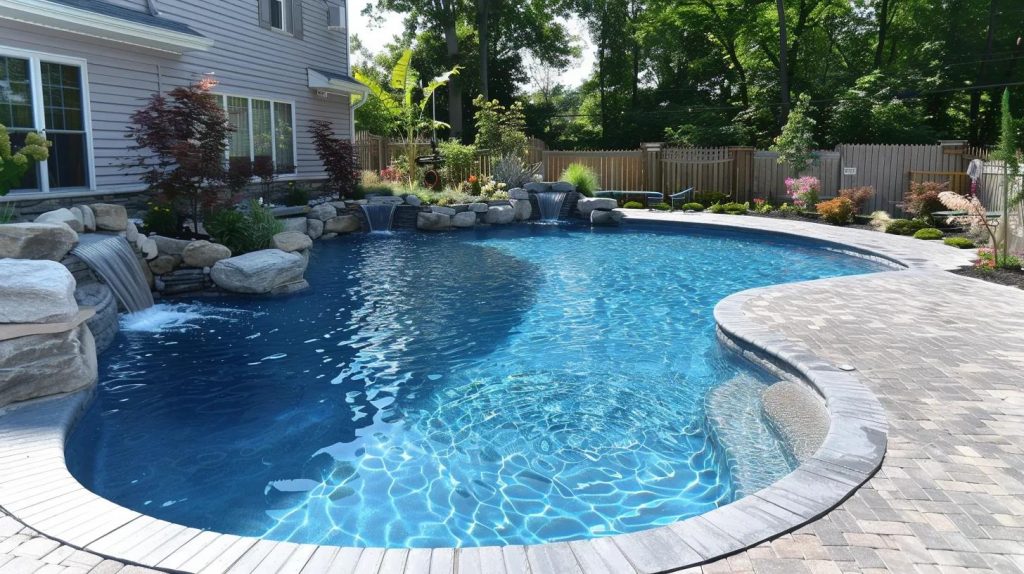
Choosing your pool material represents one of the most significant cost decisions you’ll make during installation.
Vinyl pools typically cost $25,000-$45,000, making them the most budget-friendly option. Fiberglass pools range from $40,000 to $85,000, offering a middle-ground price point with faster installation. Concrete pools command $50,000-$100,000+, representing the highest initial investment.
However, consider long-term expenses.
Vinyl liners need replacement every 7-10 years at $4,000-$5,000. Fiberglass requires minimal maintenance but limits customization. Concrete demands regular resurfacing every 10-15 years, costing $10,000-$20,000, plus higher chemical and cleaning expenses throughout its lifetime.
Why Your Property Could Add $10K to Pool Installation
Before excavators break ground, your property’s unique characteristics will greatly impact your final bill. Rocky terrain requires specialized equipment and adds $5,000 to $15,000. Poor soil drainage necessitates extensive prep work. Limited access forces hand-digging instead of machinery, tripling labor costs.
| Property Challenge | Added Cost |
|---|---|
| Rocky/hard soil | $5,000-$15,000 |
| Steep slopes | $3,000-$8,000 |
| Tight access | $2,000-$10,000 |
Distance from your home to the installation site affects plumbing and electrical runs, every additional 50 feet costs $500-$1,500. If you’re removing trees, expect $500-$2,000 per tree. Underground utilities requiring relocation can add another $2,000 to $5,000.
Heaters, Lighting, and Finishes That Double Your Budget
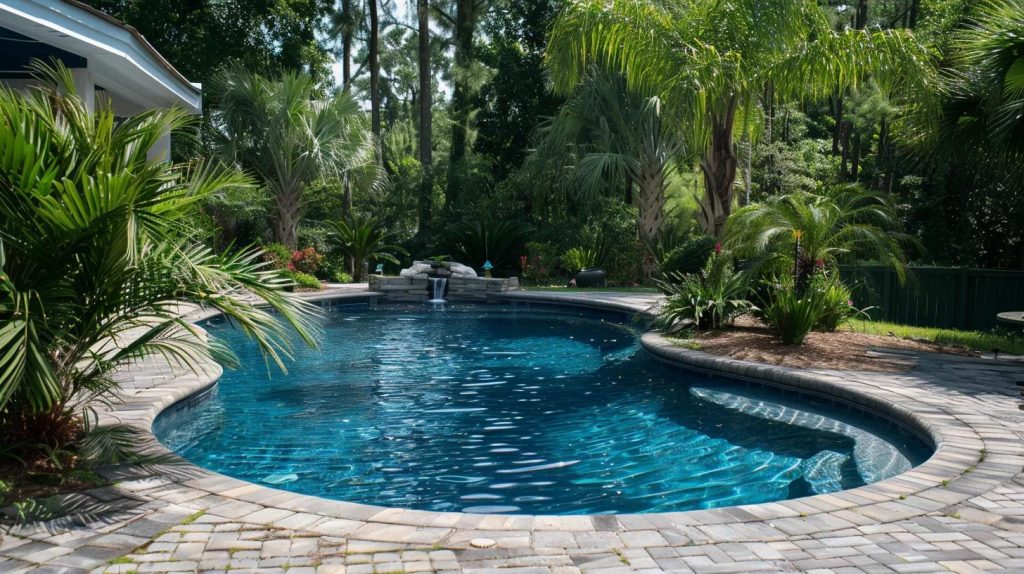
Once your pool shell is in the ground, upgrades to heating, lighting, and finishes can easily match, or exceed, your base installation costs.
Gas heaters run $2,500–$5,000, while heat pumps cost $3,000–$7,000. LED lighting systems add $1,000–$3,000, depending on complexity.
Your finish choice dramatically impacts expenses: basic plaster costs $5–$10 per square foot, aggregate finishes run $10–$20, and premium glass tiles reach $30–$80.
Salt systems add $1,500–$2,500. Waterfalls start at $1,500, while built-in spas begin around $10,000.
These enhancements transform your pool but require careful budget planning upfront.
Frequently Asked Questions
How Long Does a Typical In-Ground Pool Installation Take to Complete?
You’ll typically need 6-12 weeks for your inground pool installation, though it can vary.
The excavation and shell installation take about 1-2 weeks, while plumbing, electrical work, and decking require another 2-4 weeks.
Weather conditions, permit approvals, and your pool’s complexity can extend this timeline.
If you’re adding custom features like waterfalls or elaborate landscaping, you should expect the project to take closer to 3-4 months to complete.
Do I Need Permits for In-Ground Pool Installation in My Area?
Yes, you’ll almost certainly need permits for your inground pool installation.
Nearly all municipalities require building permits, and many also mandate electrical and plumbing permits.
You’ll need to contact your local building department to determine specific requirements for your area. They’ll outline necessary inspections, setback regulations, and safety codes you must follow.
Don’t skip this step, installing without proper permits can result in hefty fines and complications when selling your home.
What Ongoing Maintenance Costs Should I Budget for Annually?
You’ll need to budget $1,200 to $2,500 annually for basic pool maintenance. This includes chemicals ($300-$800), electricity for pumps and heaters ($300-$600), water ($100-$200), filter cleaning supplies ($100-$200), and equipment repairs ($400-$700).
If you’re hiring a professional service, expect to pay $80-$150 per month during swim season.
You’ll also want to set aside extra funds for unexpected equipment replacements, such as pumps or heaters, which can cost $400-$1,500.
Does Installing an In-Ground Pool Increase My Property Taxes?
Yes, installing an inground pool will likely increase your property taxes since it adds significant value to your home.
The exact increase depends on your local tax assessment rates and how much value the pool adds to your property.
Typically, you’ll see a 5-10% boost in your home’s assessed value, which translates to higher annual property taxes.
Contact your local tax assessor’s office for specific rates in your area.
Should I Finance My Pool or Pay Cash Upfront?
You’ll need to weigh your financial situation carefully.
If you’ve got the cash available and can pay upfront, you’ll save money on interest charges.
However, financing lets you preserve your emergency fund and spread costs over time.
Consider current interest rates, your credit score, and whether you’d earn more by investing that cash elsewhere.
If financing offers low rates, it might make sense to keep your liquidity intact.
Conclusion
You’ve explored the major cost drivers for your inground pool project, from choosing among concrete, fiberglass, and vinyl to understanding how your property’s unique features affect installation costs. Don’t forget those enticing upgrades like heaters and lighting that can quickly double your budget. Before you plunge into it, create a detailed budget that accounts for all three factors. With proper planning, you’ll make informed decisions that align your dream pool with your financial reality.