
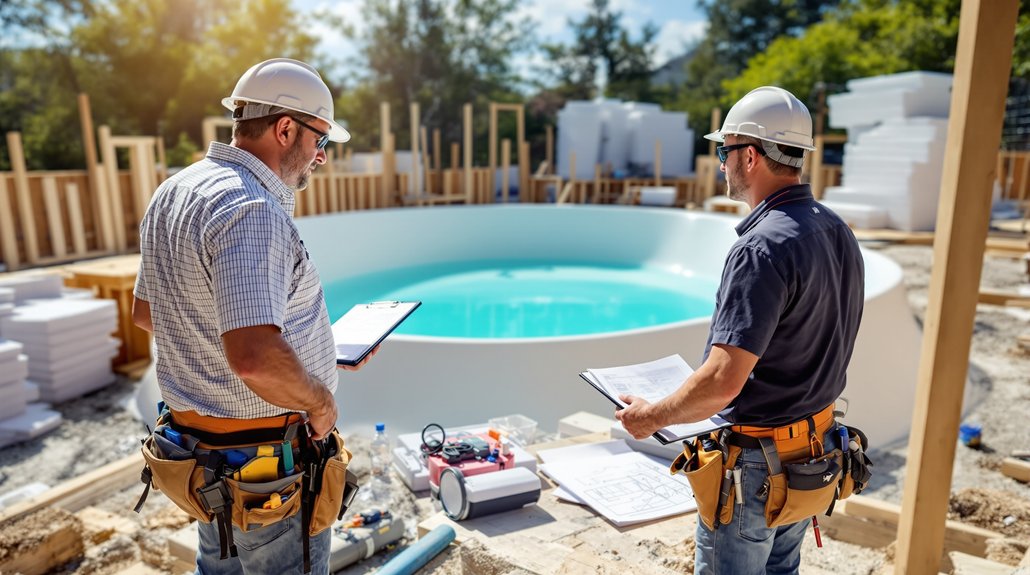
You’ll need to verify your contractor holds proper licensing, general liability insurance, and workers’ compensation coverage to protect against potential damages. Look for at least three years of fiberglass-specific experience with ten or more annual installations, and always check customer reviews across multiple platforms. Request references, inspect completed projects in person, and compare warranty coverage for both labor and materials. Confirm they use in-house crews rather than subcontractors, and verify their manufacturer certifications directly with the pool company. Understanding these critical factors will help you identify red flags and secure the right professional for your investment.
Key Takeaways
- Verify the contractor holds proper licensing, general liability insurance, and workers’ compensation to ensure accountability and protection.
- Choose contractors with at least three years of fiberglass pool experience who complete ten or more installations annually.
- Check customer reviews across multiple platforms and request a visit to completed installations for an in-person quality assessment.
- Compare warranty coverage for labor and materials, ensuring all details are provided in writing before signing contracts.
- Confirm the contractor uses in-house installation teams and holds manufacturer certifications to maintain warranty validity.
Why Fiberglass Pool Contractor Licensing and Insurance Matter
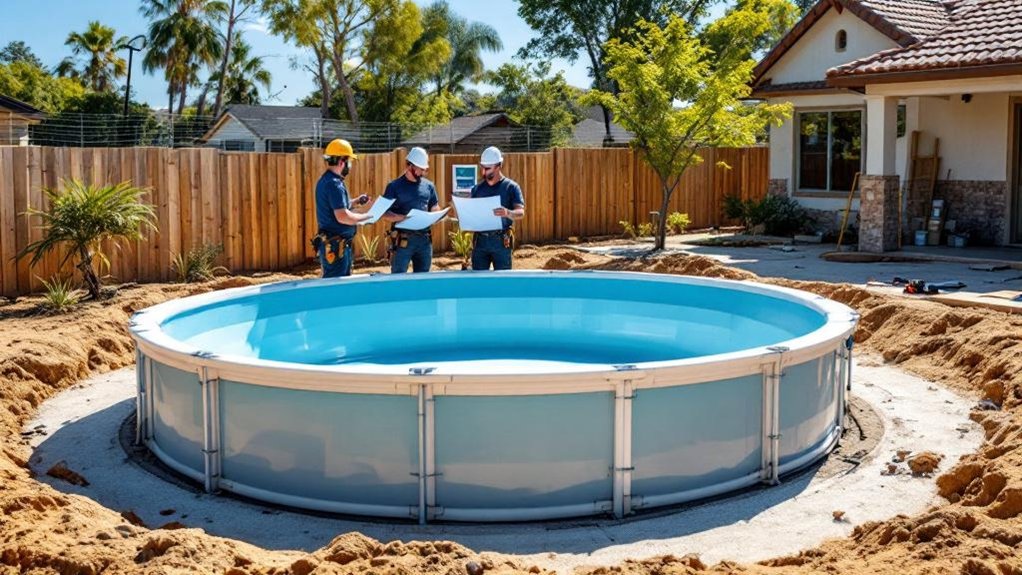
Before you sign any contract or hand over a deposit, you need to verify that your pool contractor holds proper licensing and insurance.
Licensed contractors have demonstrated they meet industry standards and local regulations. They’re accountable to licensing boards if problems arise.
Insurance protects you from liability if workers get injured on your property. It also covers damages to your home during installation.
Request certificates of both general liability and workers’ compensation insurance. Verify these documents directly with the insurance company.
Unlicensed contractors might offer lower prices, but you’ll have no recourse if they deliver poor workmanship or disappear mid-project.
How Much Fiberglass-Specific Experience Does Your Contractor Need?
How much experience should your contractor have with fiberglass pools specifically? Look for at least three years of dedicated fiberglass pool installationexperience.
This material differs greatly from concrete or vinyl pools, requiring specialized knowledge of delivery logistics, foundation preparation, and proper backfilling techniques.
Ask contractors how many fiberglass pools they’ve installed annually. A reliable installer should complete at least ten projects per year.
Request references from recent fiberglass installations and examine their portfolio photos.
Beware of contractors who primarily install other pool types but claim they’ll “figure out” fiberglass.
You’ll avoid costly mistakes by choosing someone who’s mastered this specific craft.
Check Past Customer Reviews and Inspect Completed Installations
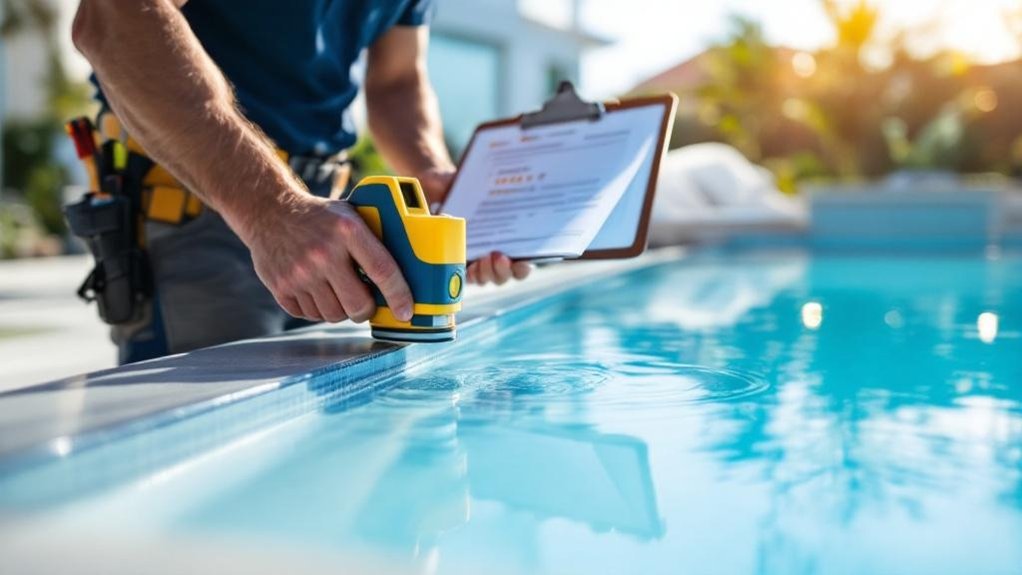
Experience alone won’t tell you everything about a contractor’s quality of work. You’ll need to verify their track record through customer reviews on Google, Facebook, and the Better Business Bureau.
Look for patterns in feedback, both positive and negative, about communication, timeline adherence, and post-installation support.
Don’t stop at online research. Ask contractors for references and actually contact previous customers.
Better yet, request to see completed installations in person. This lets you inspect the workmanship quality of the workmanship, including coping details, backfill work, and deck integration.
Photos can be misleading; nothing beats seeing their work firsthand before making your decision.
Compare Fiberglass Pool Warranty Coverage: Labor and Materials
A thorough warranty protects your investment, but not all warranties offer the same coverage.
Compare what each contractor offers for both labor and materials. The manufacturer typically warrants the fiberglass shell for 25-35 years, but labor coverage varies greatly between contractors. Some provide lifetime labor warranties, while others offer just one year.
Examine what’s covered: Does it include plumbing, electrical, and structural work? Are there exclusions?
Request warranty details in writing before signing any contract. A contractor confident in their workmanship won’t hesitate to provide extensive labor protection in addition to the manufacturer’s material warranty.
Red Flags in Contractor Communication and Timeline Promises
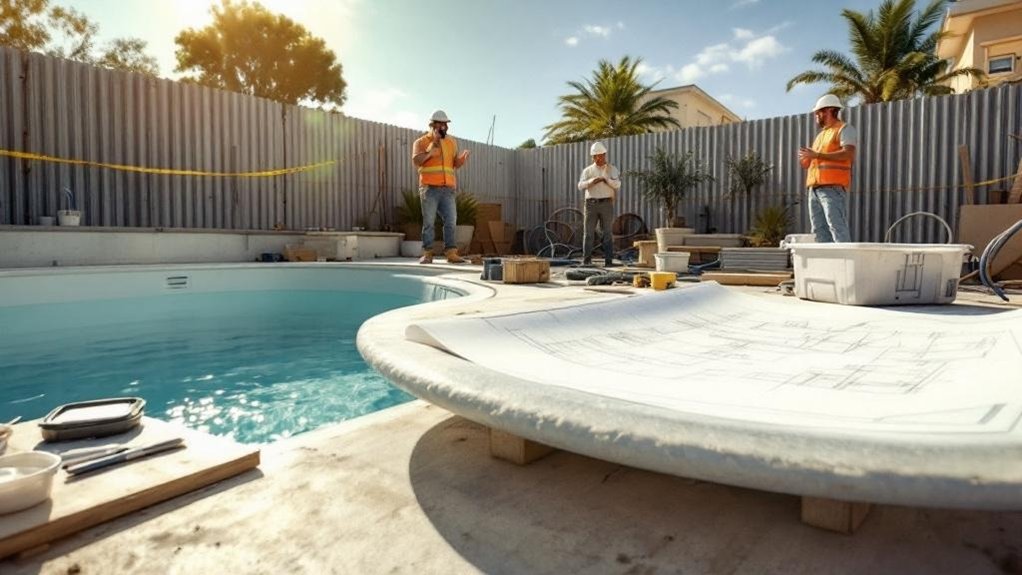
While evaluating contractors, pay close attention to how they communicate and what they promise about project timelines.
Warning signs include:
- Vague or unrealistic completion dates – Professional installers provide specific schedules accounting for weather, permits, and inspections.
- Pressure tactics demanding immediate decisions – Legitimate contractors give you time to review contracts and compare options.
- Poor responsiveness to questions – Delays in returning calls or avoiding direct answers suggest future communication problems.
- Guarantees that seem too good to be true – Extremely fast installation promises often indicate corners will be cut.
Trust contractors who communicate transparently and set realistic expectations.
What Should a Detailed Fiberglass Pool Estimate Include?
Before you sign any agreement, obtain detailed written estimates that break down every aspect of your pool installation.
A thorough estimate should itemize the pool shell cost, excavation expenses, plumbing, electrical work, decking materials, and equipment like pumps and filters. It must specify the pool model, dimensions, and color you’ve selected.
Look for clear payment schedules tied to project milestones, not arbitrary dates. The estimate should include permits, inspections, and warranty details.
Any exclusions or potential additional costs must be explicitly stated. Vague line items like “miscellaneous fees” indicate an incomplete or potentially deceptive estimate.
Do They Use In-House Installation Crews or Subcontractors?
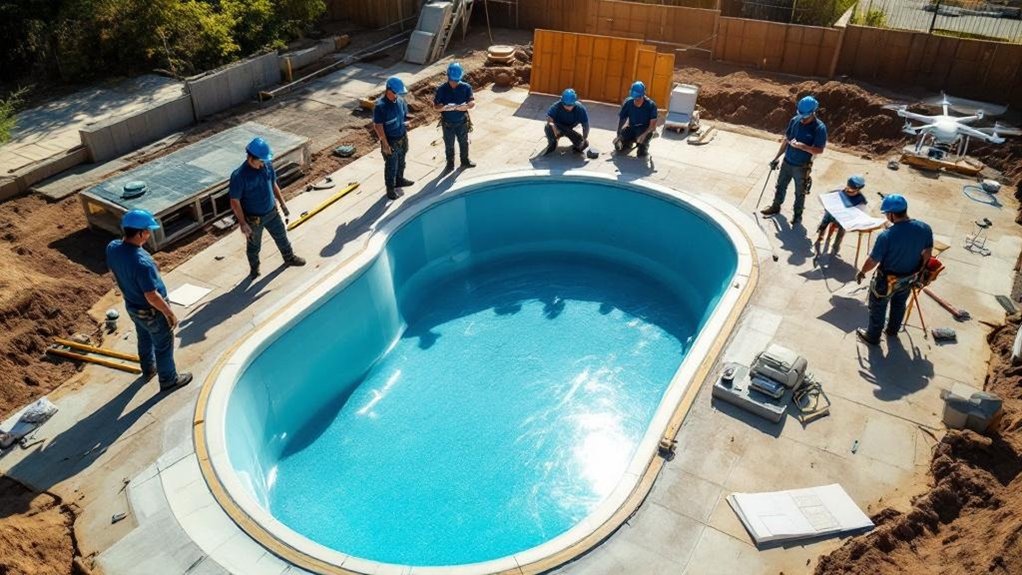
Once you’ve reviewed the estimate details, determine who’ll actually perform the work on your property. Ask whether the contractor uses in-house crews or subcontractors, as this impacts accountability and quality control.
In-house installation teams offer several advantages:
- Direct oversight: The contractor maintains complete control over workmanship standards.
- Better communication: You’ll work with the same company throughout the project.
- Clear accountability: One point of contact handles all concerns.
- Consistent quality: Trained crews follow established protocols.
While subcontractors aren’t inherently problematic, in-house teams typically deliver more reliable results and streamline project management.
How to Verify Manufacturer Certifications for Fiberglass Pool Installers
Why does manufacturer certification matter when selecting a pool installer? Certified installers receive proper training, follow installation protocols, and maintain your warranty validity. You’ll want to verify credentials directly.
Contact the manufacturer and request confirmation of your contractor’s certification status. Ask for their certification number and expiration date. Check the manufacturer’s website for a directory of certified installers.
Request documentation before signing contracts.
Frequently Asked Questions
What Permits Are Required for Installing a Fiberglass Pool in My Area?
You’ll need to check with your local building department to determine specific permit requirements for your area.
Typically, you’ll require a building permit, an electrical permit for pool equipment, and possibly a fencing permit to meet safety codes.
Some jurisdictions also need plumbing and grading permits.
Don’t assume your contractor will handle this, verify they’re obtaining all necessary permits.
Contact your city or county building office directly, as requirements vary widely across municipalities and can affect your project timeline.
How Long Does the Typical Fiberglass Pool Installation Process Take?
You’ll typically need 3-7 days for the actual fiberglass pool installation once your contractor begins work.
However, you should plan for 4-8 weeks in total, including permit approval, site preparation, and finishing touches such as decking and landscaping.
Weather conditions and your contractor’s schedule can affect this timeline.
If you’re adding custom features or dealing with complex site conditions, you’ll want to allow extra time for your project.
Can I Finance My Fiberglass Pool Installation Project?
Yes, you can finance your fiberglass pool installation project through various options.
Many pool contractors offer in-house financing plans or work with third-party lenders who specialize in home improvement loans.
You’ll also find options through personal loans, home equity loans, or home equity lines of credit (HELOCs).
It’s worth comparing interest rates, terms, and monthly payments across lenders to find the best financing solution for your budget and financial situation.
What Site Preparation Work Is Needed Before Pool Installation Begins?
You’ll need to clear and level the installation area to ensure proper access for heavy equipment.
Your contractor must excavate the hole to exact specifications, install drainage systems, and create a stable base with gravel or sand.
They’ll also need to arrange for utility location services to mark underground lines.
Additionally, you’ll want to secure necessary permits and verify there’s adequate space for crane access and equipment maneuvering around your property.
Do Fiberglass Pools Work in Areas With Freezing Winter Temperatures?
Yes, fiberglass pools work excellently in freeze-thaw climates.
You’ll find they’re actually more durable than concrete pools in cold weather because their flexible structure withstands ground movement from freezing temperatures.
However, you must guarantee proper winterization, lower the water level, add antifreeze to plumbing lines, and use a quality winter cover.
Your contractor should understand local freeze depths and install the pool with adequate backfill drainage to prevent frost heave damage.
Conclusion
Choosing the right fiberglass pool contractor isn’t just about finding the lowest price, it’s about protecting your investment. You’ll want someone who’s licensed, experienced, and transparent about their process. Don’t rush this decision. Take time to verify credentials, read reviews, and compare detailed estimates. Ask tough questions about warranties, installation crews, and timelines. When you’ve done your homework, you’ll find a contractor who’ll deliver the backyard oasis you’re dreaming of.