Pool Installation: 10 Tips Comparing Materials and Methods
You’ll spend $40,000-$100,000+ on pool installation, with concrete pools costing the most ($50,000-$100,000+) but offering unlimited design options, and fiberglass pools ($40,000-$85,000) requiring minimal maintenance. Your soil type and climate heavily influence which material works best. Clay can crack concrete, and a high water table can lift a fiberglass shell if the site is not dewatered properly. Factor in permits ($500-$2,000), installation timelines (3-12 weeks), and ongoing maintenance costs, which vary considerably by material, to make an informed decision that suits your property’s unique conditions.
Key Takeaways
Concrete pools cost $50,000-$100,000+ and require the most maintenance, while fiberglass pools run $40,000-$85,000 with far lower upkeep.
Fiberglass pools install fastest in 3-6 weeks and require minimal upkeep compared to concrete’s 8-12 week installation timeline.
Soil composition and climate significantly impact material choice; clay cracks concrete, while sandy soil provides better drainage.
Building permits ($500-$2,000) and inspections are required for all in-ground pool installations to ensure code compliance.
Concrete pools require 3-4 hours of weekly maintenance, whereas fiberglass pools require only 1-2 hours and have lower annual costs.
Which Pool Material Fits Your Budget: Concrete or Fiberglass?
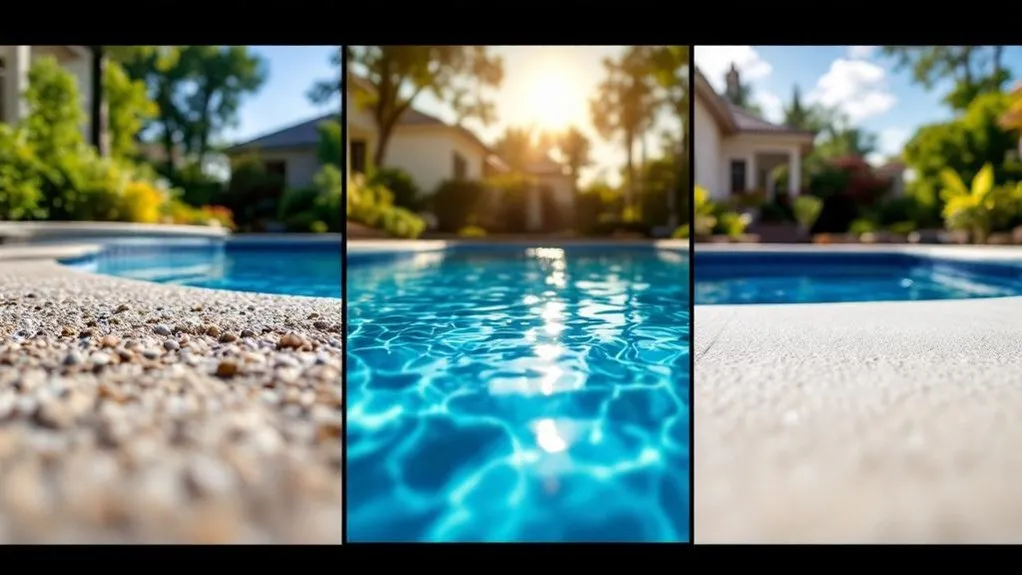
When you’re planning a pool installation, your choice of material will greatly impact both upfront costs and long-term expenses.
Concrete pools offer unlimited customization but cost $50,000-$100,000+ and require higher maintenance. They require resurfacing every 10-15 years, adding significant expense.
Fiberglass pools range from $40,000 to $85,000, with quick installation and minimal upkeep, though you’re limited to pre-manufactured shapes.
Consider your budget, desired aesthetics, and willingness to perform ongoing maintenance when selecting your pool material.
Will Your Soil or Climate Rule Out Certain Pool Materials?
Your soil composition and local climate can make or break your pool installation before you even break ground.
Clay soil expands and contracts with moisture, which threatens concrete pools with cracks, while a fiberglass shell flexes with that movement. Sandy soil drains well, accommodating a wide range of materials. Rocky terrain increases excavation costs considerably.
Freeze-thaw cycles in northern climates can damage concrete pools without proper winterization, while fiberglass flexes with temperature changes.
Areas with high water tables can lift a fiberglass shell out of position if the site is not dewatered during installation.
Always conduct a soil test and consult local installers about climate-specific challenges.
What Permits and Approvals Do You Need to Install a Pool?
Before digging into your backyard, you’ll need to navigate a maze of legal requirements that vary by location. Most municipalities require building permits that verify your pool meets safety codes and zoning regulations.
You’ll likely need approval from your homeowners association if applicable. Schedule inspections for electrical work, plumbing, and final construction. Some areas mandate setback distances from property lines, easements, and utilities.
Contact your local building department early, as permit processing takes weeks or months. Fence requirements for child safety are nearly universal.
Budget $500-$2,000 for permits and associated fees, depending on your pool’s complexity.
Fiberglass vs. Concrete: Installation Costs and Timelines Compared
The choice between fiberglass and concrete affects both your wallet and your timeline. A fiberglass pool runs $40,000-$85,000 and has you swimming in 3-6 weeks. A concrete pool runs $50,000-$100,000+ and takes 8-12 weeks to build. Consider what matters most to you:
Your budget and patience determine which pool delivers the backyard oasis you’re craving.
What You’ll Actually Spend Over 10 Years by Pool Type
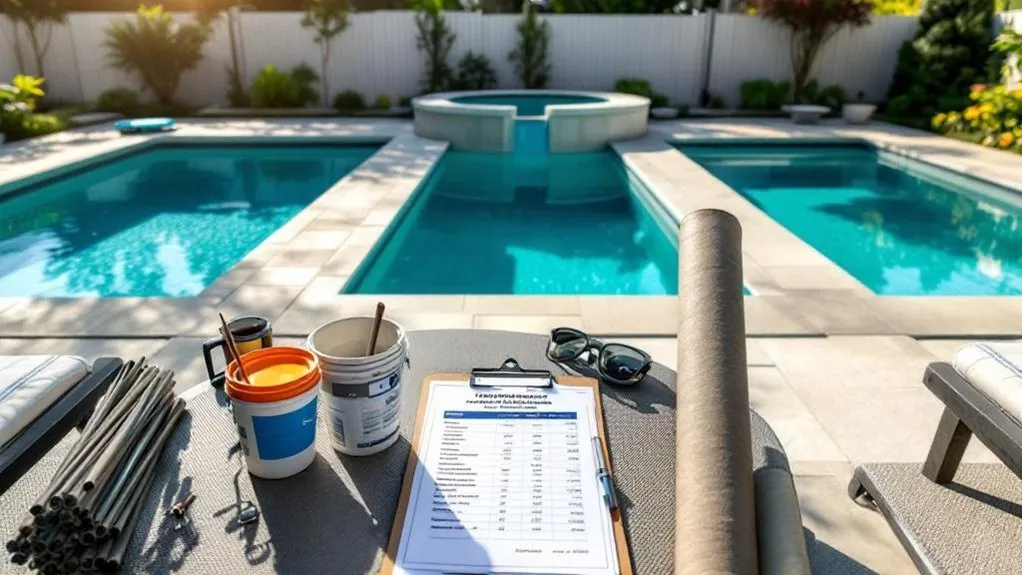
Sticker shock at purchase is only the beginning of pool ownership costs. Over ten years, you’ll spend considerably more on maintenance, chemicals, utilities, and repairs.
Fiberglass pools cost $40,000-$60,000 and require minimal maintenance. Concrete pools reach $60,000-$100,000 due to resurfacing requirements and higher chemical costs.
Energy-efficient equipment reduces long-term expenses. You’ll also face potential insurance increases and property tax adjustments that affect your overall investment.
Which Pool Materials Hold Up Best in Harsh Weather?
Climate extremes test pool materials differently, and choosing the wrong one for your region can lead to costly repairs or premature replacement.
Cold climates: Fiberglass handles freeze-thaw cycles best since it flexes without cracking.
Concrete’s porous nature makes it vulnerable to ice damage and surface degradation.
Hot, sunny regions: Concrete withstands intense UV exposure, and modern fiberglass gelcoats resist fading.
Coastal areas: Fiberglass resists saltwater corrosion better than concrete, which requires frequent acid washing and resurfacing.
Fiberglass: Superior temperature flexibility
Concrete: Best UV resistance
How Much Design Freedom Do You Get With Each Pool Type?
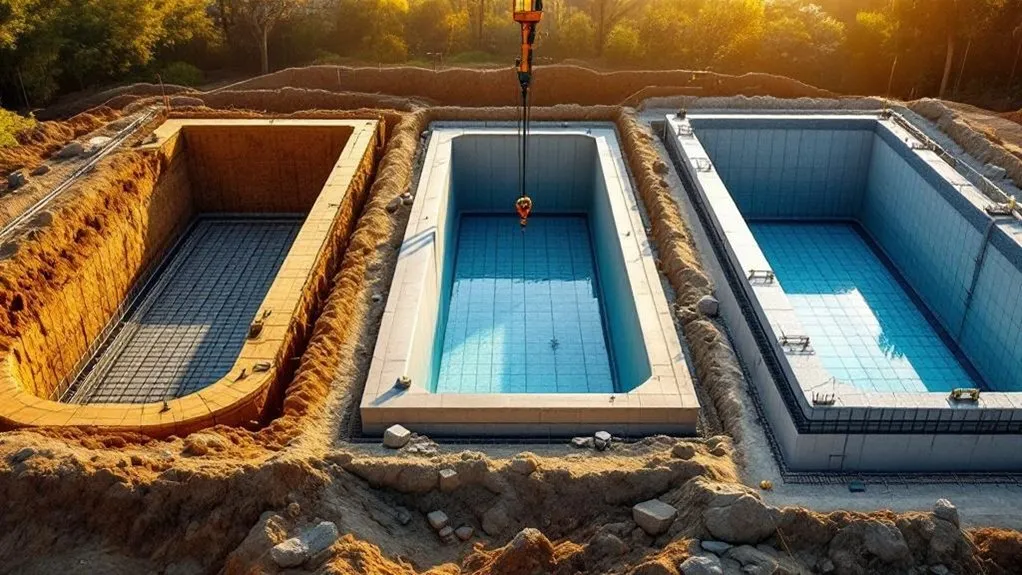
Your pool’s shape, depth, and features depend heavily on which material you choose, with each option imposing different creative limitations.
Concrete offers unlimited design possibilities. You’ll create custom shapes, depths, and built-in features like tanning ledges or beach entries.
Fiberglass restricts you to pre-manufactured shell designs, though you’ll find dozens of shapes and sizes available.
If you’re seeking unique water features, vanishing edges, or irregular contours, concrete’s your best choice.
For quicker installation with a proven shape, fiberglass works perfectly.
How Long Does Each Pool Type Take From Breaking Ground to Swimming?
Once you’ve settled on a design that fits your vision, installation timelines become the next major consideration.
Different pool types require varying construction periods that’ll impact your planning:
Fiberglass pools install fastest, typically taking 3-6 weeks from excavation to completion.
Concrete pools require the longest commitment, 8-12 weeks, due to curing requirements and custom finishing.
Weather conditions, permit delays, and site complications can considerably extend these timeframes.
Weekly Maintenance: Time and Cost Requirements by Material
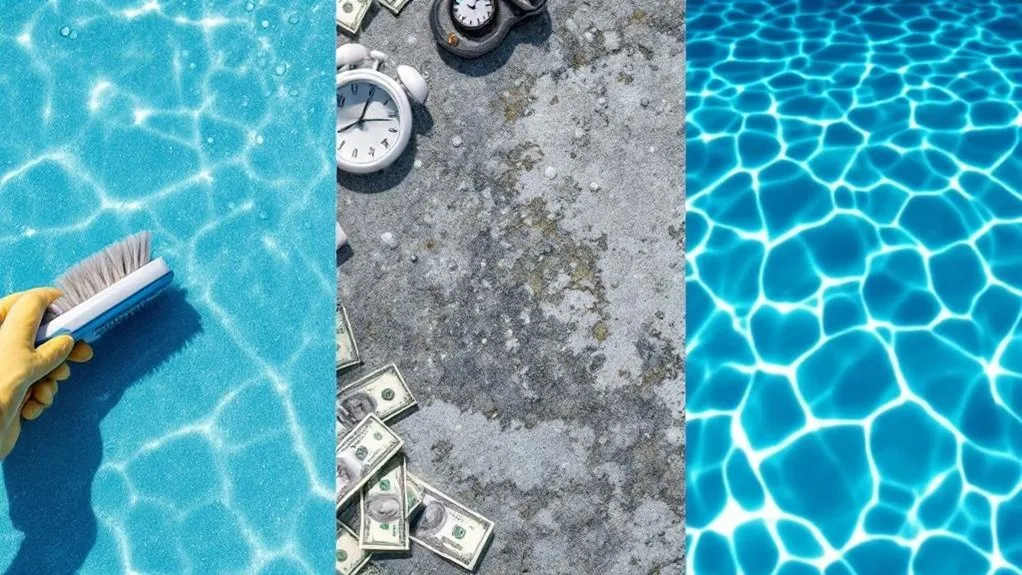
While installation costs grab most of the attention during pool planning, ongoing maintenance expenses often catch owners off guard. You’ll spend different amounts of time and money depending on your pool’s material.
Concrete demands the most attention. You’ll brush walls, balance chemicals frequently, and acid-wash periodically. Fiberglass requires minimal effort because its smooth surface resists algae growth.
Do Pools Increase Home Value, and Which Types Add the Most?
Beyond the ongoing costs of pool ownership, most homeowners want to know if their investment will pay off when it’s time to sell.
Pools typically add 5-8% to your home’s value, but returns vary considerably by location and type.
The highest-value pools include:
Saltwater systems: lower maintenance appeals to buyers
Gunite/concrete pools: premium construction attracts higher offers
Smart-enabled features: automation increases modern appeal
Energy-efficient equipment: reduces a buyer’s operating concerns
Climate matters most.
Warm-weather markets yield better returns, while cold regions often see minimal value gains or even declines.
Frequently Asked Questions
Can I Install a Pool Myself, or Do I Need Professionals?
An inground pool is not a do-it-yourself project.
You’ll need professionals for inground pools since they require excavation, plumbing, electrical work, and proper permits.
Attempting the work yourself risks costly mistakes, failed inspections, and code violations.
If you’re not experienced with construction, plumbing, or electrical systems, it’s safer to hire licensed contractors.
They’ll guarantee your pool meets local codes and functions properly for years to come.
What Safety Features Are Required or Recommended for Residential Pools?
You’ll need proper barriers like a fence at least four feet high with self-closing, self-latching gates.
Install pool alarms that detect surface disturbances, and consider adding door alarms if your house has direct pool access.
Anti-entrapment drain covers are mandatory to prevent accidents.
You should also add safety equipment, such as ring buoys, reaching poles, and a first-aid kit, nearby.
Motion sensors and pool covers provide extra protection, especially if you’ve got young children.
How Deep Should My Pool Be for Diving?
You’ll need a minimum depth of 9 feet for safe diving, though many experts recommend 10-12 feet for ideal safety.
If you’re installing a diving board, you’ll want even deeper water, at least 12 feet beneath the board’s end.
However, consider that deeper pools cost more to build and maintain.
If diving isn’t essential, you can opt for a shallower design that’s more versatile for swimming and games.
What Heating Options Exist for Extending My Swimming Season?
You’ve got several heating options to extend your season.
Gas heaters warm water quickly but cost more to operate.
Electric heat pumps are energy-efficient in moderate climates.
Solar heating is long-term, eco-friendly, and budget-friendly, though it requires roof space.
You can also use solar covers to retain heat overnight.
If you’re in a cold climate, consider combining methods, such as pairing solar with a backup gas heater for year-round performance.
Do I Need Special Insurance Coverage After Installing a Pool?
Yes, you’ll need to update your homeowner’s insurance after installing a pool.
Most policies require additional liability coverage since pools greatly increase your risk exposure. Contact your insurance agent immediately to discuss increased liability limits, typically $300,000 to $500,000.
You’ll also need coverage for the pool structure itself, equipment, and accessories.
Some insurers may require safety features such as fencing, alarms, or covers before they’ll provide coverage, so check the requirements beforehand.
Conclusion
You’ve weighed the costs, timelines, and maintenance demands of concrete and fiberglass pools. You’ve considered your soil, climate, and design preferences. Now it’s time to decide which pool fits your lifestyle and budget. Don’t rush this choice. You’ll live with it for decades. Get multiple quotes, verify contractor credentials, and secure all permits before breaking ground. Your backyard oasis is within reach when you’re properly informed.