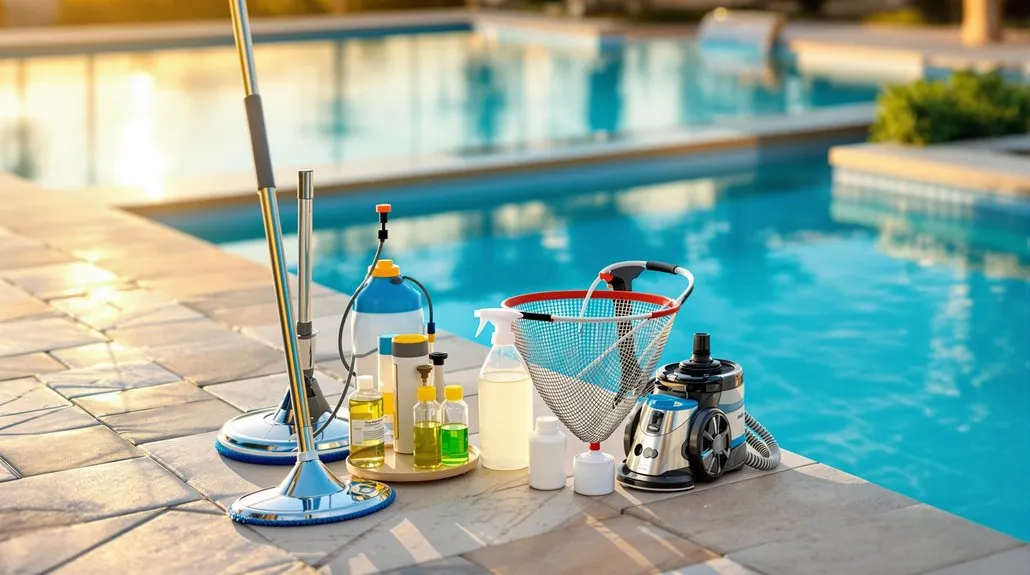
Your new pool needs three essential maintenance schedules: daily tasks (15 minutes of skimming debris, testing pH and chlorine levels, and running circulation for eight hours), weekly care (brushing surfaces, vacuuming thoroughly, and adjusting chemical balance), and monthly deep maintenance (cleaning filters, inspecting equipment, and checking calcium hardness). You’ll prevent costly repairs by establishing this consistent routine from day one, as proactive care guarantees water clarity and extends your pool’s lifespan. The fundamentals below will transform you into a confident pool owner.
Key Takeaways
Daily maintenance requires 15 minutes: skim debris, test pH and chlorine levels, run circulation eight hours, and check skimmer baskets.
Weekly care involves testing alkalinity and calcium, brushing all surfaces, vacuuming the floor, and cleaning pump and skimmer baskets.
Monthly tasks include deep-cleaning filters, inspecting equipment for wear, testing stabilizer levels, and examining surfaces for damage.
Consistent routines prevent costly repairs, maintain water clarity, ensure structural integrity, and extend equipment lifespan.
Balanced water chemistry requires pH between 7.4-7.6, chlorine at 1-3 ppm, and gradual chemical adjustments during weekly maintenance.
Daily Pool Maintenance: Skimming, Testing, and Circulation Checks
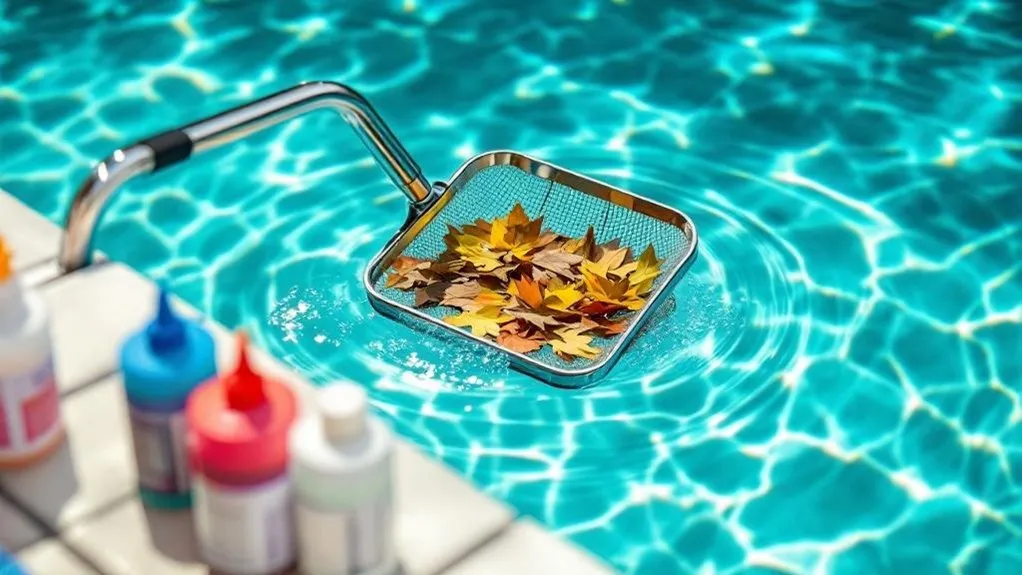
When you first fill your pool, establishing a consistent daily routine becomes the foundation of effective water maintenance.
Start each morning by skimming surface debris like leaves and insects before they sink. Test your water’s pH and chlorine levels using test strips, aiming for 7.4-7.6 pH and 1-3 ppm chlorine.
Run your circulation system at least eight hours daily to prevent stagnant water and algae growth. Check your skimmer baskets and remove accumulated debris to maintain proper flow.
These simple tasks take fifteen minutes but prevent costly problems. Consistency matters more than perfection when you’re learning the fundamentals of pool care.
Weekly Pool Care: Chemical Balancing, Brushing, and Vacuuming
Your pool needs deeper attention once a week to maintain water clarity and structural integrity.
Test and adjust alkalinity, pH, and calcium hardness levels using a thorough test kit. Add necessary chemicals gradually, allowing circulation between additions.
Brush all pool surfaces systematically, including walls, steps, and hard-to-reach corners where algae accumulates.
Work from the shallow to the deep end, pushing debris toward the main drain.
Vacuum the pool floor thoroughly, overlapping each pass to capture settled dirt and particles.
For manual vacuuming, move slowly to prevent stirring up debris.
Clean the skimmer and pump baskets afterward to maintain peak filtration efficiency.
Monthly Pool Tasks: Filter Cleaning, Equipment Checks, and Deep Maintenance
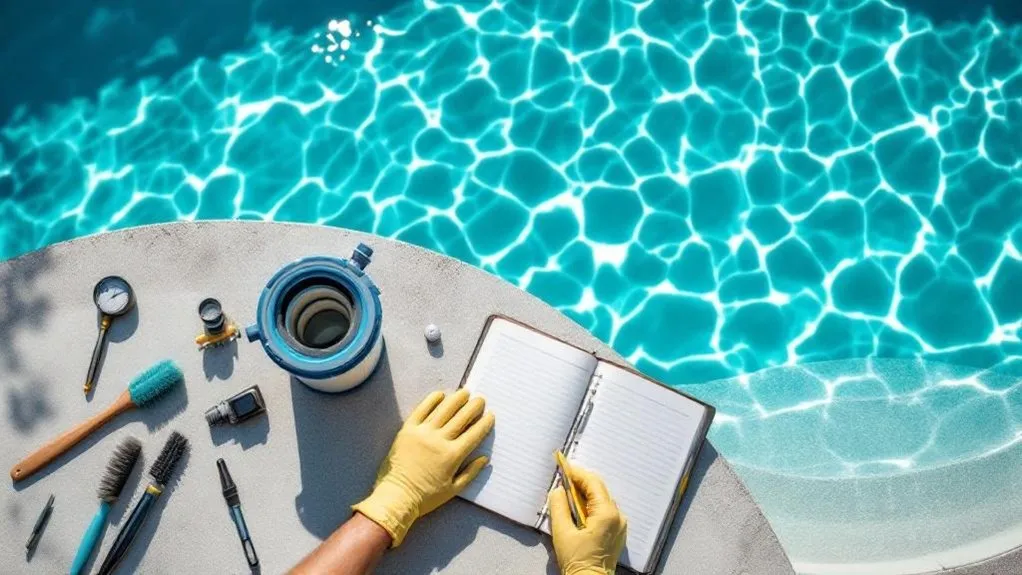
Each month brings maintenance tasks beyond your regular routine, supporting equipment longevity and system performance.
You’ll need to deep-clean your filter system, inspect all equipment for wear, and perform thorough water testing. These proactive steps prevent costly repairs and guarantee peak pool function.
Remove and clean filter cartridges or backwash sand filters to restore proper flow rates
Inspect pump baskets, O-rings, and seals for cracks, deterioration, or debris buildup
Test calcium hardness and stabilizer levels since they change slowly over time
Examine pool surfaces for cracks, stains, or tile damage requiring attention
Lubricate moving parts on equipment to prevent premature wear
Frequently Asked Questions
How Does Seasonal Weather Affect My New Pool’s Maintenance Schedule?
Seasonal weather dramatically impacts your pool maintenance routine.
In summer, you’ll need to test water chemistry more often, run your filter longer, and add chemicals weekly because of increased use and UV exposure.
In winter, you’ll reduce filtration time, lower chemical treatments, and possibly winterize your pool depending on your climate.
Spring requires intensive cleaning and rebalancing, while fall demands extra skimming to remove falling leaves and debris before temperatures drop.
When Should I Drain and Refill My Pool Completely?
Drain and refill your pool every 3-5 years, or when total dissolved solids (TDS) exceed 2,500 ppm.
If you notice cloudy water that chemicals can’t fix, persistent algae problems, or excessive calcium buildup, it’s time to drain completely.
Always check your pool’s manufacturer guidelines first, and consider doing this during mild weather.
Never drain your pool during extreme heat or when the water table’s high, as it’ll damage the structure.
Should I Hire a Professional or Maintain My New Pool Myself?
You can maintain your new pool yourself if you’re willing to learn the basics and stay consistent with testing, cleaning, and balancing chemicals.
It’ll save you money and give you better control over your pool’s condition.
However, if you’re short on time, uncomfortable handling chemicals, or dealing with complex equipment issues, hiring a professional is worth it.
Many pool owners start DIY and call pros for seasonal openings, closings, or repairs.
How Much Does Annual Pool Maintenance Typically Cost for New Pools?
You’ll typically spend $1,200 to $2,400 annually for professional pool maintenance on a new pool.
If you’re handling it yourself, expect $500 to $1,000 yearly for chemicals, cleaning supplies, and equipment.
Your costs depend on pool size, type, and location.
New pools often require less maintenance initially since equipment is fresh and surfaces haven’t accumulated buildup.
However, you’ll still need regular chemical testing, cleaning, and seasonal preparations to keep everything running smoothly.
What Maintenance Records Should I Keep for Warranty Purposes?
Keep detailed receipts for all chemical purchases, equipment repairs, and professional service calls.
Document your water chemistry test results weekly, including pH, chlorine, and alkalinity levels.
Take dated photos of your pool’s condition regularly.
Save all invoices from pool store visits and contractor work.
Store warranty cards and installation documents together.
This paperwork proves you’ve maintained your pool properly, which protects your warranty coverage if equipment fails or structural issues arise.
Conclusion
You’ve got everything you need to keep your pool crystal clear year-round. Stick to your daily skimming and testing, don’t skip those weekly chemical checks and cleaning sessions, and you’ll prevent most problems before they start. Set reminders for your monthly deep maintenance tasks, and you’ll save money on costly repairs later. These simple routines will keep your new pool swim-ready and looking great.