You’ll extend your fiberglass pool’s lifespan beyond 30 years by testing water chemistry weekly, maintaining pH between 7.2 and 7.6, and keeping chlorine at 1-3 ppm. Brush the surface weekly with soft-bristled tools to prevent algae, and clean your filter system monthly when pressure rises 8-10 PSI above normal. Keep water at mid-skimmer level year-round, and inspect pumps and seals monthly for leaks. Address small cracks immediately with fiberglass repair kits to prevent costly damage. The following sections break down each pool maintenance task in detail.
Key Takeaways
- Test water chemistry weekly, maintaining pH between 7.2 and 7.6, alkalinity at 80-120 ppm, and calcium hardness at 200-400 ppm.
- Brush pool walls and floor weekly with soft-bristled brushes, focusing on low-circulation areas to prevent algae buildup.
- Keep water level at mid-skimmer height year-round, never dropping below 75% full to avoid structural stress and damage.
- Clean filter systems monthly by backwashing or rinsing, and check pressure gauges for 8-10 PSI increases above normal.
- Repair small cracks and scratches immediately using fiberglass repair kits to prevent escalation and costly structural damage.
Balance Your Fiberglass Pool Water Chemistry Weekly
Every fiberglass pool owner needs to test their water chemistry at least once a week to prevent costly problems down the road.
You’ll want to maintain pH levels between 7.2 and 7.6, alkalinity at 80-120 ppm, and calcium hardness around 200-400 ppm. These balanced levels protect your pool’s gelcoat surface from staining and deterioration.
Test your chlorine weekly and keep it between 1 and 3 ppm for proper sanitization. Use a reliable test kit or strips to measure chemical levels accurately.
When adjustments are needed, add chemicals gradually and retest after several hours. Consistent monitoring prevents algae growth, cloudy water, and equipment damage.
Test and Adjust pH and Chlorine Levels Consistently
While weekly testing covers the basics, your pH and chlorine levels can fluctuate daily based on weather, usage, and debris. Test these parameters 2-3 times weekly during peak swimming season. You’ll maintain ideal water quality and prevent costly problems.
| Parameter | Ideal Range | Action Required |
|---|---|---|
| pH Level | 7.2-7.6 | Add pH increaser/decreaser |
| Free Chlorine | 1-3 ppm | Add chlorine tablets/shock |
| Total Alkalinity | 80-120 ppm | Adjust with sodium bicarbonate |
| Calcium Hardness | 200-400 ppm | Add calcium chloride if low |
| Cyanuric Acid | 30-50 ppm | Add stabilizer as needed |
Keep a testing log to track trends and anticipate adjustments.
Brush Your Fiberglass Pool Surface With Soft Tools
Unlike traditional concrete pools, fiberglass pools require gentler cleaning methods to preserve their smooth gel-coat finish.
You’ll need soft-bristled brushes specifically designed for fiberglass pools, never use wire brushes or abrasive tools that’ll damage the protective coating.
Brush your pool walls and floor weekly to prevent algae buildup and remove debris.
Focus on areas with poor circulation, like steps, corners, and behind ladders, where contaminants accumulate. Use gentle, overlapping strokes rather than aggressive scrubbing.
Regular brushing maintains your pool’s appearance and prevents stubborn stains from developing.
It’s simple preventive maintenance that protects your investment and keeps the surface pristine for years.
Maintain Proper Water Levels Through All Seasons
Because fiberglass pools can flex with ground movement, you’ll need to maintain consistent water levels throughout the year to prevent structural damage.
| Season | Recommended Water Level | Key Consideration |
|---|---|---|
| Spring | Mid-skimmer | Compensate for rainfall |
| Summer | Mid-skimmer | Monitor evaporation rates |
| Fall | Mid-skimmer | Account for leaf debris |
| Winter | Below the skimmer opening | Prevent freeze damage |
| Year-round | Never below 75% full | Avoid structural stress |
Keep water at mid-skimmer height during active seasons. Never let levels drop below three-quarters full, as empty pools risk popping from groundwater pressure. Monitor weekly and adjust accordingly.
Clean Your Filter System Monthly to Maximize Flow
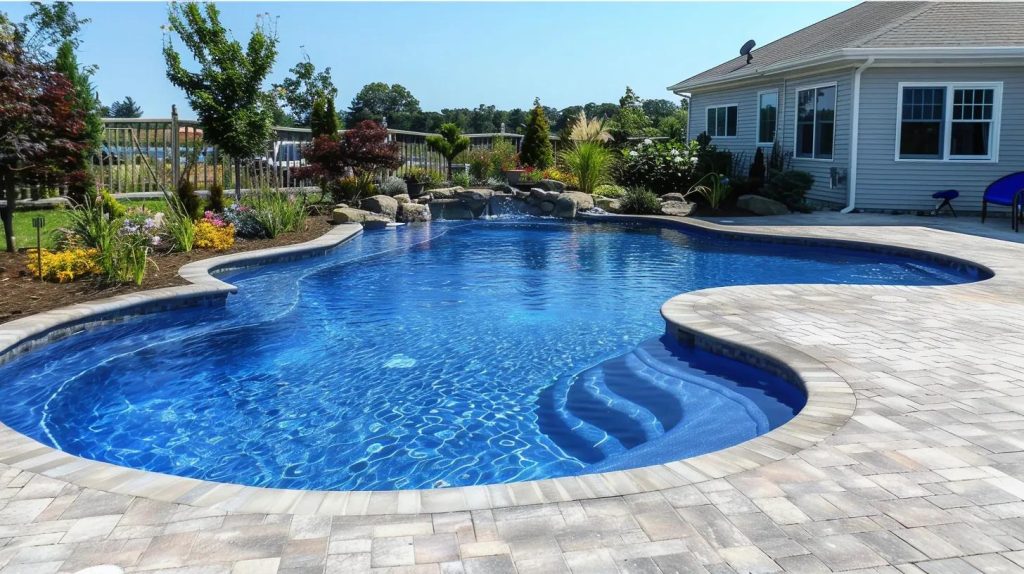
Your fiberglass pool’s filter system works as its primary defense against cloudy water and algae growth, making monthly cleanings essential for peak performance.
A clogged filter restricts water circulation, forcing your pump to work harder and increasing energy costs.
Follow this monthly maintenance routine:
- Backwash sand filters for 3-5 minutes until water runs clear
- Rinse cartridge filters with a garden hose, replacing them annually
- Check pressure gauges – readings 8-10 PSI above normal indicate cleaning needs
- Inspect O-rings and gaskets for cracks or deterioration
- Remove debris from skimmer baskets before filtering
Regular filter maintenance guarantees crystal-clear water year-round.
Remove Organic and Metal Stains With Targeted Treatments
Stains on your fiberglass pool’s surface don’t just look unsightly, they signal underlying water chemistry issues that need immediate attention.
Organic stains from leaves, algae, or debris typically appear green, brown, or purple. You’ll remove these with chlorine-based treatments or enzyme cleaners.
Metal stains, caused by iron, copper, or manganese, show up as rust, blue-green, or dark brown discoloration. Treat these with ascorbic acid or specialized metal removers.
Always test a small area first, then follow product instructions carefully.
After treating stains, rebalance your water chemistry and check metal levels to prevent recurrence and protect your pool’s gelcoat finish.
Stop Calcium Scaling Before It Rings Your Waterline
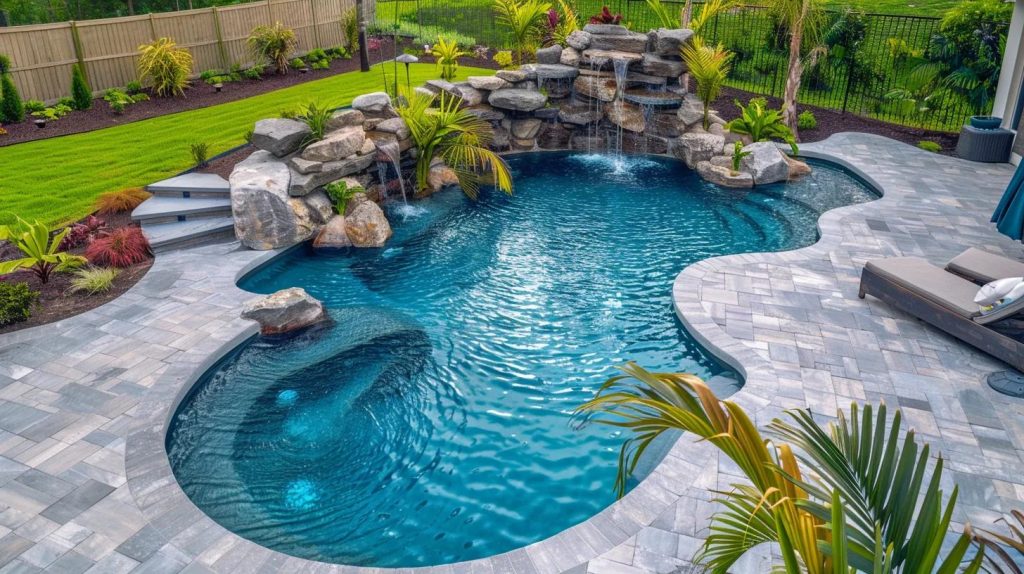
When calcium levels exceed 400 ppm in your pool water, you’ll notice a chalky white ring forming at the waterline, and it’s much harder to remove than prevent.
Test your water weekly and maintain calcium hardness between 200 and 400 ppm.
- Add a sequestering agent monthly to bind excess minerals
- Brush the waterline twice weekly with a soft-bristled brush
- Use a calcium reducer if levels climb above 400 ppm
- Install a pre-filter when filling your pool to remove minerals
- Apply enzyme-based cleaners to break down existing scale deposits
Consistent monitoring protects your fiberglass surface from permanent etching.
Check Pumps, Heaters, and Seals for Leaks Monthly
A single undetected leak can waste up to 30,000 gallons of water annually, raise your energy costs, and damage pool equipment. Inspect pump seals, heater connections, and filter O-rings monthly. Look for puddles, rust stains, or damp areas around equipment.
| Inspection Point | Warning Signs |
|---|---|
| Pump seals | Water drips, white calcium deposits |
| Heater connections | Corrosion, moisture accumulation |
| Filter O-rings | Cracks, flattening, air bubbles |
| Pressure gauge | Fluctuating readings, consistent drops |
| Plumbing joints | Wet soil, unexplained water loss |
Tighten loose connections immediately and replace worn seals before minor issues become expensive repairs.
Repair Minor Fiberglass Pool Damage Immediately
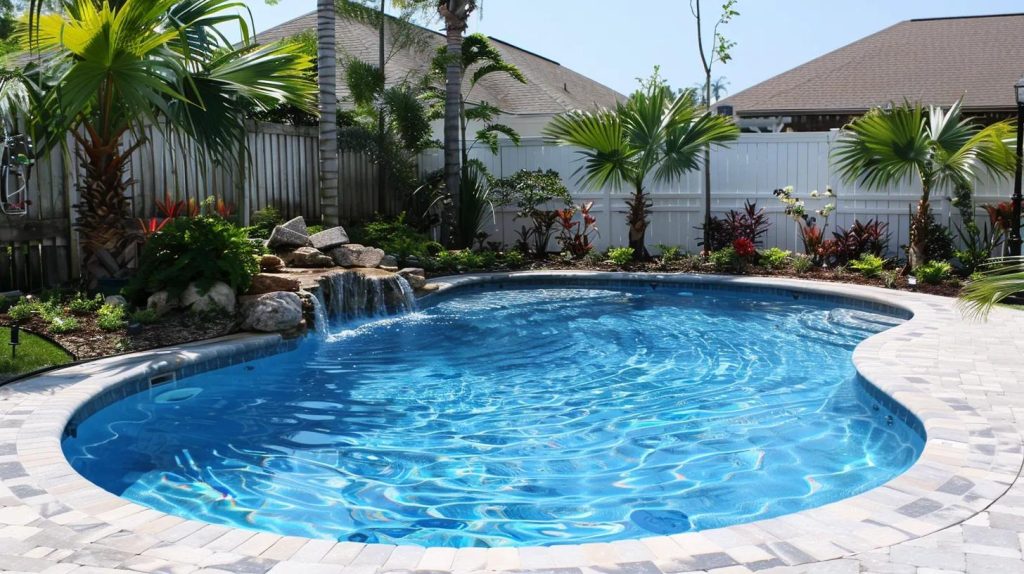
Small cracks and scratches in your fiberglass pool shell can quickly escalate into costly structural problems if you don’t address them promptly.
Minor damage allows water to seep beneath the gel coat, causing blistering and delamination that’ll compromise your pool’s integrity.
Watch for these warning signs requiring immediate attention:
- Spider web cracks around steps or benches
- Scratches deeper than the gel coat surface
- Discolored patches indicating underlying damage
- Rough spots where the finish has worn away
- Small blisters are forming on the interior surfaces
Purchase fiberglass repair kits specifically designed for pools.
They’re affordable and prevent expensive future repairs.
Winterize Your Fiberglass Pool in Freezing Climates
Although fiberglass pools handle cold temperatures better than concrete, you’ll still need to protect your investment when winter arrives.
Lower your water level below the skimmer and jets, then drain all equipment and plumbing lines completely.
Add winterizing chemicals to prevent algae growth and maintain proper pH levels.
Install a winter pool cover to keep debris out and protect the surface.
Use air pillows beneath the cover to absorb the pressure from ice expansion.
Remove ladders, handrails, and accessories to prevent damage.
Don’t drain your pool completely, the water weight prevents ground pressure from damaging the fiberglass shell.
Frequently Asked Questions
How Long Does a Fiberglass Pool Typically Last With Proper Maintenance?
With proper maintenance, you’ll get 25 to 30 years or more from your fiberglass pool. Some manufacturers even offer warranties up to 35 years on their shells.
You’ll maximize your pool’s lifespan by maintaining proper water chemistry, cleaning it regularly, and addressing minor repairs promptly.
If you’re diligent about winterizing, preventing surface damage, and keeping equipment in good shape, your pool can easily last for three decades or more.
What Are the Initial Costs of Installing a Fiberglass Pool?
You’ll typically spend between $45,000 and $85,000 for a fiberglass pool installation. This cost includes the pool shell, excavation, delivery, and installation labor.
You’re also looking at additional expenses such as decking, fencing, landscaping, and permits, which can add $10,000 to $30,000.
Your final price depends on your pool’s size, features, site accessibility, and location.
It’s smart to get multiple quotes from certified installers in your area.
Can I install a Fiberglass Pool Myself, or do I need professional help?
While you can technically install a fiberglass pool yourself, it’s not recommended.
You’ll need specialized equipment like cranes and excavators, plus expertise in plumbing, electrical work, and proper grading. One mistake can cause serious structural issues or void your warranty.
Most manufacturers require professional installation to maintain coverage. Unless you’ve got extensive construction experience and the right equipment, you’re better off hiring professionals who’ll guarantee it’s done correctly and safely.
How Does Fiberglass Pool Maintenance Compare to Concrete or Vinyl Pools?
You’ll find fiberglass pools require considerably less maintenance than concrete or vinyl alternatives.
Unlike concrete pools that need acid washing, resurfacing every 10-15 years, and constant chemical balancing due to porous surfaces, fiberglass pools have smooth, non-porous gel coats that resist algae growth.
You won’t deal with vinyl liner replacements every 5-9 years either.
Your fiberglass pool needs basic cleaning, filter maintenance, and water-chemistry checks, saving you time, money, and hassle in the long term.
What Warranty Coverage Comes With a New Fiberglass Pool Installation?
You’ll typically receive a structural warranty covering the pool shell for 25-30 years, protecting against defects like cracking, blistering, or delamination.
Most manufacturers also include a surface warranty for 10-15 years against fading and staining.
Your installation company should provide a separate workmanship warranty, usually 1-3 years, covering equipment and labor.
Always review what’s specifically included, as coverage varies by manufacturer and installer, and proper maintenance is required to keep warranties valid.
Conclusion
You’ve got everything you need to keep your fiberglass pool in top shape for decades. Stick to your weekly water testing, monthly filter cleanings, and seasonal maintenance checks. Don’t ignore small issues, they’ll only get bigger and costlier. Stay consistent with these simple tasks, and you’ll enjoy crystal-clear water and worry-free swimming all season long. Your fiberglass pool’s longevity depends on the care you give it today.