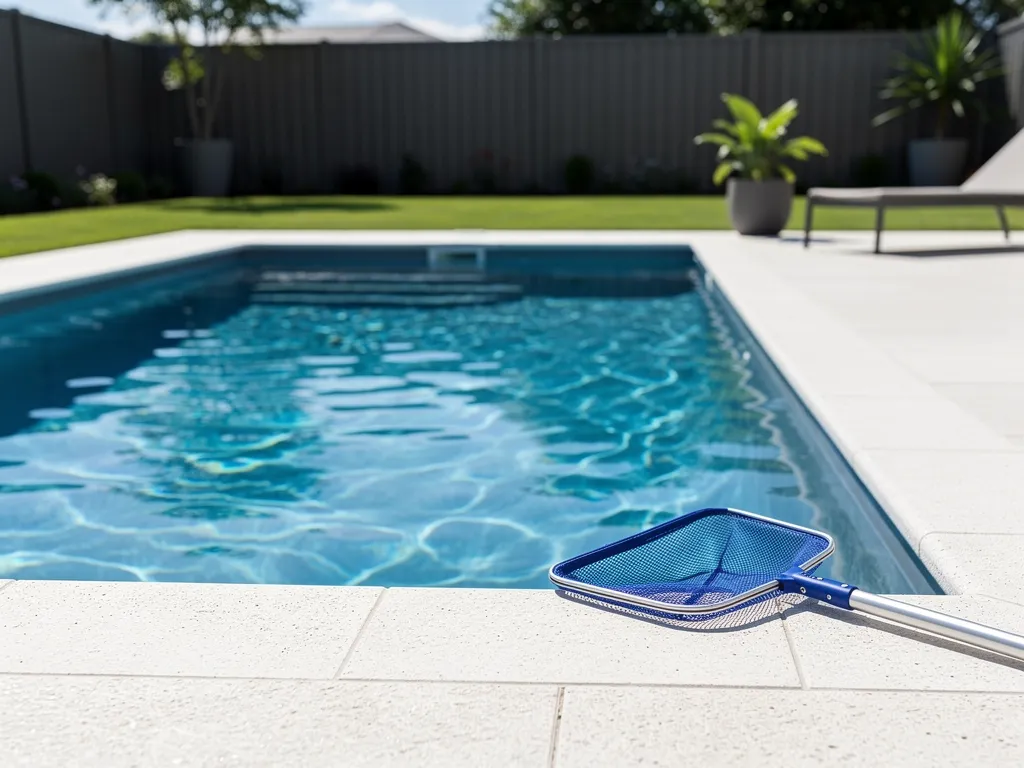
Your new pool needs daily attention to stay swim-ready: skim debris, test pH and chlorine levels, and empty skimmer baskets. You’ll also want to brush the walls 2-3 times a week to prevent algae buildup. Weekly tasks include monitoring pH (keep it between 7.2 and 7.6) and checking your filter’s pressure gauge. Monthly, test alkalinity and backwash sand filters as needed. The sections below break down each maintenance category so you can master your pool care routine.
Key Takeaways
Test and balance water chemistry weekly, maintaining pH at 7.2-7.6, chlorine at 1-3 ppm, and alkalinity at 80-120 ppm.
Skim surface debris daily, empty skimmer baskets, brush walls 2-3 times weekly, and check water levels regularly.
Clean or backwash filters based on type: clean cartridge filters biweekly, and clean sand and DE filters monthly or when pressure rises.
Address cloudy water or algae immediately by testing chemistry, shocking the pool, and adding appropriate treatment chemicals.
Winterize by lowering the water level, draining equipment, adding winterizing chemicals, and covering; rebalance the chemistry before spring reopening.
Understanding Pool Water Chemistry: The Foundation of Pool Care
Balanced water chemistry protects your pool equipment, keeps swimmers safe, and prevents costly repairs later.
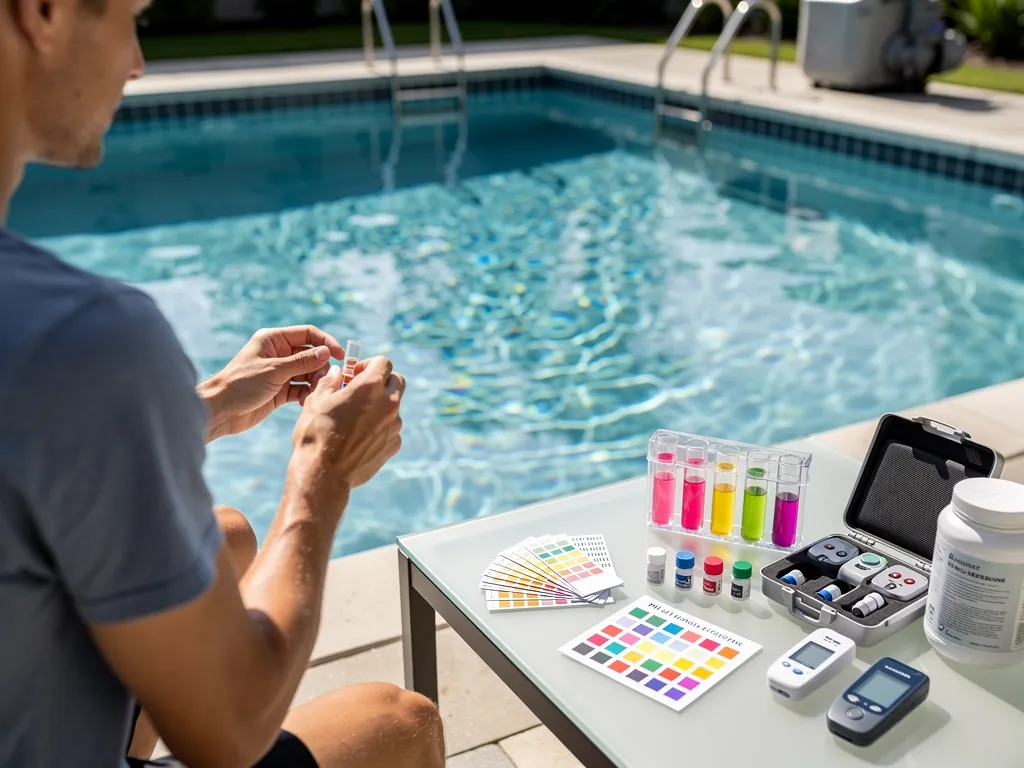
Monitor pH weekly, keeping it between 7.2 and 7.6 for ideal comfort and sanitizer effectiveness. Test chlorine or alternative sanitizers daily during peak season to guarantee proper disinfection.
Check alkalinity monthly to stabilize pH fluctuations, keeping it between 80 and 120 ppm. Calcium hardness prevents surface etching and equipment corrosion; test it quarterly and maintain 200-400 ppm.
Invest in a reliable test kit or strips, and keep a log of your readings to identify patterns and address issues quickly.
Daily Skimming, Testing, and Brushing: Your Essential Maintenance Routine
A consistent daily routine takes just 10-15 minutes but prevents hours of corrective work later. You’ll need to skim debris from the surface, test your water’s pH and chlorine levels, and brush the walls and floor to prevent algae buildup.
Test strips or liquid kits give you immediate readings. If levels are off, adjust chemicals accordingly. Brushing dislodges contaminants before they settle and become stubborn stains.
How to Clean and Maintain Your Pool Filter System
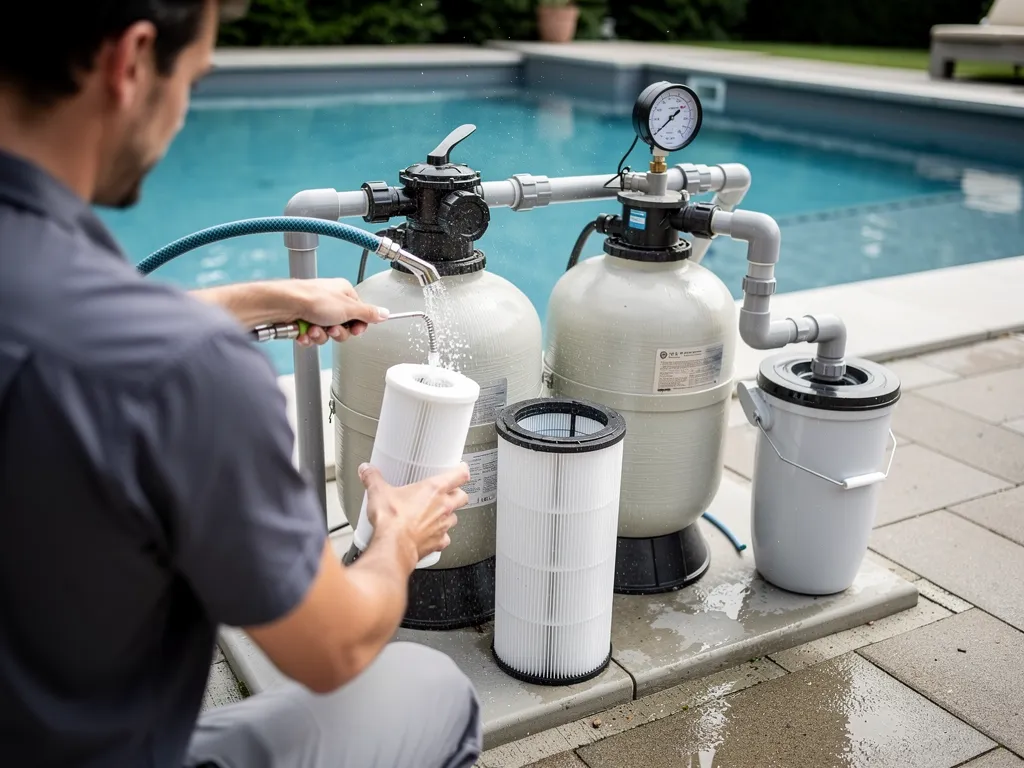
Your pool filter serves as the system’s workhorse, circulating thousands of gallons daily to trap dirt, oils, and debris that would otherwise cloud your water.
Rinse cartridge filters every 2 weeks and replace them annually. Sand filters require backwashing when pressure gauges read 8-10 PSI above normal, typically monthly. DE filters require backwashing, followed by fresh diatomaceous earth.
Check your pressure gauge weekly—rising pressure means it’s time to clean. Always turn off your pump before maintenance.
Clean the skimmer and pump baskets during each filter service to maintain ideal flow. Proper filter maintenance prevents costly repairs and keeps water crystal clear.
Cloudy Water, Algae, and Stains: Troubleshooting the Most Common Pool Problems
Even with regular filter maintenance, pool problems can still arise. You’ll encounter cloudy water, algae growth, or stubborn stains at some point. Here’s how to address each issue:
Test your water weekly and maintain proper chlorine levels between 1 and 3 ppm. Brush walls regularly to prevent algae attachment. Address problems immediately—they’ll worsen quickly if you ignore them.
Opening and Closing Your Pool: Seasonal Maintenance for Cold Climates
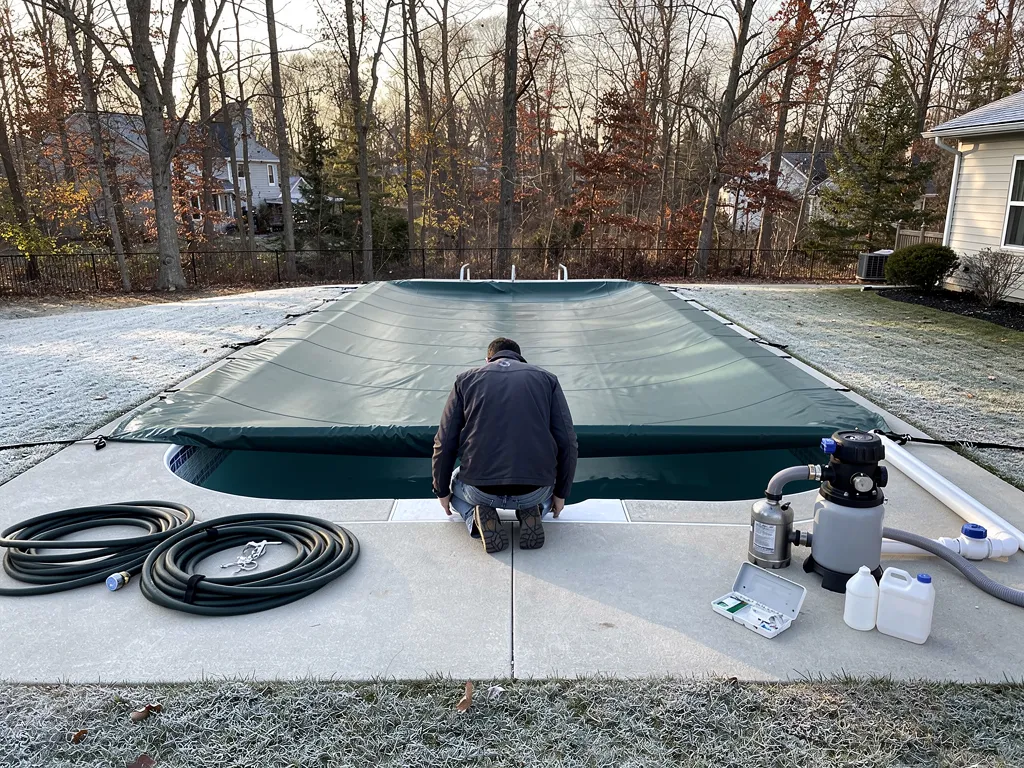
When winter approaches, pools in cold climates require proper closing procedures to prevent expensive freeze damage. Lower the water below the skimmer, drain all equipment and plumbing lines, and add winterizing chemicals to prevent algae growth.
Cover your pool with a durable winter cover to keep debris out.
Come spring, remove the cover and refill to normal levels. Balance your water chemistry immediately, then shock the pool heavily.
Clean the filter, reinstall the equipment, and run your pump continuously for several days. Test daily until chemistry stabilizes, ensuring you’re ready for swimming season.
Frequently Asked Questions
How Often Should I Completely Replace My Pool’s Water?
You’ll typically need to replace your pool’s water completely every 3-5 years, depending on your maintenance routine and water quality.
If you’re diligent with chemical balancing and regular upkeep, you can extend this timeline.
However, you should drain and refill sooner if you notice persistent cloudiness, high total dissolved solids, or stubborn algae problems.
Regular testing will help you determine when it’s time for a complete water replacement.
What’s the Typical Lifespan of Pool Equipment Like Pumps and Heaters?
Your pool pump typically lasts 8-12 years with proper maintenance, while heaters generally run 5-10 years, depending on the type.
Gas heaters tend to have shorter lifespans than heat pumps.
You’ll get the most longevity by keeping up with regular cleaning, balancing your water chemistry, and scheduling annual professional inspections.
If you’re noticing unusual noises, reduced efficiency, or frequent repairs, it’s probably time to start budgeting for a replacement.
Do I Need Professional Pool Maintenance or Can I Do It Myself?
You can handle basic pool maintenance yourself if you’re willing to learn and stay consistent.
Weekly tasks like testing water chemistry, skimming debris, and vacuuming are straightforward with proper guidance. However, you’ll likely need professional help for equipment repairs, complex chemical imbalances, or seasonal openings and closings.
Many pool owners choose a hybrid approach—maintaining their pools weekly while scheduling professional service quarterly for thorough inspections and specialized tasks.
How Much Does Annual Pool Maintenance Typically Cost for Homeowners?
Annual pool maintenance typically costs you between $1,200 and $1,800 if you hire a professional pool service. This breaks down to roughly $100-150 per month for weekly cleaning, chemical balancing, and equipment checks.
However, you’ll save considerably by doing it yourself—expect to spend only $300-500 yearly on chemicals, testing kits, and supplies.
Your actual costs depend on your pool’s size, type, and your local climate conditions.
Should I Drain My Pool During Extended Vacations or Absences?
You shouldn’t drain your pool during vacations. Leaving it empty can cause serious damage—the shell might crack from ground pressure, pop out of the ground, or develop structural issues.
Instead, maintain proper chemical levels, reduce pump runtime slightly, and ask a neighbor or pool service to check it weekly.
If you’re leaving for an extended period, consider hiring a professional pool maintenance service to keep everything running smoothly while you’re away.
Conclusion
Your new pool will reward you with years of enjoyment when you stay on top of regular maintenance. By consistently testing your water chemistry, sticking to your daily cleaning routine, and addressing problems quickly, you’ll prevent most issues before they start. Don’t forget to open and close your pool properly each season if you’re in a cold climate. With these practices in place, you’ll spend less time maintaining and more time swimming.