
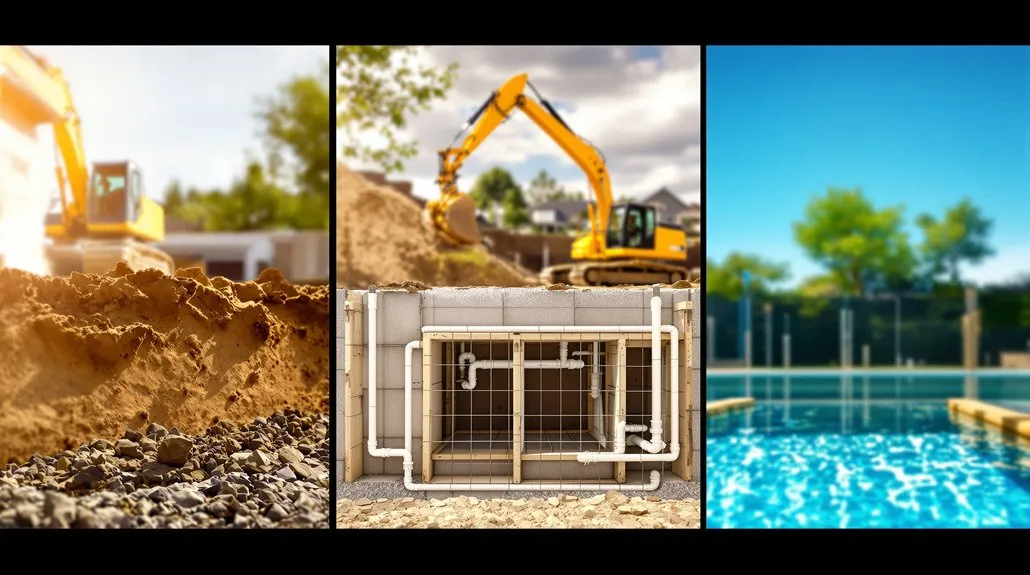
Your pool installation timeline depends on four key factors: pool type, size, soil conditions, and weather. Apply for permits 2-3 weeks before construction begins, as contractors need building, electrical, and plumbing approvals. Always add a four-week buffer to account for weather delays and material shortages that can halt excavation and concrete work. Understanding these timeline essentials helps you avoid costly contractor rescheduling and keeps your project on track. The insights below will show you exactly how to navigate each phase successfully.
Key Takeaways
Apply for permits 2-3 weeks early, including building, electrical, and plumbing approvals to avoid construction delays.
Add four weeks of buffer time to account for weather disruptions, material shortages, and unexpected site conditions.
Contact local authorities early to understand permit requirements, including property surveys, site plans, and pool specifications.
Expect longer timelines for in-ground pools, larger sizes, and challenging soil conditions like rocky terrain.
Plan ahead to reduce stress, maintain project flow, and ensure time for landscape contractors and outdoor installations.
Understand the 4 Factors That Affect Your Pool Installation Timeline
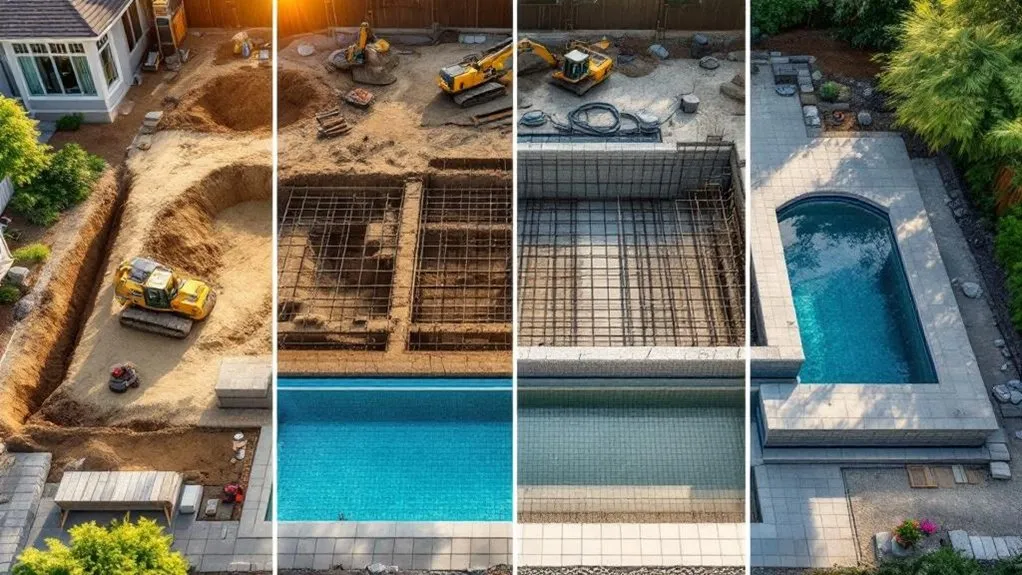
Several variables affect how long your pool installation will take.
Pool Type and Size – Inground pools require more excavation and construction time than above-ground options.
Larger pools naturally extend your timeline.
Soil Conditions – Rocky terrain, high water tables, or unstable soil slow down excavation and may require additional engineering solutions.
Weather – Rain, extreme temperatures, and storms halt construction.
Installing during peak season typically guarantees better weather conditions.
Permits and Inspections – Local regulations dictate approval times.
You’ll need various permits before construction begins, and inspections throughout the process can cause delays.
Apply for Permits Early to Prevent 2-3 Week Delays
Before you break ground on your dream pool, you’ll need to secure the proper permits from your local building department. This process typically takes 2-3 weeks, so submit your application as early as possible to avoid delays.
Your contractor should handle permit applications, but you’re responsible for ensuring they submit them promptly. Required permits vary by location but generally include building, electrical, and plumbing approvals.
Missing or incomplete documentation causes the most delays. Provide accurate property surveys, site plans, and pool specifications upfront.
Contact your local building department to understand specific requirements before applying to avoid costly timeline setbacks.
Add a 4-Week Buffer Time for Weather and Material Shortages
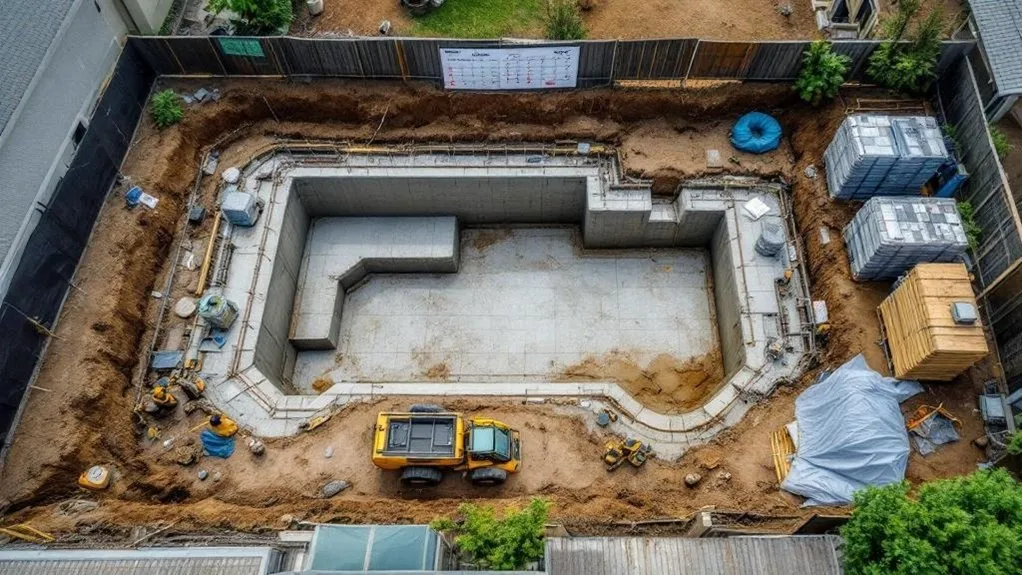
Even with permits approved on schedule, your pool installation timeline needs breathing room for factors beyond anyone’s control.
Weather delays from rain, extreme heat, or freezing temperatures can halt excavation and concrete work for days. Material shortages continue affecting construction supplies, from pool liners to pumps and filtration systems.
Adding four weeks of buffer time protects your project from these disruptions.
You’ll avoid the stress of rescheduling landscape contractors or outdoor living installations. This cushion also accounts for unexpected site conditions, like rocky soil or drainage issues, that require extra time to resolve properly.
Frequently Asked Questions
What Is the Average Total Cost of Installing an Inground Pool?
You’ll typically spend between $35,000 and $65,000 for an inground pool installation, with the national average hovering around $50,000.
Your final cost depends on factors like pool size, material choice (concrete, fiberglass, or vinyl), and location.
If you’re adding features like heating, lighting, or waterfalls, expect to pay more.
Don’t forget to budget for ongoing maintenance, which’ll add several hundred to thousands annually to your expenses.
How Do I Choose Between Concrete, Fiberglass, and Vinyl Pool Materials?
You’ll want to evaluate your budget, maintenance commitment, and customization needs.
Choose concrete if you want complete design flexibility and don’t mind higher costs plus regular maintenance.
Opt for fiberglass if you’d prefer low maintenance and quick installation, though you’re limited to pre-made shapes.
Pick vinyl if you’re on a tighter budget and want smooth surfaces, but know you’ll need liner replacements every 7-10 years.
What Ongoing Maintenance Is Required After Pool Installation Is Complete?
Maintain proper chemical balance by testing and adjusting pH, chlorine, and alkalinity weekly.
Skim debris daily and vacuum weekly to keep the water clean.
Clean or backwash filters every few weeks, and brush walls and steps regularly to prevent algae buildup.
Also check equipment like pumps and heaters monthly to ensure proper operation.
During off-season, you’ll winterize your pool to protect it from freezing damage.
Can I Use My Pool Immediately After Installation Is Finished?
You can’t use your pool right away after installation.
You’ll need to wait 24-48 hours for the chemicals to balance properly and circulation systems to stabilize. Your installer should test the water’s pH, chlorine, and alkalinity levels before giving you the green light.
Don’t jump in too soon—improperly balanced water can irritate your skin and eyes, and it won’t be safe or enjoyable until everything’s adjusted.
Do I Need to Hire Separate Contractors for Landscaping Around the Pool?
You don’t necessarily need separate contractors for pool landscaping. Many pool installation companies offer extensive services that include surrounding landscape work.
However, if your installer doesn’t provide landscaping or you’re seeking specialized design features, you’ll need to hire a separate landscaper.
It’s best to coordinate both projects at the same time to ensure proper drainage, equipment access, and a cohesive design.
Ask your pool contractor about their landscaping capabilities before deciding whether you’ll need additional help.
Conclusion
You’ve got the knowledge to plan your pool installation realistically. Remember to account for the four key factors affecting your timeline, submit those permits as early as possible, and don’t forget your four-week buffer. With these strategies, you’ll avoid frustrating delays and set proper expectations from day one. Now you’re ready to work with your contractor and create a timeline that’ll actually hold up throughout your project.