Fiberglass vs Gunite: Which Pool Belongs in Your Backyard

We build both, so we have no reason to talk you into either one. Here is the rule we actually use.

Get An Instant Price Estimate

We Respond Within 24 Hours

✔ Licensed & Insured✔ Building Since 2003✔ Our Own Crews, No Subcontractors✔ Free Design Consultation

We build fiberglass and we build gunite, which means we have no stake in which one you pick. So here is the rule we use on site, before any of the other detail:

If a 40 x 16 pool or smaller works for your yard, and you can find a model with the attributes you want, go fiberglass. If you want something bigger than that, go concrete.

That is the whole decision for most people. Everything below is why.

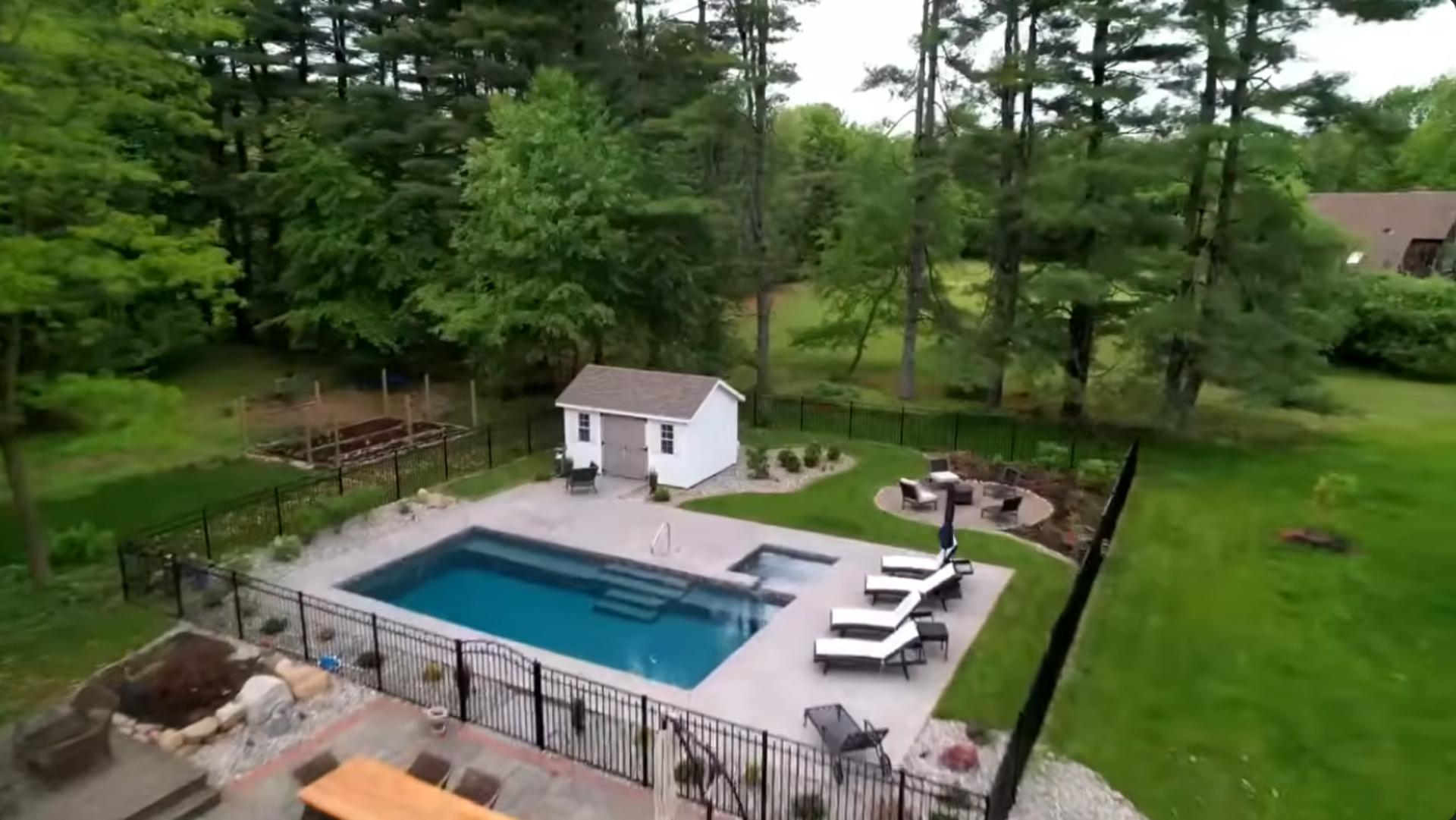
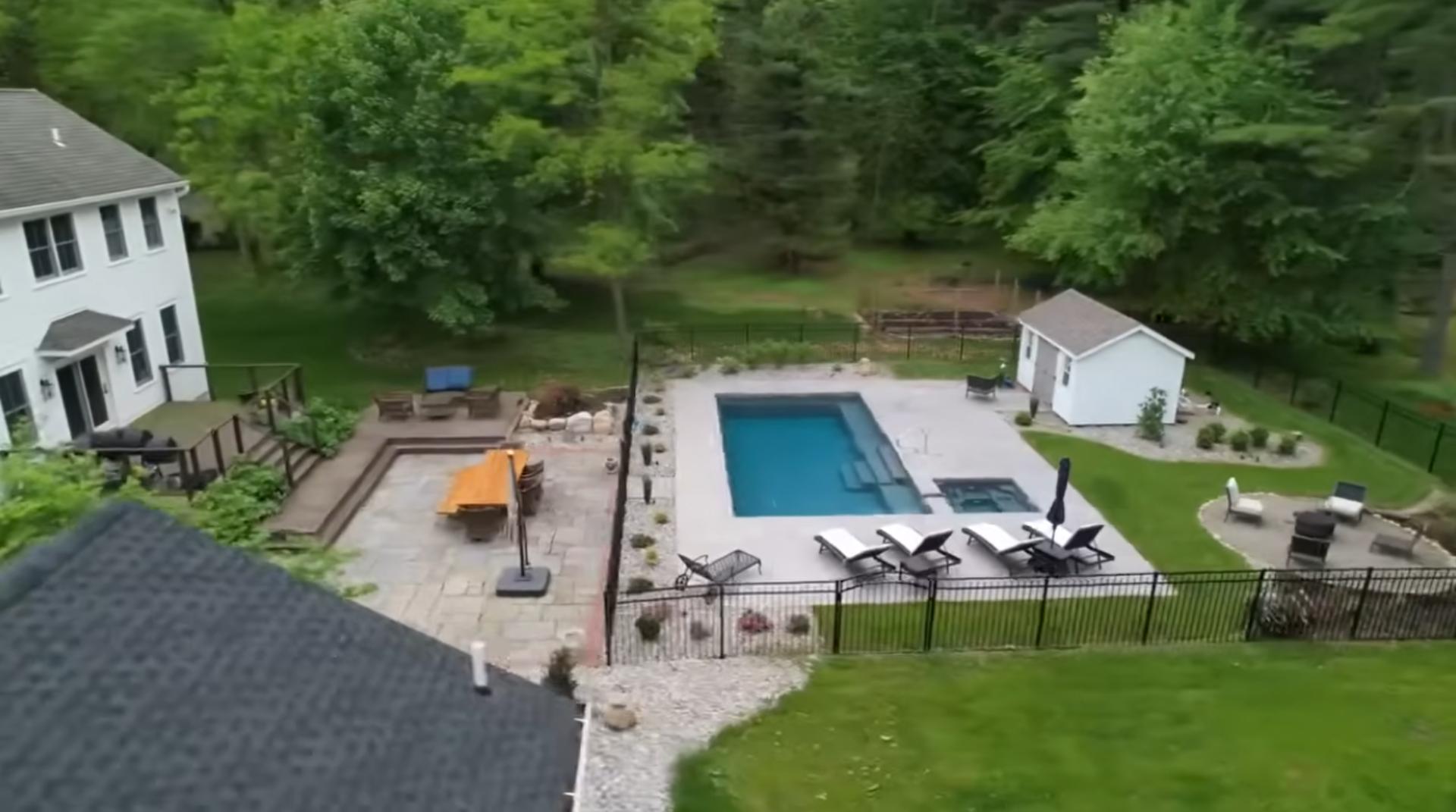
Fiberglass pool installation in Washington Crossing, PA

The Size Rule, and Why 40 x 16

A fiberglass pool is one solid shell built in a factory and trucked to your house. That is its whole advantage, and it is also its whole limit. It has to fit on a truck and travel down your road, which is what puts a ceiling on the size at roughly 40 feet by 16 feet.

So the question is not really “which material is better.” It is “does a shell exist that gives me what I want?” You are choosing from a catalogue of models. If one of them has the shape, the depth, the steps and the ledge you want, you get all the benefits of fiberglass and give up nothing. If nothing in the catalogue is right, do not force it. That is where concrete comes in.
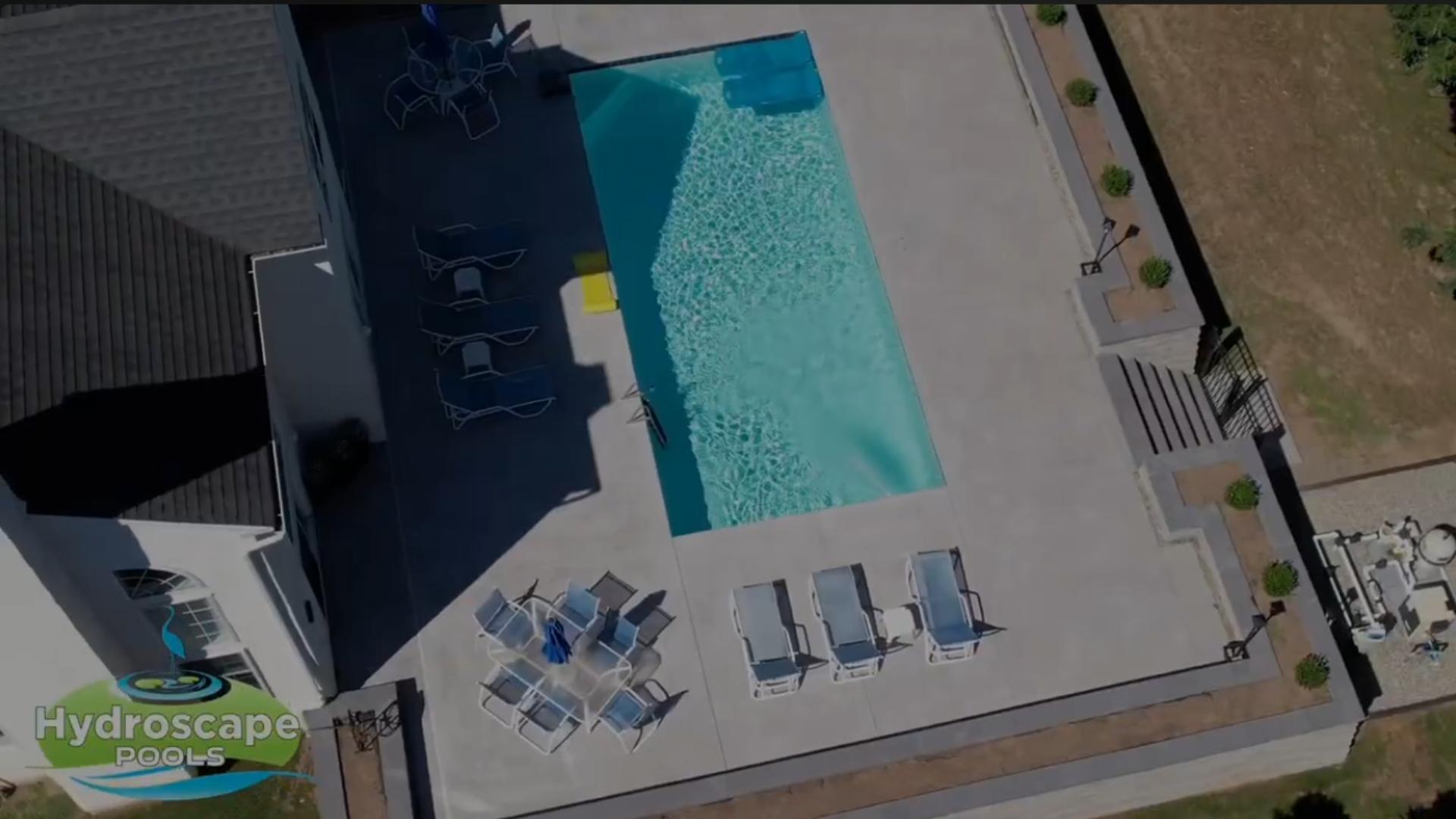
The Real Argument for Fiberglass: You Never Resurface It

This is the part people find out too late, and it is the strongest thing we can say for fiberglass.

A fiberglass pool never needs to be re-tiled or resurfaced. A concrete pool does. The plaster or aggregate surface on a gunite pool wears out, and the tile line goes with it. When it is time, that is a job that runs roughly $20,000 to $35,000, every 10 to 15 years, for as long as you own the pool.

Run that out. A gunite pool costs more to build, and then it asks for a five figure cheque twice in thirty years. A fiberglass shell just does not have that line item. If you are comparing the two on price, that is the number that actually decides it, and it is the one that never shows up on a quote.

Fiberglass pool installation in Washington Crossing, PA
Pool renovation in New Hope, PA by Hydroscape Pools

When You Should Build Concrete Instead

We are not here to talk you out of gunite. There are real reasons to build it, and if any of these are you, build it.

The main one is size. If you want it bigger than about 40 x 16, fiberglass is not an option and the decision has been made for you. After that comes shape. Concrete gets formed in your yard, so it can be any shape and any depth, wrapped around anything, with no catalogue involved. Depth belongs in the same conversation, whether that means diving depth, a deeper end than the models give you, or a vanishing edge.

The last reason is the one people never think of: your yard itself. A shell has to physically get back there on a truck and go in under a crane. Tight access, a steep slope, or the wrong tree overhead can rule fiberglass out on logistics alone, whatever the catalogue says.

What It Costs, Both Ways

Our real ranges, not internet numbers. Fiberglass runs roughly $60,000 to $90,000 installed. Gunite runs roughly $80,000 to $120,000. Where you land inside a range depends on the decking, the coping, the fencing and what else you are adding, and there is full detail on our pricing page.

Now put the resurfacing back in. Gunite starts higher and adds $20,000 to $35,000 every 10 to 15 years. Fiberglass starts lower and never does. Over the life of the pool that gap is not close, which is exactly why our rule leans fiberglass whenever a shell will actually do the job.

What is the same either way: excavation, plumbing, electrical, backfill, decking, fencing and your heater. The material changes the shell, not the project.

The Short Version

Go fiberglass if a 40 x 16 pool or smaller works for the yard, a model has the attributes you want, you would rather never resurface, and you want to be swimming sooner. Go concrete if you want it bigger than that, you want a shape or a depth nobody manufactures, or your yard simply will not take a shell.

If you are between the two, that is what the site visit is for. We build both, so whichever one you land on, it is the same crew. See inground pool design and installation for how each one gets built, or the installation timeline comparison if you want the week by week.

We build with fiberglass shells from River Pools, Imagine Pools, Latham and Glimmerglass. Four catalogues rather than one is the difference between finding the model you want and settling for the one your builder happens to sell.

Fiberglass Brands We Build With

River Pools logo
Imagine Pools logo
Latham logo
Glimmerglass Fiberglass Pools logo

All indicated Pentair trademarks and logos are property of Pentair. Coverstar is a trademark of Latham Pool Products, Inc. All other brand names and logos are the property of their respective owners. Hydroscape Pools & Landscape Construction is an independent contractor and is not an agent of, or affiliated with, these manufacturers.

Proudly Providing Services Throughout the Mid-Atlantic United States

From building a brand-new pool to keeping an older one in great shape, we offer a full range of pool and outdoor living services across the Mid-Atlantic. One team handles all of it, start to finish.
Custom inground pools built in fiberglass or concrete, designed around your yard and how your family wants to use it. We handle the design, the permits, and the full build with our own crew.
Inground spas, spillover spas built right into your pool, and standalone hot tubs, with the jets, heating, and controls to match.
Is your older pool looking tired? We handle resurfacing, new tile and coping, deck updates, and equipment upgrades to bring it back to life.
Gas heat to stretch your season into April and October, or a heat pump to hold temperature through the summer for less money to run. We install Pentair, and we run the gas line and the electrical ourselves.
Pentair IntelliCenter, standard on every pool and spa combination we build. Start the spa, run the lights and check the pump from your phone instead of walking out to the pad in the dark.
Natural stone waterfalls and waterfall and slide combinations from Advanced Waterfall Systems, plus spillover spas and bubblers on a tanning ledge.
Coverstar automatic safety covers, built to meet ASTM F1346. One button closes the pool, which is the whole reason an automatic cover actually gets used.
Pumps, filters, heaters, salt systems, and automation. We diagnose, repair, and replace the equipment that keeps your pool running right.
Keep your pool clean, balanced, and ready to swim, with regular care plus seasonal openings and closings handled by our own team.
Patios, walkways, plantings, and complete outdoor living areas that turn the space around your pool into a backyard you actually want to spend time in.

Built-in grills, bars, countertops, and full outdoor kitchens, with the gas and electrical handled in-house.

Pergolas, pavilions, and shade structures that keep your patio and pool comfortable all summer.

Patios, pool decks, walkways, retaining walls, and fire features, built to last.

Frequently Asked Questions

Fiberglass or Gunite: Which Should I Choose?

Our rule: if 40 x 16 or smaller works for your yard and you can find a model with the attributes you want, go fiberglass. If you want something bigger than that, go concrete. We build both, so we have no reason to push you either way.

Because a fiberglass pool is one solid shell made in a factory and driven to your house. It has to fit on a truck and get down your street, and that is what caps the size at around 40 feet by 16 feet. Past that, the shell cannot be transported, so concrete is the only way to get there.

Correct, and it is the biggest long term difference between the two. A gunite pool’s plaster surface and tile line wear out and need redoing roughly every 10 to 15 years, which runs about $20,000 to $35,000 each time. A fiberglass shell does not have that cost at all. Over the life of the pool it is the single largest number in the comparison, and it is never on the quote.

No, and it is a fair thing to be suspicious about. They are different tools. Concrete’s advantage is freedom: any size, any shape, any depth. Fiberglass’s advantage is that it is built in a controlled factory, it goes in fast, and its surface never needs redoing. Neither is the “cheap” option or the “premium” option. Pick based on the size and the shape you want.

Gunite, both times. It costs more to build, roughly $80,000 to $120,000 against roughly $60,000 to $90,000 for fiberglass, and it keeps costing every 10 to 15 years when it needs resurfacing. See our pricing page for what moves you inside those ranges.

River Pools, Imagine Pools, Latham and Glimmerglass. Carrying four means we are matching a shell to what you want rather than talking you into the one line we happen to carry. If none of the four has your pool in it, we will tell you, and that is usually the moment we start talking about concrete.

Meaningfully. The shell arrives finished, so there is no waiting on concrete to cure and no plaster stage. Gunite is a multi week build in your yard. We break the timelines down on the installation comparison.

Still Not Sure Which One?

Tell us the yard and what you want out of it. We build both, so the answer you get is the one that fits, not the one we would rather sell.